
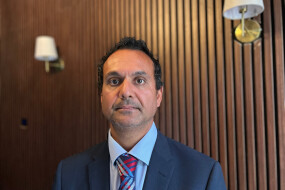
Pádraig Langsch outlines the flaws in the government's proposal for criminal legal aid reform in the District Court. The minister for justice’s proposed reform of criminal legal aid in the District Court risks causing serious and lasting damage to the administration of justice, particul
Opinion
Council of Europe secretary-general Alain Berset reflects on the situation in Ukraine ahead of the fourth anniversary of the Russian invasion tomorrow. Tomorrow, 24 February, marks four years since Russia’s full-scale invasion of Ukraine. Strikes on homes, schools, hospitals, and energy infras
William Fry partners Jason Milne and Michelle Martin examine a Supreme Court ruling which clarifies planning bodies' climate duties and limits the decisive impact of s.15 on individual development decisions. The Supreme Court in the Coolglass case upheld the High Court's decision to quash the r
Mahbooba Faiz, an Afghan-born lawyer based in Ireland, uncovers the detail of the Taliban's new diktat on criminal procedure. After nearly four years of legislative opacity and rule by decree, on 4 January 2026, the Taliban issued a new legal document in Pashto language titled the “Criminal Pr
Karyn Harty, Lesley Caplin and Aaron McCarthy of Dentons consider whether EU law permits member states to ban social media for under-16s. Australia's ban on under-16s using major social media services came into force in December. Hot on the heels of this news, President Macron announced that France
McCann FitzGerald lawyers Mary Brassil, Donal Hamilton, David McCauley, Eleanor Cunningham and Catherine Austin review upcoming changes to mandatory retirement ages. Employers with employees who have contractual retirement ages of 65 or lower should be aware that new legislation will restrict the ci
Erika Guevara Rosas of Amnesty International responds to the Trump administration’s announcement that the US is withdrawing from 66 international organisations, conventions, and treaties. This is a vindictive and reckless assault on the legitimacy and integrity of the United Nations and the ru
Lynda Nyhan, partner and head of the employment team at Taylor Wessing, makes predictions for employment law in 2026. 2025 has been a notable year for employment law in Ireland, with steady progress towards greater workplace flexibility and employee wellbeing.
Joan McCoy of Employee Ownership Ireland urges solicitors in Northern Ireland to highlight the continued benefits of employee ownership in spite of UK tax changes. Last month, Employee Ownership Association held its annual conference in Telford. Although the event offered valuable insights and into
McCann FitzGerald partner Marie-Alice Cleary warns retailers not to fall foul of pricing laws as Black Friday approaches. A trader announcing a price reduction must indicate in the announcement the prior price of the product.
McCann FitzGerald partners Niall Best and Conor Cunningham offer insights into the government’s new public consultation on a life sciences strategy. In a pivotal moment for a sector that employs around 100,000 people in Ireland and delivers close to €100 billion in exports annually, the D
Wider use of community sanctions can help to improve public safety while tackling the prison overcrowding crisis, write Dr Ian Marder, Dr Eoin Guilfoyle, Dr Lousie Kennefick, Dr Niamh Maguire and Professor Nicola Carr. Amid extensive debate on public safety in recent weeks, one proven tool rema
KOD Lyons partner Matthew de Courcy looks back at divorce in early Irish law. The Brehon laws were the legal system of Ireland for over a thousand years, dating back as early as the 1st century AD and continuing in various forms until the 17th century, when they were superseded by English common law
William Fry lawyers Rachel Hayes, Leo Moore and Aoife Keenan explain the key features of the EU's Digital Identity Wallet. The Regulation (EU) 2024/1183, which establishes the European Digital Identity Framework (EUDI Regulation), came into force in May 2024 and will take legal effect across the Eur
Nina M. Hart makes the case for Ireland taking a stronger approach to the enforcement of EU sanctions. Ireland has long maintained a framework for implementing the European Union’s economic sanctions, or restrictive measures, but not prioritised enforcing them.