
Analysis: Can an EU member state unilaterally ban social media for children?
 Reading time: 6 minutes

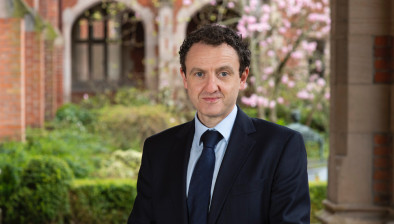
Pictured: Karyn Harty, Lesley Caplin and Aaron McCarthy.
Karyn Harty, Lesley Caplin and Aaron McCarthy of Dentons consider whether EU law permits member states to ban social media for under-16s.
Australia’s ban on under-16s using major social media services came into force in December. Hot on the heels of this news, President Macron announced that France intended to follow suit, with a ban on social media for under-15s aimed to come into force from September 2026. The Irish government is said to be examining the question of a similar ban, although it has stated that it would prefer such a decision to be taken at the EU level.
If no decisions are made at the EU level, then it is possible that member states will take matters into their own hands and consider unilateral bans. But would a ban by a member state such as Ireland be legally permitted under EU law?
Minors and online content regulation
In recent years, several significant new laws were enacted at European and national levels regulating online content, with the protection of minors being one of the key aims. The EU Digital Services Act (Regulation (EU) 2022/2065) is central to the regime as it governs how digital intermediaries operate their platforms. The Act contains a number of provisions directly aimed at protecting minors, for example:
-
Article 28(1) requires providers of online platforms to “put in place appropriate and proportionate measures to ensure a high level of privacy, safety and security of minors, on their service”. The European Commission released guidelines on how platforms could comply with this provision, which included carrying out risk reviews, setting minors’ accounts to the highest privacy settings by default, and avoiding addictive design interfaces and exploitative commercial practices.
-
Article 35 requires “very large online platforms” (VLOPs) and “very large online search engines” (VLOSEs) to implement appropriate risk mitigation measures, with age verification suggested.
Another key piece of legislation introduced was the Audiovisual Media Services Directive (Directive (EU) 2010/13) (AVMSD). Ireland’s media regulator, Coimisiún na Meán, published an “Online Safety Code” under the Irish law transposing the AVMSD in October 2024. The Code contains provisions requiring video-sharing platforms that have their European headquarters in Ireland to amend their terms and conditions to, among other things, implement age checks to prevent minors from seeing restricted video content.
Restricted video content under the Online Safety Code is a much wider category than purely “illegal” content. It includes bullying content, content promoting eating disorders and content which incites hatred based on specified grounds, such as sex, race and religion.
These measures all have weight, but none of them go as far as imposing a general bar to minors accessing the social media platforms on which they are generally active today.
Does EU law prohibit a member state banning social media for minors?
So what is the legal position facing an EU member state considering a unilateral ban on social media for minors? The two biggest EU law obstacles to overcome would be: (i) the “country of origin” principle under Article 3 of the eCommerce Directive (2000/31/EC); and (ii) the “maximum harmonisation” nature of the Digital Services Act.
The country of origin principle
The country of origin principle establishes that primary responsibility for regulating an online platform belongs to the member state in which that platform is established. The aim of the country of origin principle is to facilitate the free movement of digital services across the EU and avoid regulatory hurdles of a provider needing to comply with variable laws in different member states.
For example, the country of origin principle would prevent France from introducing a law which imposed general rules on a platform which had its European headquarters in Germany. There are limited exceptions to the rule, such as measures to protect public health or security.
The country of origin principle was recently upheld by the CJEU in the KommAustria (case C-376/22) where the court held against an Austrian law obliging social media platforms to set up a notification and review procedure for alleged illegal content.
If a member state introduced a ban, but limited its effect to social media platforms having their European headquarters within that member state, it appears highly unlikely that the country of origin principle would be breached.
Ireland is in a unique position in this regard since many of the large platforms have their European headquarters there. Ireland may accordingly have a freer hand in establishing obligations without falling foul of the country of origin principle.
There is also an argument to be made that banning social media for minors would fall squarely within the public health exception.
Digital Services Act
The Digital Services Act is a maximum harmonisation measure. “Maximum harmonisation” means that member states are generally prohibited from imposing stricter measures than those set down in the regulation.
Since the Digital Services Act regulates how digital intermediaries operate their platforms, it might be argued that banning minors from accessing social media conflicts with the maximum harmonisation nature of the Digital Services Act.
Conversely, an argument could be made that such a measure is not precluded by the Digital Services Act. Article 2(4) of the Digital Services Act provides that it is “without prejudice to the rules laid down by other Union legal acts regulating other aspects of the provision of intermediary services…” One such legal act is the AVMSD. Article 28b of the AVMSD requires member states to take appropriate measures to, among other things, protect minors from content which may impair their physical, mental or moral development. An argument might be made that a social media ban for minors is a necessary and proportionate measure in transposing Article 28b and the requirement to safeguard the rights of the child under Article 24 of the Charter of Fundamental Rights of the European Union.
Conclusion
There are certainly platforms which, by their very nature, call for “bans” for minors — pornography sites being the obvious example. It cannot therefore be said that measures outright banning certain types of online platforms for minors breach EU law per se. To implement a social media ban would be a distinctly different step and would likely meet arguments that such a measure was neither necessary nor proportionate.
There are various cases pending across the EU that relate to the regulation of online platforms and content. If social media bans for minors are enacted unilaterally by member states, we are likely to see legal challenges. Ultimately, we will not know the answer to the question posed in this briefing unless and until the CJEU rules on the issue. However, there are certainly good legal arguments available to a state looking to take action.
As for the social media platforms themselves, they will need to track legislative developments carefully across the various EU member states so that they are well prepared to consider a challenge, if such a ban is tabled.
Karyn Harty is a partner, Lesley Caplin is an of counsel and Aaron McCarthy is a senior associate in the Dublin office of global law firm Dentons.

Share this article:

Subscribe to our newsletter to not miss articles like this one:
 SUBSCRIBE