

Kieran McEvoy: Calls for an amnesty for British soldiers in Northern Ireland are based on a myth
 Reading time: 6 minutes
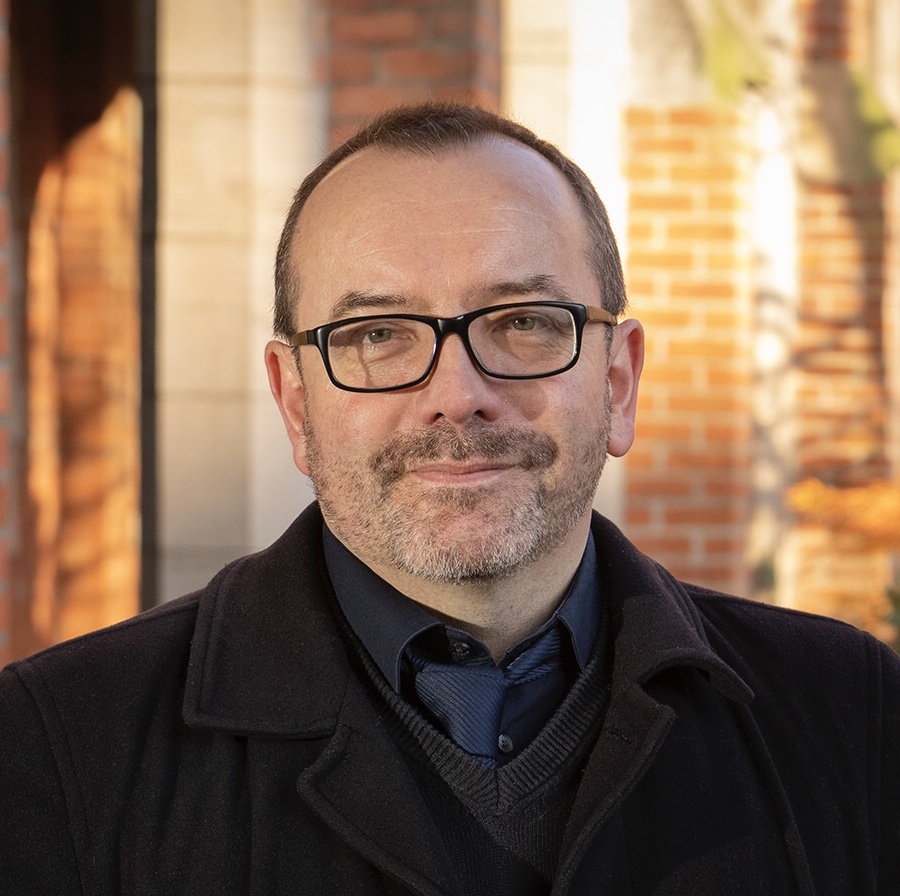
Professor Kieran McEvoy
Professor Kieran McEvoy rubbishes claims of a “witch hunt” against former British soldiers who served in Northern Ireland.
In recent months, there has been a renewed push by British army veterans and their supporters for a return to some variant of the Boris Johnson-era amnesty and for drawing a line under the past in Northern Ireland.
The clamour for an amnesty was, and is, based on the fake news that there was a post-conflict “witch-hunt against veterans” – apparently driven by the human rights-obsessed “lawfare” of the Police Service of Northern Ireland, the Director of Public Prosecutions and lawyers representing bereaved families.
For the record, between 2012 and 2024, there were 25 decisions to prosecute conflict-related offences in Northern Ireland, six of which were against soldiers. Only one ex-soldier was convicted of manslaughter after he shot a civilian in the back, receiving a suspended sentence.
Actual data often appears beside the point.
As Arron Banks, the major funder of the Brexit Leave campaign, said of his Remain opponents, a focus on “facts, facts, facts” does not connect with people emotionally. Right-leaning Britain is told that investigating or prosecuting past army misdeeds feels like a legal witch-hunt, therefore it is.
Like the broader Brexit campaign, the amnesty was rationalised by nativist bluster and macho posturing (best army in the world, etc), a disdain for “foreign” European law and the deliberate erosion of factual authority.
For those of us who worked to counter the amnesty, post-truth populism at times seemed impervious to pesky legal or empirical facts.
Thankfully, in line with their election pledge, Labour abandoned the Johnson amnesty. That decision followed a determination in the UK courts that it was unlawful.
Last autumn, the UK and Irish governments signed the “Framework Agreement”. It included a commitment to establish new human rights-compliant mechanisms to address the legacy of the Northern Ireland conflict. The relevant enabling legislation is before the House of Commons and is due soon before the Dáil.
At first blush, these developments embody grown-up Anglo-Irish politics – complex negotiations, a treaty between two sovereign states and a re-emphasis of the primacy of the rule of law – a comforting return to status quo ante after the aberration of the Johnson era.
Except, of course, efforts to address the legacy of the Northern Ireland conflict are taking place in the context of supercharged, Trump 2.0, post-truth politics. This challenge is not unique to Northern Ireland.
In the field of transitional justice – broadly understood as the means through which societies address past wrongs – established truths about past violence or authoritarianism are being relentlessly undermined. All populists need a usable past to make and sustain their pitch – therefore credible versions of history must be rubbished.
For example, in Argentina, president Javier Milei (he of the sideburns and chainsaw) has persistently disputed the long-established reality of state terror during the military dictatorship, including the reality that up to 30,000 people were murdered or disappeared by the regime. These facts were established by a truth commission and numerous trials since Argentina’s amnesty laws were overturned.
Similarly, the brutal abuses of institutional racism in apartheid-era South Africa – painstakingly documented by the Truth and Reconciliation Commission – are now frequently disputed by white nationalist groups and countered by Elon Musk and others who claim that white South Africans are now the victims of a “white genocide”. Despite any credible evidence to substantiate this claim, Afrikaners are now uniquely recognised as refugees by the Trump administration.
Of course, states and powerful non-state actors have always engaged in lying and denial about past abuses. As sociologist and criminologist Stan Cohen detailed in States of Denial, such strategies included literal denial (it never happened), interpretative denial (something happened but it’s not what it looks like) or implicatory denial (it happened but the consequences are disputed).
The post-truth era arguably presents a new challenge in addressing past harms.
The Princeton philosopher Harry Frankfurt has distinguished between lies and bullshit. He argues that a liar knows the truth, therefore seeks to distract you from it – but a relationship between the truth and the lie sustains for the lie to be plausible, restricting the latter in different ways. Bullshit on the other hand is “panoramic”, largely “unconstrained by truth”, less “austere” and essentially indifferent to the point that at least some of the audience know that they are being bullshitted.
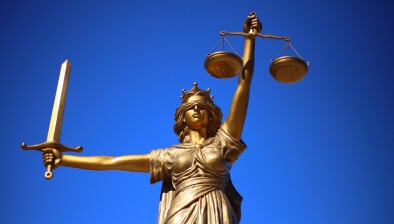
This is where law comes in. Law is the place where bullshit stops, where what Hannah Arendt termed the “thoughtlessness” towards law is halted. For example, a Trump-appointed federal judge who dismissed the administration’s rationale for deploying the national guard in Portland as being “simply untethered from the facts” was a perfect illustration.
Closer to home, when the High Court in Belfast found that the Boris Johnson 2023 amnesty was unlawful, Judge Adrian Colton dismissed the then government’s claim that it would “facilitate reconciliation” by finding “there is no evidence that granting of immunity under the 2023 [Legacy] Act will in any way contribute to reconciliation in Northern Ireland, indeed the evidence is to the contrary”.
Given the rigour of its working methods – effective investigations, the testing of evidence, equality of arms, intellectually reasoned argument, the privileging of legality and so forth – law can serve as a buttress against moral relativism, lies and bullshit.
Of course, there will be bad legal decisions, and the UK Supreme Court in particular is now a very conservative body with little apparent feel for the realities of the Northern Ireland conflict. In a recent conflict-related case, it in effect gave MI5 huge influence in deciding what truth families should be allowed to know about the death of their loved ones including in cases involving state agents.
Nonetheless, a critically informed commitment to human rights and the rule of law, with all its flaws, remain the sine qua non, the indispensable requirement, of efforts to combat denialism and acknowledge past harms in the post-truth era.
Professor Kieran McEvoy is chair of peace, security and justice and professor of law and transitional justice at the Institute for Global Peace, Security and Justice, Queen’s University Belfast. This article first appeared in The Irish Times.

Share this article:

Subscribe to our newsletter to not miss articles like this one:
 SUBSCRIBE