




Practitioners pay tribute to District Judge Eamonn King upon retirement
 Reading time: 5 minutes
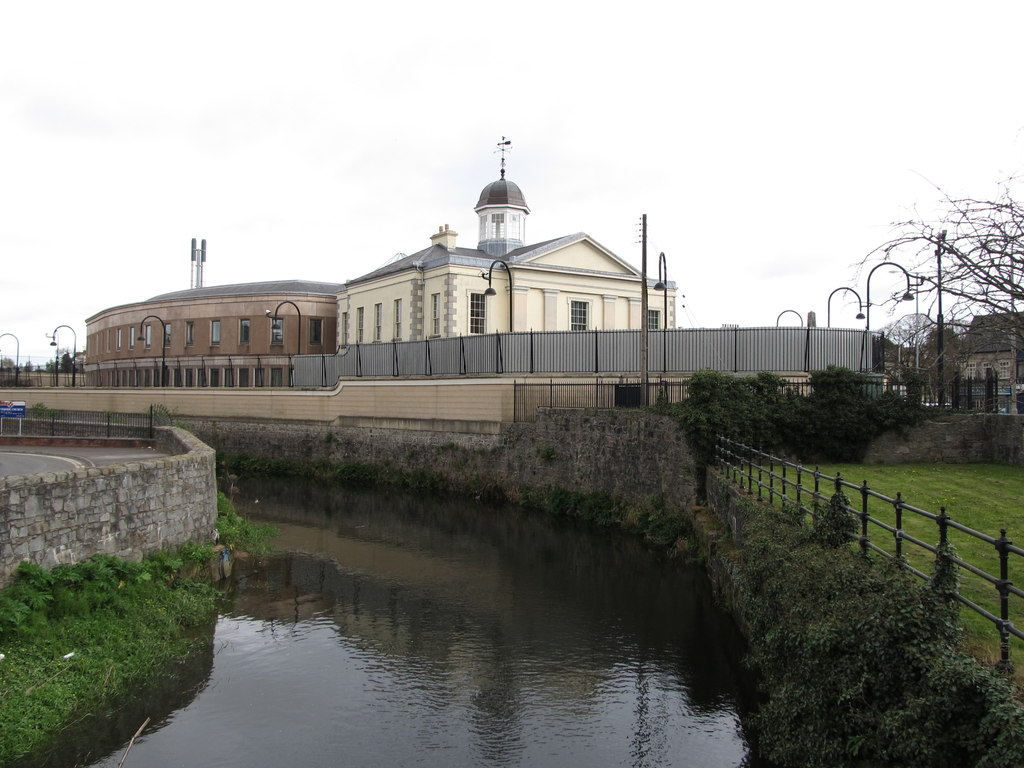
“Newry Courthouse/Teach na Cuirte,”
Credit: Eric Jones, CC BY-SA 2.0 [Newry Courthouse/Teach na Cuirte © Eric Jones :: Geograph Britain and Ireland]
Practitioners filled Newry Courthouse to pay tribute to District Judge Eamonn King who retired on 31 July after 21 years in the role.
Hailing from a rural background, Mr King grew up on dairy farm in Castlewellan Co. Down and attended St Patrick’s Grammar School in Downpatrick.
He had aspirations to become a vet before a turn of fate took his career in a different direction. Mr King told Armagh I that he had applied to a number of universities to study veterinary but, assuming that he had not got a place, accepted an offer to study law at Queen’s University Belfast. After he had accepted that place an offer to study veterinary arrived from University College Dublin.
Mr King, however, stated that he felt this was “pre-destined”. He qualified as a solicitor in the 1980s and became a deputy resident magistrate in 1998. He became a full-time district judge in 2005 and left private practice behind.
As he retired from the bench many practitioners, however, were not ready to leave the “Mr King era” behind as they filled the courtroom at Newry Courthouse to mark his last day.
Solicitor, Rory McShane joked that Newry & Banbridge Solicitors’ Association had held an “emergency meeting” on the subject of Mr King’s application to retire and had “rejected it initially” only for it to be accepted on “humanitarian grounds”.
Cormac McDonald, speaking formally on behalf of the Solicitor’s Association, wished Mr King well and noted that it was an “incredible achievement” to have remained “universally well liked and respected” after over 20 years sitting in Newry.
Mr King described his approach as applying his “common sense” and “life experience” to the situations that were presented to him. There were funny anecdotes, such as the solicitor left in charge of two dogs after a defendant in breach of bail was given a custodial sentence. A desperate plea by the defendant to Mr King: “What about the dogs?” was met with a promise from the judge that his solicitor would take care of them.
There was also praise, prosecutor Catherine Kearns stating that it had been a “privilege” to watch Mr King handle young defendants with skill and compassion. On behalf of court staff the court administrator for Armagh and South Down said: “There are many judges who are respected for their knowledge and experience, but it is much rarer to find someone who combines those qualities with genuine warmth, kindness and humility – and you have done exactly that.”
It was in Mr King’s final year that the most high-profile case that he presided over came before the court, the trial of former DUP leader Jeffrey Donaldson. However, it was the ordinary people that left a mark as Mr King recalled to Armagh I the case of a 13 year old girl, before the court on a number of serious assaults, for whom he decided to grant a conditional discharge. The girl went on to a long-term foster placement and sent a card to Mr King thanking him for his perseverance with her for allowing her “to get where she is now”.
As Mr King retires from the bench he intends to return to his background in farming and to spend more time with his two grandchildren. As the court administrator for Armagh and South Down praised him for creating a “family atmosphere” in Newry Court he was joined by his own family, wife Sheila and daughters Christine and Sarah, on his last day. Stating that he was “overwhelmed” by the turnout and he described Newry Courthouse as “the jewel in the crown” of the criminal justice system.
Mr King said: ““From the front door to the cells, every person that works here works to deal with the people that come through this court with dignity, humanity and compassion.
“There but for the grace of God go many of us. We don’t know the circumstances that result in the person standing in the dock, but we never forget that they’re a person… to be listened to and dealt with with courtesy, respect and dignity.”
Returning to the theme of family he added: “I described Newry Courthouse as a family. I will miss this job. I’ve loved it… I hope I’ve dealt with everybody in the same way I would expect them to deal with me – with respect, courtesy and dignity – and I wish you all the best.”

Share this article:

Subscribe to our newsletter to not miss articles like this one:
 SUBSCRIBE