




Written by:

Gillian O'Hanlon BL
Case Reporter
Supreme Court: Observations made on ground rents legislation
 Reading time: 8 minutes
Written by:
Gillian O'Hanlon BL
Case Reporter
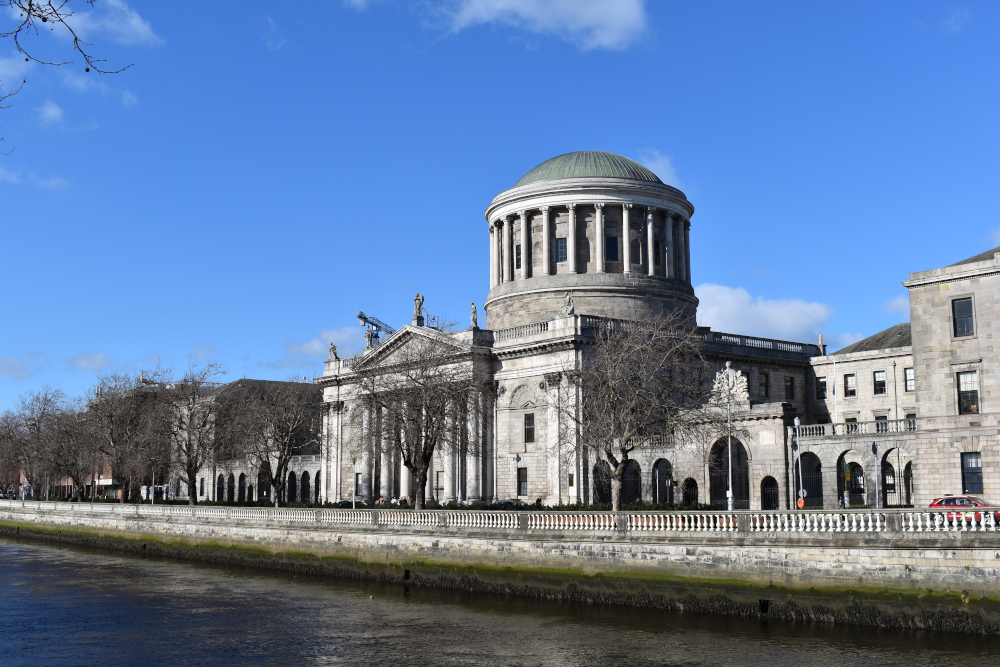
The Supreme Court has, notwithstanding unusual developments on appeal, made important observations on the application of ground rents legislation.

About this case:
- Citation:[2026] IESC 6
- Judgment:
- Court:Supreme Court
- Judge:Ms Justice Elizabeth Dunne
Delivering judgment for the Supreme Court, Ms Justice Elizabeth Dunne opined: “A party cannot obtain leave to appeal to this court on the basis of an issue of general public importance, and then by conceding that point proceed to agitate an appeal on a ground that is not an issue of public importance.”
Background
The respondents owned a property in Cork city pursuant to a sublease dated 12 April 1940 which contained a covenant to erect a dwelling house. The relevant head lease dated 1893 contained no covenant on part of the lessee to erect any buildings.
By deed of assignment dated 18 February 2022, the appellant acquired the interest of the respondents’ former lessor in the head lease lands and premises.
On 9 May 2022, the appellant served a forfeiture notice on the respondents seeking forfeiture of the 1940 lease on the basis of the respondents’ alleged failure to keep the premises in “good and tenantable order; repair and condition” pursuant to clause 7 thereof.
On 6 May 2022, the respondents sought by way of a Notice of Intention to acquire by purchase the fee simple and all intermediate interests in the property pursuant to s.4 of the Landlord and Tenant (Ground Rents) Act 1967, which permits a lessee to enlarge their leasehold interest into a fee simple where the qualifying criteria in s.9 and one of the alternative conditions set out s.10 of the Landlord and Tenant (Ground Rents) (No. 2) Act 1978 are satisfied.
The s.9 criteria provide inter alia that Part II of the 1978 Act applies to a person holding land under a lease, where there are permanent buildings on the land and land uncovered by those buildings is subsidiary and ancillary to them, where those buildings comprise an alteration or reconstruction, that alteration or reconstruction caused the buildings to lose their original identity, and that those buildings and any alteration or reconstruction were not erected in contravention of a covenant in the lease.
The s.10 conditions included inter alia that those permanent buildings were erected by the person who at the time was entitled to the lessee’s interest under the lease, or were erected in pursuance of an agreement for the grant of the lease upon the erection of the buildings.
The right to acquire a fee simple by purchase is restricted by s.16(2)(f) of the 1978 Act, which prohibits the acquisition of the fee simple by a sub-lessee in circumstances where the person holding the superior leasehold interest fails to satisfy the qualifying criteria of ss.9 and 10 of the 1978 Act or is disqualified by one of the restrictions in s.16.
In a decision dated 13 December 2023, the County Registrar accepted that the 1940 lease complied in all material respects with the requirements of the 1978 Act to purchase the fee simple.
The appellant contended that the absence of a building covenant in the 1893 lease rendered that head lease a non-qualifying lease, thereby removing the sub-lessee’s entitlement to acquire the fee simple where the appellant was not a qualifying person to whom Part II of the 1978 Act applies under s.16(2)(f).
The County Registrar found that interpreting the legislation in this manner would deny a whole cohort of leasehold owners the opportunity to secure the fee simple in their property in contravention of the direct purpose of that legislation, and found that the respondents were entitled to acquire the fee simple interest.
On appeal, the Circuit Court and High Court refused the appellant’s appeal.
The appellant was subsequently granted leave to bring a leapfrog appeal on the interpretation of s.16(2)(f), with the Supreme Court finding that the case raised issues of general public importance insofar as the interpretation contended for by the appellant could deny sub-lessees such as the respondents of their entitlement to acquire the fee simple in respect of domestic dwellings that they or their predecessors-in-title would have built on foot of their sub-lease.
The Supreme Court
At hearing, the respondents did not seek to stand over the High Court interpretation of s.16(2)(f), which was to the effect that in enacting s.16(2)(f), the Oireachtas intended that those provisions would apply only to supermarket/commercial leases.
The appellant then abandoned the argument that for the fee simple to be acquired it was necessary that the head lease contained a building covenant. Instead, the appellant made the case that the respondents had failed to prove that the head lease was a qualifying lease.
Ms Justice Dunne observed that the basis upon which leave had been granted had disappeared from the case. Notwithstanding that development, the Court elected to examine some of the abandoned points raised by the parties.
As to s.16(2)(f), Ms Justice Dunne noted that the section was introduced to prevent what was seen as a problem in relation to commercial leases which could give rise to an entitlement to buy out the fee simple contrary to the landowner’s intentions, but that there was no language in the section itself that could have resulted in the section being restricted to supermarket/commercial premises only, as was the High Court’s view.
The judge further considered that the appellant’s argument to the effect that the head lease needed to contain a building covenant in order to be a qualifying lease was misconceived where there was nothing in the ground rents legislation to support such a contention, and where “A lease which neither requires the lessee to build and does not restrict the lessee from building is all that is required.”
Ms Justice Dunne expressed that it seemed reasonable to take the view that the High Court had concluded that if s.16(2)(f) applied to the respondents, they were not entitled to buy out the fee simple. However, the judge was “far from convinced” that the High Court came to that view because it was not satisfied that the respondents had satisfied the requirements of s.10.
In this regard, the court noted that the High Court had been focused on the absence of a covenant to build in the head lease, rather than on any specific condition set out in s.10, and so it could not be implied that it was because the High Court was not satisfied that the respondents had come within the s.10 conditions, that it proceeded to consider the requirements of s.16(2)(f).
The court observed that having been granted leave to appeal, the appellant sought to conduct the appeal before this court on an entirely different basis to that upon which leave was granted, being whether or not the head lease was a qualifying lease under s.10.
The court further noted that the respondents then sought to place reliance on condition 2 of s.10 relating to rateable valuation.
Ms Justice Dunne pointed out: “None of the earlier judgments and orders in these proceedings touched on the question of whether the requirements of s. 10 had been met because the case was always run by the appellant on the basis that the respondents could never comply with the provisions of s. 16(2)(f) in the absence of a building covenant in the head lease.”
The judge refused to take the course suggested by the appellant, that in circumstances where the arguments in respect of the interpretation of s.16(2)(f) fell away, the appeal should be allowed and the orders of the courts below should be set aside with no further orders.
Ms Justice Dunne explained: “To do that would be extremely unfair to the respondents given that at all times they had attempted to deal with the arguments actually put forward by the appellant. This would mean that a party who had pursued one line or argument throughout the conduct of the proceedings could, by taking an entirely different line of argument in this court achieve a successful outcome.”
Finding that there was nothing stopping the appellant from raising any relevant issue before the lower courts to prevent the respondents from succeeding, and that it would be unfair to allow the appellant to now rely on new arguments made following a concession that the argument made previously throughout the proceedings was wrong.
Conclusion
Notwithstanding the court’s finding that the High Court’s interpretation of s.16(2)(f) was incorrect, the Supreme Court dismissed the appeal and upheld the High Court’s order.
Crowley & Anor v Sheehan [2026] IESC 6

Share this article:

Subscribe to our newsletter to not miss articles like this one:
 SUBSCRIBE