



Written by:

Gillian O'Hanlon BL
Case Reporter
Supreme Court: Famous Bewley’s Café windows belong to building owner
 Reading time: 7 minutes
Written by:
Gillian O'Hanlon BL
Case Reporter
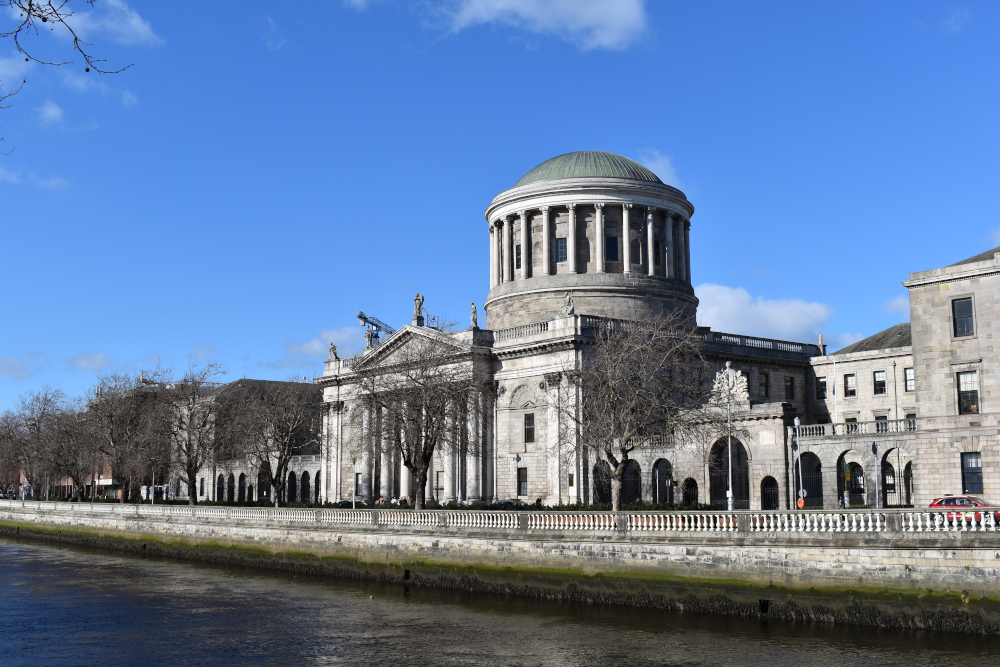
The Supreme Court has upheld the finding of the Court of Appeal that the six Harry Clarke stained glass windows in Bewley’s Café on Grafton Street belong to the building owner, RGRE Grafton Limited.

About this case:
- Citation:[2026] IESC 10
- Judgment:
- Court:Supreme Court
- Judge:Mr Justice Maurice Collins
Delivering judgment for the Supreme Court, Mr Justice Maurice Collins concluded that “that the two Swan Yard windows were, in common with the Four Orders, designed to be, and installed as, windows” and that “the Swan Yard windows are ‘part and parcel’ of the Premises to the same extent as the Four Orders. They are not fixtures; less still are they tenant fixtures capable of removal under Deasy’s Act.”
Background
In 1925–1926, Ernest Bewley assembled a site for Bewley’s café on Grafton Street, Dublin, intending that he would own the premises but that the café would be operated by a company, Bewley’s Oriental Café Limited (now Bewley’s Café Grafton Street Limited, the tenant), pursuant to a lease.
In 1927, the famous artist Harry Clarke was commissioned to create six stained glass windows for the premises. Four of the windows (the Four Orders) were set into window openings in the western wall of the premises, and two (the Swan Yard windows) were originally set into window openings in the south-facing wall of the premises.
The windows were installed in 1928, being removed only for safekeeping during World War 2 and for refurbishment in 1998, and are now very valuable.
In December 2020, the tenant agreed with its parent company Bewley’s Limited to transfer ownership of the windows to the parent company.
RGRE Grafton Limited (the landlord) challenged the validity of the purported transfer to the parent company, leading to the commencement of proceedings.
The parent company’s claim to ownership of the windows was wholly dependent on the tenant having been the owner of the windows as of the date of the impugned transfer in December 2020.
The High Court
The High Court upheld the landlord’s claim to ownership of the Four Orders and set aside the purported transfer thereof, finding that they operated as conventional windows from their installation in 1928, were part of the external skin of the premises at that time and were not “fixtures”.
The High Court held that the tenant owned the Swan Yard windows, finding, on the evidence, that these windows had been part of a double window layer or “double fenestration” arrangement, did not function as windows and could not be considered part and parcel of the fabric of the building and were properly classified as fixtures.
The court had regard to s.17 of the Landlord and Tenant (Amendment) Act 1860, which provides inter alia that personal chattels affixed to the freehold by the tenant at his sole expenses for the purpose of trade or ornament may be removed if this can be done without substantial damage to the freehold or to the fixture itself.
The High Court found that the tenant was entitled to a declaration that it was the owner of the Swan Yard windows. Both sides appealed to the Court of Appeal, each asserting ownership of all six windows.
The Court of Appeal
The Court of Appeal allowed the landlord’s appeal and dis-allowed the tenant’s cross-appeal, finding that all of the windows formed part of the fabric of the building and belonged to the landlord.
The court found that the landlord was required to prove on the balance of probabilities that the Swan Yard windows had been installed in the original outer frame in 1928, contrary to the High Court, which placed the burden of proof on the landlord to prove that the double fenestration arrangements were not also in place in 1928.
On appeal to the Supreme Court, the focus was on the correctness or otherwise of the findings of the Court of Appeal that all six windows had, on their installation in 1928, become part and parcel of the premises and thus the property of the landlord.
The Supreme Court
Mr Justice Collins considered the applicable legal framework in respect of fixtures, noting that that area has been described as “a notoriously difficult area of the law” with the real difficulty arising in its application to individual cases.
The judge outlined that Elitestone Ltd v Morris [1997] 1 WLR 687 had been adopted by the parties, which provided a threefold classification in that objects brought onto land could be classified as chattels, fixtures or part and parcel of the land itself, with the latter two categories treated as being part of the land.
Drawing from the applicable legal principles, the court explained that if the windows were properly considered to have become “part and parcel” of the structure of the premises in 1928, then the tenant’s appeal would fail, and that this assessment was not affected by the issue of who paid for the windows.
The court further considered that if the windows were not “part and parcel” of the premises, they may have been removable as tenant fixtures, but that they could not be tenant fixtures unless they were paid for by the tenant in line with s.17.
Mr Justice Collins observed that a recurrent theme in the judgments of the High Court and Court of Appeal, as well as the written and oral submissions of the parties, was the difficulty of making findings of fact based on the available evidence given its limitations and the significant gaps in it.
The judge agreed with the findings of the High Court and Court of Appeal with regard to the Four Orders, finding that there was no “plausible basis” on which to conclude that there was a double layer of windows at the location of those windows.
The court noted that the tenant accepted that the burden of proof rested upon it to establish as a matter of probability that it paid for the windows.
Referring to the minutes of a meeting relied upon by the tenant, which referenced items for the account of the tenant as including café fittings and fixtures, the court opined: “… it seems unlikely that, while carefully itemising ovens, tables, chairs and counters, the attendees at the board meeting on 9 March 1928 were content to deal with the Harry Clarke windows sub silentio. It is also of relevance in this context that windows would not appear to be generally considered or understood to be a fitting or a fixture.”
Mr Justice Maurice determined that the minute fell far short of providing reliable or adequate evidence that the tenant undertook, or had imposed on it, liability to pay for the windows, “still less does it establish that the basis for doing so was that the windows would be owned by it”.
Finding that the tenant failed to discharge its burden of proof on this issue, which proved fatal in itself to any claim of ownership by it, the court nonetheless addressed the issue of the Swan Yard windows, indicating that it would proceed on the basis that the burden of proof rested on the landlord, as was the approach of the High Court and Court of Appeal.
Mr Justice Collins disagreed that the use of a double fenestration system on the Swan Yard windows could not be dismissed as implausible, and that the only reasonable inference to be drawn from the available evidence was that those windows had been installed “to function as windows within the opes on the Swan Yard wall”.
Accordingly, the judge found that the Court of Appeal was correct to set aside this aspect of the High Court’s findings, and determined that the Swan Yard windows were part and parcel of the premises to the same extend as the Four Orders and were neither fixtures nor tenant fixtures capable of removal under s.17.
Conclusion
Accordingly, the Supreme Court dismissed the appeal and affirmed the order of the Court of Appeal.
RGRE Grafton Limited v Bewley’s Café Grafton Street Limited & Anor [2026] IESC 10

Share this article:

Subscribe to our newsletter to not miss articles like this one:
 SUBSCRIBE