


Research finds strong relationships with practitioners can help reduce youth offending
 Reading time: 4 minutes
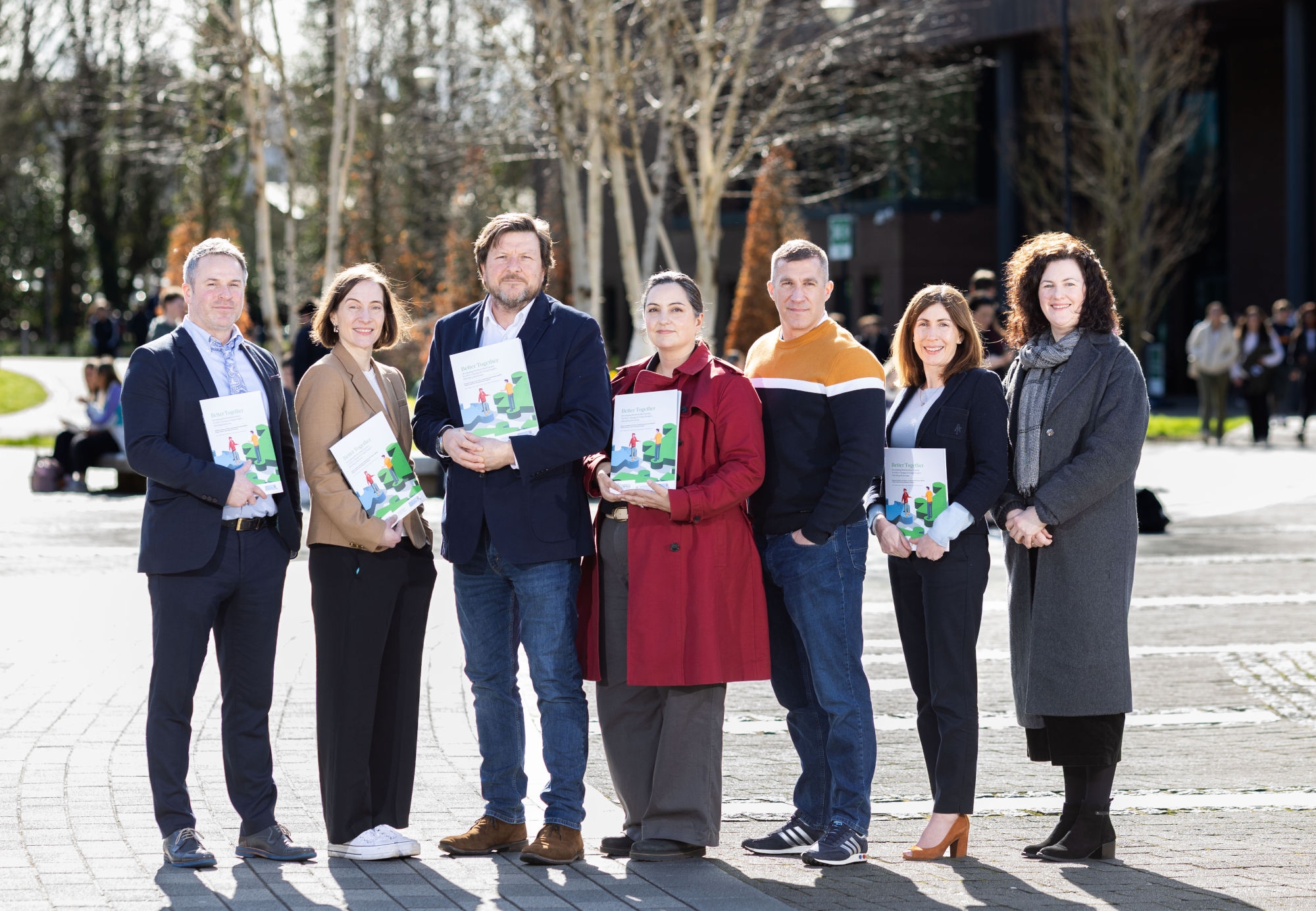
Pictured: Eoin O’Meara Daly, Tina Morin, Sean Redmond, Caitlin Lewis, James Leonard, Jackie Dwane and Susan Leahy.
New research has identified how effective, trust-based relationships between youth justice practitioners and young people can play a significant role in supporting positive change and reducing offending behaviour.
The study, led by the Research Evidence into Policy, Programmes and Practice (REPPP) team in the School of Law at University of Limerick, examined how relationships are built and how they make a difference within Ireland’s youth diversion projects (YDPs).
The research found that effective professional relationships support key outcomes for young people that are closely linked to positive behavioural change including greater trust in adults and services, improved ability to cope with challenges, and increased confidence and self-worth.
Dr Seán Redmond, adjunct professor of youth justice and director of REPPP at UL, said these outcomes are central to helping young people move away from offending and engage more positively with education, services, and their communities.
“I’ve been interested in relationships in a professional way for a long time, as a social worker, manager, public sector worker and latterly as an academic,” he said.
“Relationships cannot change the world or the structural inequalities that many of our young people face, but they are agile, endlessly flexible and resilient to knocks and shocks. They can help young people negotiate adversities, seize and sustain new opportunities and get exposed to new affirming networks — and in this way are potentially transformational.
“Our evidence supports continued investment in, and further development of, relationship building to help change young people’s offending behaviour in Ireland.”
The findings have been published in a new University of Limerick report, Better Together: Developing Relational Practice to Effect Change in Young People’s Offending Behaviour, and have directly informed the development of national guidance for YDPs.
Commenting on the launch of the report, Niall Collins, minister of state with responsibility for youth justice, said: “Investing in youth diversion and youth justice services is a key priority for government, as it provides invaluable support to An Garda Síochána in its work to address youth crime and protect communities.
“I recognise the dedication and expertise of youth justice workers who facilitate these youth diversion pathways, and I commend them for their efforts to change the lives of young people for the better.
“This invaluable work, done by almost 550 youth justice workers each year, has an undeniable positive impact on the lives of children, their families, their communities and on society as a whole. It moves young people away from pathways that, in the absence of diversion, would very likely lead to re-offending and imprisonment.
“I welcome the publication of the Better Together research report, developed by our academic partners in the implementation of the youth justice strategy, the REPPP team in University of Limerick. I am sure that the guidance REPPP have developed to aid youth justice workers in building effective relationships with young people will be an invaluable asset to their work moving forward.”
The REPPP Action Research Project aimed to close the knowledge gap, and develop practical, implementable guidance for practitioners in YDPs and support the policy of intervening to divert young people from crime.
The three-year project worked with 16 YDPs across Ireland, involving 60 youth justice practitioners, managers, and gardaí, and 27 young people who shared their experiences of working with youth justice services.
This group worked closely with the research team to share relational practice insights and co-designed a practical guidance document for fellow practitioners.
The action research approach to the project ensured that the research and guidance were co-designed by practitioners, thereby combining ‘on the ground’ wisdom with international evidence.
REPPP will be supporting the scale out and implementation of the guidance across the YDP network by offering a series of supports including webinars, events, and a six-part podcast launching in the coming months.
The research was funded by the Department of Justice, Home Affairs and Migration and carried out as part of a research collaboration between the School of Law at University of Limerick and the Department.

Share this article:

Subscribe to our newsletter to not miss articles like this one:
 SUBSCRIBE