



Written by:

Gillian O'Hanlon BL
Case Reporter
NI Crown Court: Man who slit his sister’s throat and set her on fire sentenced to 24 years’ imprisonment
 Reading time: 7 minutes
Written by:
Gillian O'Hanlon BL
Case Reporter
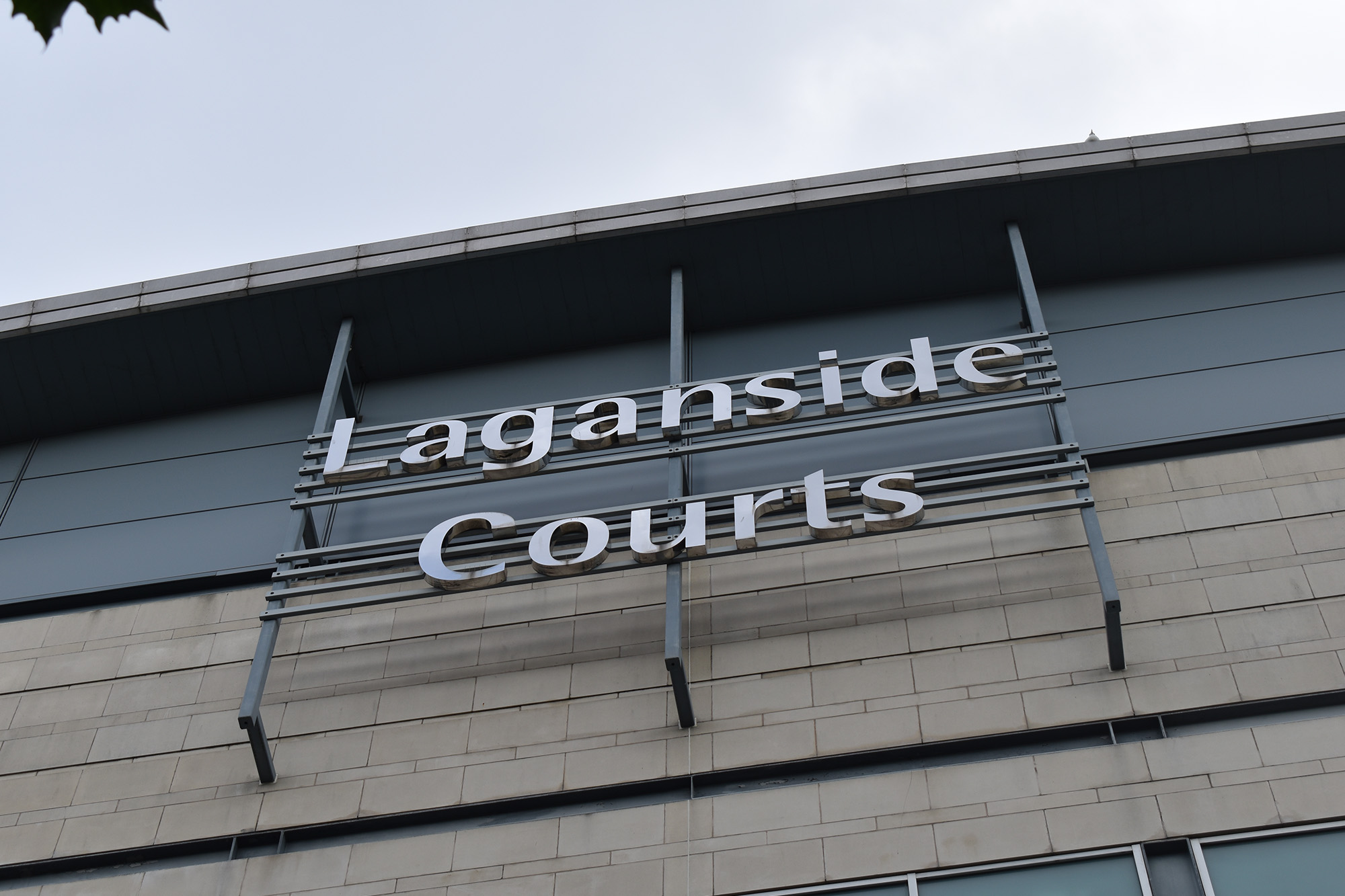
Northern Ireland’s Crown Court has sentenced a man who slit his sister’s throat and set fire to her whilst she was still alive is sentenced to 24 years’ imprisonment.

About this case:
- Citation:[2026] NICC 1
- Judgment:
- Court:Crown Court
- Judge:Madam Justice McBride
Delivering judgment for the Crown Court of Northern Ireland, Madam Justice Denise McBride stated to the defendant: “You are one of the most brutal, remorseless and cold-blooded murderers that I have had to deal with. This is exemplified by the hard-hearted way you told the police at interview that you took a knife from the kitchen, slit your sister’s throat, then cleaned the knife and returned it to the kitchen. You have demonstrated gratuitous violence and a callous disregard for life. I sentence you to 24 years in prison.”
Neil Connor KC along with Nicola Auret appeared for the Crown instructed by the Public Prosecution Service, and Kieran Mallon KC along with Gavyn Cairns appeared for the defendant instructed by GR Ingram Solicitors.
Background
The deceased, Alesia Nazarova, was born in Lithuania and moved to Northern Ireland in 2006. At the time of her death, she was 37 and was a single mother who worked locally and lived with her young daughter, who was 12 at the time. She had taken the defendant, her brother, into her home in Portadown after he had been evicted from his mother’s and father’s homes.
On 21 March 2023, shortly after 2am, emergency services received a call from members of the public concerning a terraced house fire.
Firefighters rescued the deceased’s daughter from a first-floor bedroom, the door of which had been blocked by a headboard. The deceased was found lying on the floor in the living room. She was pronounced dead shortly thereafter.
At her autopsy, it was noted that the deceased had been alive when the fire was started and had sustained serious burns covering 60 per cent of her body. Her most significant injury was a deep wound to the left side of her neck.
The deceased was also observed to have abrasions to her neck and four stab wounds to her abdomen, and haemorrhages within the lining of her eyes which could have been due to strangulation or the application of a ‘head lock’. Her death was attributed to haemorrhage from her neck wound.
The defendant was arrested on a river towpath in Portadown, with a smell of kerosene from his clothing. He was found in possession of the deceased’s bank card, which he had used to purchase items from Tesco.
At interview, the defendant admitted to killing the deceased, stealing her bank card, and setting five fires at her property with the intention of burning it down. He denied attempting to murder his niece.
The defendant alleged that the deceased did not “appreciate” him, had treated him like “garbage” and that he was made to do household chores and to babysit for his niece.
He described packing up to leave the deceased’s property in the early hours of 21 March, alleging that his sister screamed at him and that he “snapped”. The deceased had started to climb the stairs when he placed her in a headlock until she stopped breathing and then “slit her throat”, placed rubbish around her body and set fire to it. He also admitted to setting a fire outside his niece’s bedroom door.
The defendant was charged with the murder of his sister, the attempted murder of his niece, the theft of the deceased’s bank card and arson being reckless as to endanger life. At this arraignment, an additional count of arson with intent to endanger the deceased’s daughter was added to the indictment, with the attempted murder charge not being proceeded with.
The Crown Court
Madam Justice McBride noted that the defendant had four convictions in the jurisdiction, involving inter alia common assault and criminal damage perpetrated on his family members and their property.
Having regard to the pre-sentence report prepared by the Probation Board, the judge outlined that the defendant was 26 years old and was not in work due to back pain. The court further noted that the defendant had issues with alcohol and drug use.
As to the offending, the court observed that the defendant had minimised his behaviour and his culpability by stating that he was not in control. The court considered that the defendant had been assessed as being at a high risk of general reoffending and presenting a serious risk of serious harm.
Highlighting that arson endangering life is a serious specified offence under the Criminal Justice (Northern Ireland) Order 2008, Madam Justice McBride considered the requirement to evaluate the “dangerousness” of the defendant.
In circumstances where the defendant had pleaded guilty to murder and had received a life sentence, the judge explained that “the life sentence already imposed provides greater public protection than any other sentence available under the 2008 Order, namely an extended sentence or an indeterminate custodial sentence. It is for this reason, I consider murder is not one of the specified offences under the 2008 Order.”
Finding that the court, accordingly, did not need to determine whether the defendant was dangerous under the 2008 Order, Madam Justice McBride turned to the principles relating to setting the appropriate tariff for murder.
Having regard to the relevant jurisprudence and to article 5(2) of the Life Sentences (Northern Ireland) Order 2001, the judge accepted that the case before her was one of “exceptionally high culpability” as set out in R v Whitla [2024] NICA 65.
The court reasoned that the starting point of 20 years should be varied upwards to reflect the aggravating features of the case, including inter alia the multitude of offences committed and the fact that the defendant’s niece only survived because of the “brave actions” of neighbours and of the Northern Ireland Fire and Rescue Service.
The court also considered, as a very serious aggravating factor, the fact that the defendant had set fire to the deceased whilst she was still alive and after her death.
Finally, Madam Justice McBride observed that the defendant’s track record of domestic violence was a serious aggravating factor, noting that “Northern Ireland has one of the highest rates of femicide in Western Europe and there is a need for deterrence to show society’s abhorrence of such conduct and as a tool to end this blight in our society”.
The judge continued: “All the offending took place in the home of the deceased where she and her daughter ought to have felt safe. The offending, therefore, involved a very serious breach of trust in relation to family members.”
Finding that the murder charge was aggravated by reason of involving domestic abuse, contrary to s.15 of the Domestic Abuse and Civil Proceedings Act (Northern Ireland) 2021, the court explained that the statutory aggravator should be the “last step in the sentencing process”.
Fixing the starting point as one of 26 years, the Crown Court recognised that the only mitigating factor was the defendant’s guilty plea. The court recounted that at his first arraignment, the defendant had not pleaded guilty as he had given instructions to his legal advisors that he was under coercive control and they properly engaged experts to explore this issue.
The court deducted four years from his sentence having regard to the late plea and his lack of remorse. Having regard to the statutory aggravator, the court imposed an additional sentence of two years.
The court refused to deport the defendant, noting that R v Kluxen [2010] EWCA Crim 1084 ruled that whether offenders were EU or non-EU nationals, it was not necessary or appropriate for the courts to make recommendations for the deportation of those who qualified as “foreign criminals” under s.33 of the UK Borders Act 2007.
Conclusion
Accordingly, the Crown Court imposed a sentence of 24 years’ imprisonment, to be served in full before the defendant could be considered for release. The court also imposed concurrent prison sentences in respect of the remaining offences.
The King v Kornelijus Bracas [2026] NICC 1

Share this article:

Subscribe to our newsletter to not miss articles like this one:
 SUBSCRIBE