


Court of Appeal dismisses Garvaghy Road appeal
 Reading time: 3 minutes
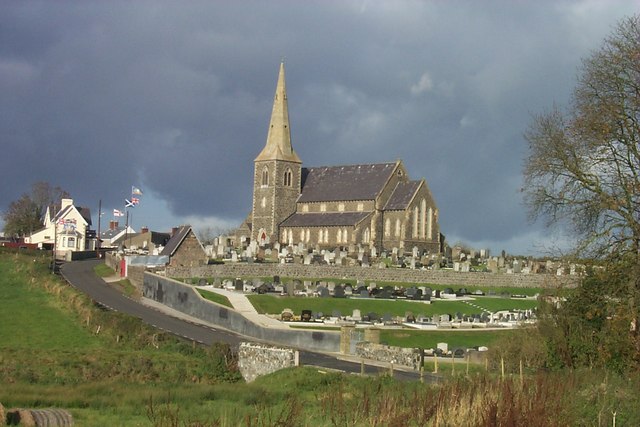
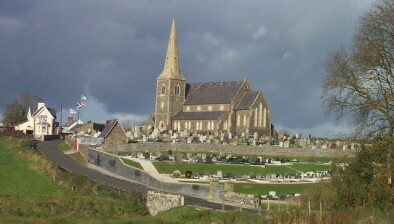
Drumcree Church
Credit: Raymond Okonski [CC BY-SA 2.0]
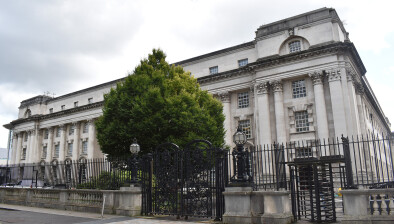
The Court of Appeal has dismissed an appeal by Breandán Mac Cionnait against a decision of Mr Justice Humphreys where he refused leave to apply for judicial review of a determination of the Parades Commission for Northern Ireland permitting a parade by Portadown Orange Order down the Garvaghy Road.
The determination was made on 25 September 2026 and permitted a parade by Portadown District LOL No.1 down the Garvaghy Road subject to a number of conditions. Mr Mac Cionnait, as a member of the Garvaghy Road Residents’ Coalition, sought leave to apply for judicial review of that decision. Leave was refused by the High Court in a decision of Mr Justice Humphreys dated 27 September 2026.
Mr Mac Cionnait appealed that decision to the Court of Appeal which has now dismissed the appeal.
Lady Chief Justice Dame Siobhan Keegan, delivering judgment on behalf of the Court, noted that the Court made no comment on the merits of the Parades Commission’s decision as that is not the Court’s function. However, she stated that: “Having assessed this material and the extensive legal arguments made, we find that this application for leave to apply for judicial review has no reasonable prospect of success and so the judge was correct to refuse leave.”
Lady Chief Justice Keegan added that even if leave were granted the application would have failed on its merits.
The Court considered the four grounds of appeal advanced by the appellant: (i) application of an incorrect test regarding public disorder; (ii) inadequacy of reasons; (iii) failure properly to conduct the proportionality balancing exercise; and (iv) irrationality.
On the first ground the Court found that the Commission had not applied the wrong legal test and having considered all the material before it, in particular the PSNI assessment, the Commission had understood and evaluated the risks.
On the second ground the Court found that the determination contained adequate reasons. In particular, the Court stated, in relation to the change in determination from what had been the status quo for 28 years, that there was no legal requirement for the Commission to explain consistency or inconsistency with previous decisions.
On the third ground the Court held that the Commission had properly conducted the proportionality assessment where rights under the European Convention on Human Rights were engaged and that the court “declined to second guess that assessment”.
On the final ground the Court held that the bar for irrationality is high and could not be met “given that the Commission obtained evidence from the relevant sources and then considered the competing interests to reach a reasoned decision.” Lady Chief Justice Keegan concluded, repeating Mr Justice Humphreys’ comments, that “the fact that people may disagree with a decision does not make it irrational”.

Share this article:

Subscribe to our newsletter to not miss articles like this one:
 SUBSCRIBE