





Written by:

Gillian O'Hanlon BL
Case Reporter
NI High Court: Remitted application for judicial review dismissed in Garvaghy Road dispute
 Reading time: 6 minutes
Written by:
Gillian O'Hanlon BL
Case Reporter
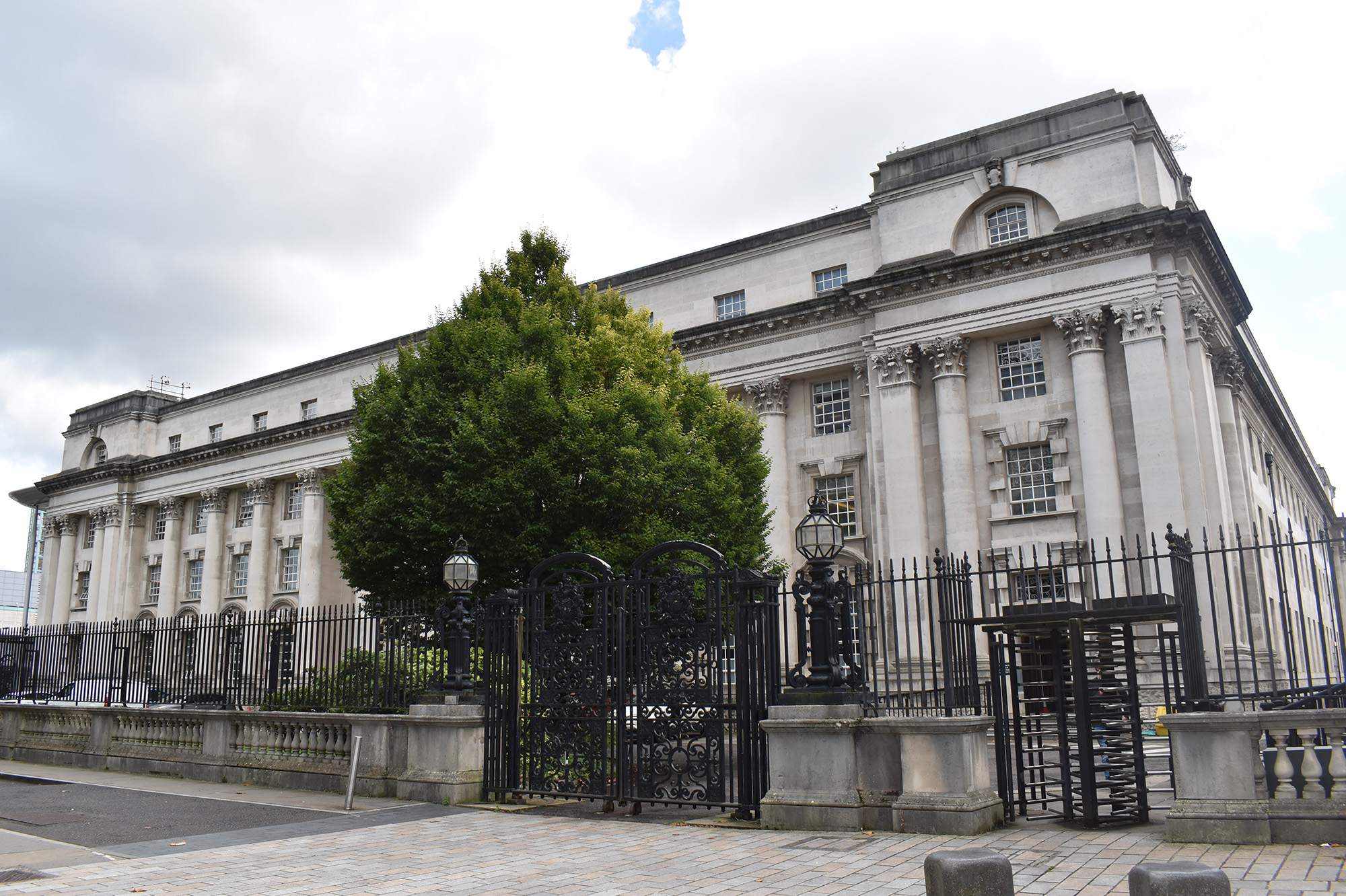
Northern Ireland’s High Court dismissed a remitted application for leave to apply for judicial review in dispute over Parade Commission’s decision to permit Orange Lodge procession on Garvaghy Road.

About this case:
- Citation:[2026] NIKB 55
- Judgment:
- Court:NI High Court
- Judge:Mr Justice Michael Humphreys
Delivering judgment for the High Court of Northern Ireland in September, Mr Justice Michael Humphreys highlighted that the jurisdiction to impugn public body decisions on the basis of rationality “is necessarily limited to cases where no reasonable decision-maker could have arrived at that outcome. In this case, that threshold, in my analysis, has not been met.”
Denise Kiley KC appeared with Bobbie-Leigh Herdman for the applicant instructed by Phoenix Law, Tony McGleenan KC appeared with Mark O’Hara for the respondent instructed by the Crown Solicitor’s Office, Peter Coll KC appeared with Terence McCleave for the PSNI notice party instructed by the Crown Solicitor’s Office, and John Larkin KC appeared with Emma McIlveen for notice party Alan Hynes, instructed by McIvor Farrell Solicitors.
Background
On 3 September 2026, Portadown District Loyal Orange Lodge No.1 notified the Parades Commission for Northern Ireland that a proposed procession down inter alia the Garvaghy Road would take place on 27 September 2026, comprised of approximately 60 participants carrying banners and flags and including two bands.
The Lodge had last taken this route in 1997 amidst serious violent disorder in the area, resulting in the parade being re-routed the following year and the precipitation of a stand-off between the Lodge members, their supporters, police and the area residents.
Since then, the Lodge repeatedly sought to parade down the Garvaghy Road each Drumcree Sunday, with the Commission imposing conditions which prevented this.
Following the Commission’s imposition of similar conditions on the proposed 2026 parade, the decision was quashed by the High Court on 25 August 2026 following an application for judicial review by a Lodge member.
The Commission, having received oral and written submissions from various parties, issued a determination on 25 September 2026 which imposed conditions relating to the time and manner of the parade down the Garvaghy Road, but not as to its route or location.
In its determination, the Commission stated inter alia that it considered the conditions to be the least restrictive alternative means to preventing disorder and protecting the rights and freedoms of others, and that the conditions constituted a fair balance which did not materially undermine the right to freedom of peaceful assembly.
This determination was challenged by way of judicial review, with Ms Justice Patricia Smyth adjourning the application and granting interim injunctive relief suspending the effect of the Lodge’s notice and the Commission’s decision until the application was determined.
On appeal, the Court of Appeal remitted the matter to the High Court, finding that the injunctive relief was vitiated by error of law as same effectively decided the judicial review application without a determination of its merits.
Grounds of challenge
The applicant’s first ground of challenge focused on the evidence upon which the public disorder determination was made and alleged that the Commission fell into error by failing to apply the correct statutory test focusing on the risk of violent disorder.
Secondly, the applicant contended that there was no proper analysis carried out by the Commission in respect of his rights pursuant to Article 8 of the European Convention on Human Rights (ECHR).
Thirdly, the applicant challenged the reasons given by the Commission as being defective on the basis that there was no explanation of the change of the Commission’s approach adopted over the last 28 years.
Finally, the applicant challenged the decision on grounds of rationality.
The High Court
Having set out the relevant statutory framework, Mr Justice Humphreys highlighted that the Commission, a body established by statute, is the specialist decision-maker in this area and that “it is well established that the courts ought to show an appropriate level of deference when exercising the supervisory jurisdiction in judicial review.”
Emphasising that the court on judicial review was neither acting as an appellate court nor conducting a merits-based review, the judge moved to consider the applicant’s first ground of challenge.
Noting the applicant’s contention that the Commission applied a test of certainty as to whether violent disorder would occur, rather than a test of risk to the question of public disorder, Mr Justice Humphreys was satisfied that the Commission did focus on the risk of public disorder and in assessing that risk, referenced the evidence received on the issue from different sources and applied what it believed to be appropriate weight to each.
Finding that the Commission had acted entirely in accordance with the statutory scheme and within its discretion, Mr Justice Humphreys turned to the rights issues raised.
The judge was satisfied that the Commission had carried out a balancing exercise, taking evidence from all relevant interested parties, informing itself about the interference that would occur and attempting to craft conditions to impose restrictions which would recognise the rights of Garvaghy Road residents and the right to freedom of assembly.
The court reiterated, “Where the primary decision-maker such as the Commission has undertaken an informed balancing of competing Convention rights, the court will attach substantial weight to that assessment and will be slow to interfere unless the balance struck falls outside the range of proportionate outcomes.”
As to the third ground, Mr Justice Humphreys observed that a reasons challenge, in line with South Bucks District Council v Porter (No 2) [2004] UKHL 33, will only succeed where an applicant can demonstrate that he was substantially prejudiced by a failure to give adequate reasons.
Noting that the threshold was not met as the Commission gave detailed written reasons referring to the statutory criteria and guidelines, the evidence received, the rights in play, the outcome and the reasons for it, the judge found that the reasons met the requisite standard of intelligibility and that there was “no doctrine of precedent applicable to Commission decisions and each of them has to take the necessary evidence of the circumstances prevailing at the given time.”
In respect of the final ground, the court outlined that where a specialist public body such as the Commission takes evidence from the relevant sources, weighs up the key issues in play and which arrives at a reasoned decision, it will be in a “rare case” that the court would intervene on grounds of rationality, and only where no reasonable decision-maker could have arrived at that outcome.
Finding that this threshold was not met in circumstances where the correct issues were identified, the guidance was followed and the approach of the European Court of Human Rights to the competing rights under Article 11 and Article 8 ECHR was adopted, Mr Justice Humphreys concluded that “this court cannot substitute its own view or anybody else’s view for that of the Commission.”
Conclusion
Accordingly, the High Court dismissed the application for leave to apply for judicial review.
In the matter of an application by Breandán MacCionnaith for leave to apply for judicial review and in the matter of a determination by the Parades Commission of Northern Ireland [2026] NIKB 55

Share this article:

Subscribe to our newsletter to not miss articles like this one:
 SUBSCRIBE

