


Analysis: How Sally Hayden’s journalism is shaping asylum law
 Reading time: 4 minutes
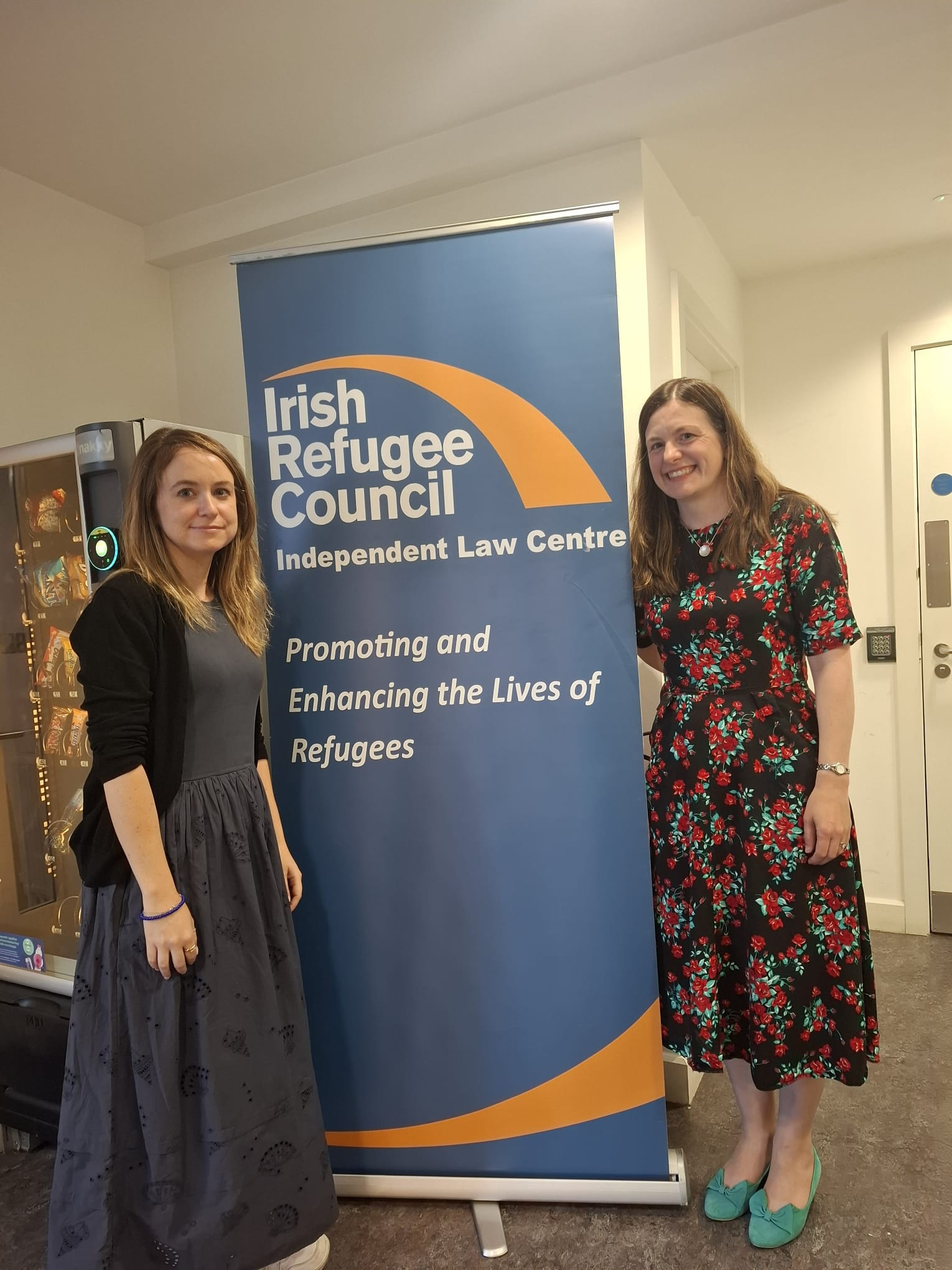
Sally Hayden and Katie Mannion
An event hosted by the Irish Women Lawyers Association and the Law Society explored how Sally Hayden’s reporting from conflict zones has informed refugee litigation, influenced policy debates and become an important resource for asylum practitioners assessing protection claims, write Lorraine Lally BL and Rapelang Molosiwa.
The Irish Women Lawyers Association (IWLA), in collaboration with the Law Society of Ireland, recently hosted award-winning journalist Sally Hayden for a discussion on her reporting from conflict zones and the themes explored in her books My Fourth Time, We Drowned and This Is Also a Love Story: Searching for Good in a Divided World. The conversation was conducted by Katie Mannion, managing solicitor of the Irish Refugee Council’s Independent Law Centre, whose extensive experience in refugee protection and strategic litigation brought a valuable practitioner perspective to the discussion.
Hayden’s work has made an important contribution to asylum and refugee law by documenting the experiences of migrants, refugees and displaced people in some of the world’s most challenging environments. Her Orwell Prize-winning My Fourth Time, We Drowned exposed the treatment of migrants and refugees in Libya, including detention, trafficking, abuse and the consequences of European migration policies. Her latest book, This Is Also a Love Story, examines resilience, solidarity and survival in communities affected by war, displacement and crisis.
For asylum practitioners, her work is particularly valuable in three respects.
First, it provides detailed evidence of conditions in countries of origin and transit. Reporting from conflict zones, refugee camps and migration routes offers contemporaneous accounts of persecution, violence, arbitrary detention, trafficking and state failure. Such material contributes to the country information relied upon by lawyers, tribunals and courts when assessing claims for international protection. Hayden’s reporting on Libya has been especially influential in highlighting the realities faced by migrants attempting to reach Europe.
Second, it assists in understanding credibility and human behaviour under extreme circumstances. During the discussion, Hayden reflected on examples from her reporting that challenge conventional assumptions about rational decision-making. She described situations where actions that might appear unusual when viewed from the perspective of a stable society were, in fact, reasonable responses to conflict, economic collapse or the absence of effective state protection. Such insights are particularly relevant in asylum cases, where credibility assessments often depend on an appreciation of the context in which individuals make decisions.
Third, investigative journalism can influence legal and policy debates. Hayden noted that her reporting has been relied upon in legal proceedings, including challenges to the United Kingdom’s Rwanda deportation policy, cases concerning Syrian refugee protection, proceedings before the International Criminal Court and other migration-related litigation. By documenting conditions on the ground and exposing human rights abuses, journalists can provide evidence that informs both litigation and policy development.
Another theme explored during the discussion was the importance of local understandings of justice and accountability. Drawing on her reporting from Northern Uganda, Hayden described how some communities affected by conflict prioritised reconciliation, reparation and reintegration alongside, and sometimes instead of, formal criminal punishment. These perspectives serve as a reminder that concepts of justice are often shaped by social and cultural context, an important consideration for those working in refugee and international protection law.
The discussion generated significant engagement among attendees, particularly on the evidential value of journalistic reporting in asylum and human rights cases. Questions focused on the use of investigative journalism in legal proceedings, the challenges of documenting abuses in conflict settings and the extent to which such reporting can contribute to accountability.
Hayden’s work demonstrates how journalism can bridge the gap between events on the ground and the legal frameworks used to assess protection claims. By providing evidence, context and insight into the lived experiences of displaced people, her reporting remains a valuable resource for practitioners, policymakers and decision-makers working in the field of asylum and refugee law.

Share this article:

Subscribe to our newsletter to not miss articles like this one:
 SUBSCRIBE