
Written by:

Gillian O'Hanlon BL
Case Reporter
Court of Appeal: Demoted legal researcher’s appeal dismissed
 Reading time: 5 minutes
Written by:
Gillian O'Hanlon BL
Case Reporter
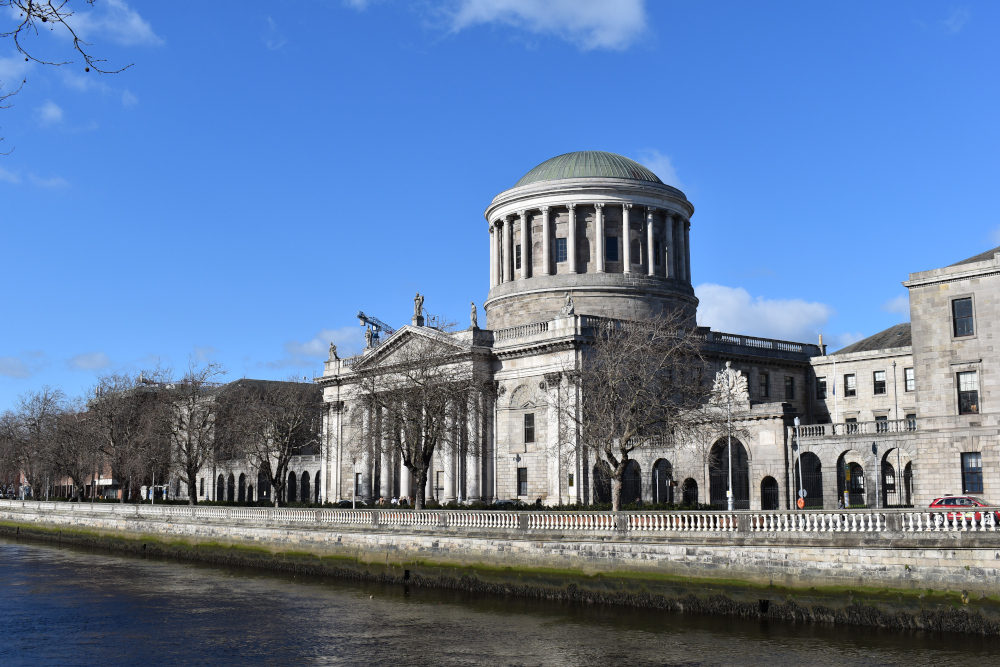
The Court of Appeal has upheld the High Court’s refusal to overturn a decision demoting a senior legal researcher to her former grade.

About this case:
- Citation:[2026] IECA 198
- Judgment:
- Court:Court of Appeal
- Judge:Ms Justice Niamh Hyland
Delivering judgment for the Court of Appeal, Ms Justice Niamh Hyland was satisfied that the secretary general “was entitled to proceed on the entirety of information before her, even where that information included disputed accounts of events”, was not bound to follow the recommendation of the Civil Service Appeals Board and had given adequate reasons for her decision.
Background
On 12 July 2021, the appellant commenced employment with the Department of Justice as a legal researcher.
In June 2023, the appellant was promoted to senior legal researcher. Her probation in her new role was governed by the 2019 Guidelines on the Management of Probation in the Civil Service which require three formal probation reviews conducted by a line manager, with the secretary general retaining authority to confirm or terminate the probationary appointment.
The appellant’s first probation review was conducted on 6 September 2023, three months following her official start date. She received a satisfactory rating.
Following the appellant’s six-month review, conducted on 19 December 2023, the appellant was notified that her performance was unsatisfactory.
The her nine-month review, conducted on 7 March 2024, the appellant received an unsatisfactory rating and her line manager recommended that she be reverted to the grade of legal researcher.
The appellant appealed to the Civil Service Appeals Board (CSAB) on 11 March 2024. The CSAB recommended that the appellant be confirmed in the position of senior legal researcher, having concluded that the appellant’s work was of a high standard and within acceptable limits.
The CSAB recommendation was added to the materials placed before the secretary general.
On 5 June 2024, having met with the head of HR and the principal officer, the secretary general determined that the appellant should be reverted to her previous grade of legal researcher pursuant to s.7(b) of the Civil Service Regulation Act 1956.
Thereafter, the appellant commenced judicial review proceedings seeking to quash the secretary general’s decision.
Her application for judicial review having been refused, the appellant appealed to the Court of Appeal.
The Court of Appeal
Ms Justice Hyland noted that the core issue on appeal was that the secretary general’s decision was not made in accordance with s.7 and that the trial judge erred in his treatment of the secretary general’s exercise of her powers.
The appellant alleged inter alia that the High Court was obliged to clarify that the material relied upon by the secretary general was capable of supporting her decision, and that this required examination of whether the factual allegations made by her line manager had any evidential foundation.
Asserting that the High Court had limited its inquiry to the mere existence of adverse material, without ensuring that such material was capable of evidencing the decision, the appellant alleged that the court departed from the principles articulated in State (Daly) v Minister for Agriculture [1987] I.R. 165, State (Lynch) v Cooney [1982] I.R. 337 and Used Car Importers Ireland Ltd v Minister for Finance & Ors [2020] IECA 298.
Having reviewed the evidence, the Court of Appeal was satisfied that sufficient facts existed to allow the secretary general to be satisfied that the appellant had failed to meet the probation conditions, and that the evaluation of those facts was a matter only for her.
Ms Justice Hyland explained, “The fact that there were conflicts in respect of certain events – which she knew about, given her receipt of the appeal material – did not prevent her from evaluating the material. The s.7 process, taking place as it does in a probation context, is not akin to a disciplinary process, where contested points generally require resolution.”
In the circumstances, the judge confirmed that the High Court had applied the appropriate legal test and that the appellant had failed to identify a legal error in the conclusion that the secretary general had adequate material before her to allow her to be satisfied that the appellant had not met the conditions of probation.
As to the appellant’s argument that the secretary general acted unreasonably in disregarding the CSAB recommendation, Ms Justice Hyland confirmed that the appeals process was based on the Guidelines, which clearly stated inter alia that the appeals process was a non-statutory procedure which did not affect the procedures under the 1956 Act and that any recommendation of CSAB was non-binding.
Turning to the alternative contention that the CSAB recommendation could only be departed from for a very good reason, as per Kelly v. Board of Management of St Joseph’s National School [2013] IEHC 392, Ms Justice Hyland considered that the appellant’s reliance on that case was striking where there was clear jurisprudence as to how the secretary general should exercise her power and on the limits of the court’s review of that power.
The Court of Appeal was further satisfied that the secretary general had given adequate reasons for her decision, finding that “the appellant knew precisely why the secretary general came to the opinion that her employment should be terminated, although she does not agree with that conclusion.”
The court highlighted that in particular, the secretary general had explained her concern about CSAB’s failure to deal with the conduct aspect of the line manager’s recommendation, the incomplete nature of the report and certain inaccuracies.
Being satisfied that the trial judge had not erred in that regard, Ms Justice Hyland did not propose to adjudicate on fair procedures arguments advanced by the appellant to the effect that she was not properly heard, where those grounds were absent from the Statement of Grounds, were not addressed in the Statement of Opposition and did not form part of the decision of the trial judge under appeal.
Conclusion
Accordingly, the Court of Appeal dismissed the appeal.
Mosepele v The Minister for Justice, Home Affairs and Migration [2026] IECA 198

Share this article:

Subscribe to our newsletter to not miss articles like this one:
 SUBSCRIBE