

Written by:

Gillian O'Hanlon BL
Case Reporter
UK Supreme Court: Coroner in Troubles inquest erred in deciding to disclose ‘gists’ of sensitive information
 Reading time: 8 minutes
Written by:
Gillian O'Hanlon BL
Case Reporter
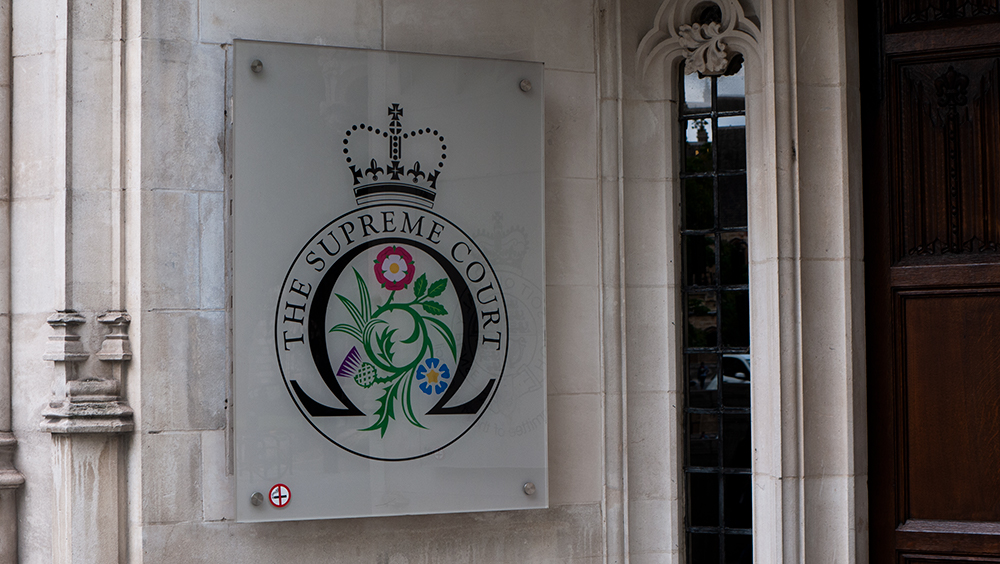
The UK Supreme Court has upheld an appeal against judgments of the High Court and Court of Appeal in relation to the disclosure in a Troubles-related inquest of “gists” of sensitive information over which public interest immunity was claimed.

About this case:
- Citation:[2025] UKSC 47
- Judgment:
- Court:UK Supreme Court
Delivering judgment for the UK Supreme Court, Lord Sales and Lord Stephens noted: “There is a single public interest, albeit composed of various aspects, and the task of the court performing the Wiley balancing exercise is to identify what it is. There is not a range of views about the public interest which the court has to consider so as to ensure it takes a view falling within that range.”
Background
On 27 April 1994, gunmen from the Springmartin Road side of a peace line which separates the nationalist Springfield Park neighbourhood from the unionist Springmartin Road area of West Belfast gained access to Springfield Park through a hole in the peace line.
The deceased, Liam Paul Thompson, was taking a lift home in a taxi driven by his friend when he was shot in the chest by the gunmen. The deceased was pronounced dead on 28 April 1994. The loyalist Ulster Freedom Fighters (UFF) subsequently claimed responsibility for the killing.
An inquest into the deceased’s death was opened in 1995. The hearing of evidence in the third and final module was listed to commence in February 2024, but due to the Northern Ireland Troubles (Legacy and Reconciliation) Act 2023, unless the coroner heard all the evidence by 1 May 2024, she would be unable to make a final determination, verdict or findings.
One issue for consideration in the third module was whether security forces had received information from an informer or other sensitive or secret information in connection with the deceased’s death, and the Ministry of Defence and the PSNI held documents which were relevant or potentially relevant to that question.
The Minister of State for Northern Ireland, representing the Secretary of State, certified that disclosing such documents would be contrary to the public interest in protecting national security, outweighing the public interest in open justice in an inquest. Accordingly, public interest immunity (PII) was claimed over the relevant documents.
The coroner upheld the PII claim, but decided that a gist or summary of the information in folder 7 of the documents would be disclosed and admitted as evidence in the inquest (Gist 1).
The Secretary of State and the Chief Constable issued judicial review proceedings in the High Court.
The High Court, in upholding the coroner’s decision, applied ordinary public law review standards, considering whether the coroner’s decision was procedurally unfair, unlawful or whether same was irrational having regard to Associated Provincial Picture Houses Ltd v Wednesbury Corporation [1948] 1 KB 223.
Following an exchange with the Chief Constable, the coroner then determined that a revised gist of folder 7 (Gist 2) should be disclosed instead, a decision challenged by the Secretary of State. The High Court upheld that decision.
Having unsuccessfully appealed to the Court of Appeal, the Secretary of State appealed to the Supreme Court, with the issue for consideration concerning the test to be applied when a court reviews a decision concerning, for example, the disclosure of a gist of information over which PII is claimed, and in particular, whether a court is restricted to reviewing the decision on ordinary public law grounds, or whether an enhanced standard of review is required as per R v Chief Constable of West Midlands Police, Ex p Wiley [1995] 1 AC 274.
The Supreme Court
Lord Sales and Lord Stephens considered that where PII applies, it is a matter of law that evidence is treated as inadmissible and that it is the court, rather than the public authority asserting the public interest, that makes the decision as to whether evidence is admissible or not, without any discretion.
Accordingly, the Supreme Court found it difficult to see how, on appeal or judicial review, the appropriate test for the court in deciding whether the first instance court acted in accordance with the law would be the test used for reviewing the exercise of discretion.
The court considered that the appellate or reviewing court must instead determine whether the first instance court has identified the relevant rule of substantive law and has applied it correctly.
In this regard, the court noted that the ultimate question for the court at first instance is where the public interest lies, determined by weighing the various aspects of the public interest as explained in Wiley.
The justices observed: “If the court which first performs the Wiley balancing exercise misidentifies the public interest, it has gone wrong in law and an appellate or reviewing court is required to correct its error.”
Noting that in assessing the extent of any prejudice to the public interest, the court should work on the basis of the assessment by the authority asserting PII subject to its compliance with normal public law principles, the Supreme Court explained that a first instance court, particularly a coroner, must also take great care to ensure that it is fully and accurately informed about the competing aspects of the public interest before reaching an overall conclusion as to disclosure.
Applying the relevant legal principles, the Supreme Court firstly determined that the coroner had failed to apply the correct test before departing from the assessment by the Minister and the Secretary of State regarding the nature and extent of the risk of damage to national security from disclosure of the documents.
The court considered that it was not correct for the coroner to have “proper regard” to the assertions in the Minister’s certificate, rather, the assessment should have been accepted unless there was no evidence in support of same or same was Wednesbury irrational.
Secondly, the Supreme Court found that absent any finding that there was no evidence supporting the Minister’s assessment or that the assessment was Wednesbury irrational, and having omitted to inform herself properly about the extent of any risk associated with disclosure of the gists, it was not open to the coroner to conclude that the gists mitigated or prevented any real risk of harm to the public interest.
The court also determined that absent a finding that there was no evidence to support the Minister’s assessment or that the assessment was Wednesbury irrational, in carrying out the balancing exercise the coroner ought to have, but failed to weigh in the balance that there was a real risk of serious harm to national security.
The justices further decided that the coroner erred in failing to obtain the views of the Minister or the Secretary of State prior to deciding to disclose either gist, where a high degree of care was required to be taken by the coroner to inform herself of the national security aspect of the public interest and where she was under a duty to protect national security.
The Supreme Court further identified that the coroner failed to take into account, in conducting the balancing exercise in relation to gist 2, that there was then no prospect of the evidence in the inquest being completed prior to the 1 May 2024 deadline.
In this regard, Lord Lane and Lord Stephens opined: “If the evidence was not completed then the coroner could not make a final determination, verdict or findings. That was clearly a material consideration in the balancing exercise which ought to have been but was not taken into account.”
The court also determined that the High Court and Court of Appeal erred in holding that the coroner enjoyed a discretion in respect of her determination of the public interest in applying the Wiley principles.
Lords Lane and Stephens explained:
“The Coroner had to determine whether there was evidence to support the Secretary of State’s assessment regarding the nature and extent of risk of damage to national security. The question there is whether there is or is not evidence. No discretion is exercised. She had to consider whether the Secretary of State’s assessment is Wednesbury irrational. That requires an evaluation, not the exercise of any discretion. In relation to the Wiley balancing exercise the Coroner had to determine whether the overall public interest was in favour of or against disclosure. Again, that is not an exercise of discretion. Rather, it requires an evaluation.”
The justices continued: “On judicial review the issue is whether deference should be shown for her evaluation or whether the reviewing court decides for itself whether her decision was right or wrong. As we have explained, it is the latter.”
Finally, the Supreme Court considered that the High Court and Court of Appeal incorrectly considered that they were restricted to reviewing the coroner’s decision on ordinary public law grounds, and that they should have formed their own view as to how the public interests should be balanced in the Wiley exercise.
Conclusion
Accordingly, the Supreme Court allowed the appeal, deciding that the balance of justice weighed against disclosure of either gist.
In the matter of an application by the Secretary of State for Northern Ireland for Judicial Review (Appellant) [2025] UKSC 47

Share this article:

Subscribe to our newsletter to not miss articles like this one:
 SUBSCRIBE