
Written by:

Review: The murky world of the ‘walk-in’ defectors
 Reading time: 3 minutes
Written by:
Two questions: who do you trust? Who do you really trust? If that is the first sift for the intelligence services, then it is notable that counter-espionage officers in MI5 had been long wary about disgruntled KGB officers claiming to be willing to betray their motherland.
That point from the prologue to a new book on espionage by Richard Kerbaj might be, as many things are in life, double-edged. Why should the KGB have necessarily trusted a number of disgruntled British chaps who claimed to be willing to destroy fascism or the west? In fact, many of them harboured grave doubts about the Cambridge Five et al.
Kerbaj has offered a study of the place of Oleg Lyalin in the world of national security. Lyalin sought to be ‘a walk in’; an intelligence officer who simply appears at the embassy or other place of another agency and offers his services in return for safety (and payment).
In setting the complicated scene, Kerbaj explains the origins of some of the intelligence agencies and their operatives; more particularly the work of Anatoly Golitsyn who as a walk-in provided priceless information about his former employers and their work.
No evidence could be uncovered that indicated that Golitsyn had been instructed by the KGB to defect for short- or long-term operational purposes; or that his story of himself and his defection are not true. In 1962 Golitsyn’s distrust of the KGB was aligned with that of the CIA.
Yuri Nosenko was another defector; in 1962 he approached an official at the American Embassy in Moscow and asked to be taken to meet a CIA representative. Two such sources of information were welcome, but false defectors were always to watched for.
Nosenko did not give up the Soviet Union. His debriefing impressed American investigators and he provided information that confirmed the genuine nature of his place and knowledge. He returned to his ordinary work with a means of communicating secretly with the Americans.
Senior counter-intelligence colleagues of the investigators thought that Nosenko was a plant, a deception agent. His simple reason for assisting, a payment of a small sum of money, was highly dubious. Similarities in the intelligence stories of Golitsyn and Nosenko were noted.
That was part of the startling story of a Soviet mission to plant fake Kremlin agents within British and American intelligence services; paranoia ensued, and led to doubts about a genuine defector, the former KGB officer Oleg Lyalin.
Once a sort of acceptance developed of the true intention of Lyalin to assist the west MI5 to rethink its relationship with the CIA. His defection discredited Golitsyn and ultimately damaged the reputation of the CIA head of counterintelligence, James Jesus Angleton.
Kerbaj has written an interesting but complex (for amateurs anyway) explanation of events: the latter point necessarily comes with the territory. Without writing so explicitly, the whole story demonstrates what must be a departmental problem of applied paranoia.
Yet, more specialist analysis of the book is available and can be found easily. The points made there about Kerbaj are his lack of sources, a failure to consult available papers and the continuing problem of crucial papers not being released by governments.
The reviewer in Studies in Intelligence recognises that there may be, and are, many who have not heard of some of the key players in all this, Golitsyn or Angleton. It is, however, damning with faint praise to say, Kerbaj has produced a good story, but he has.
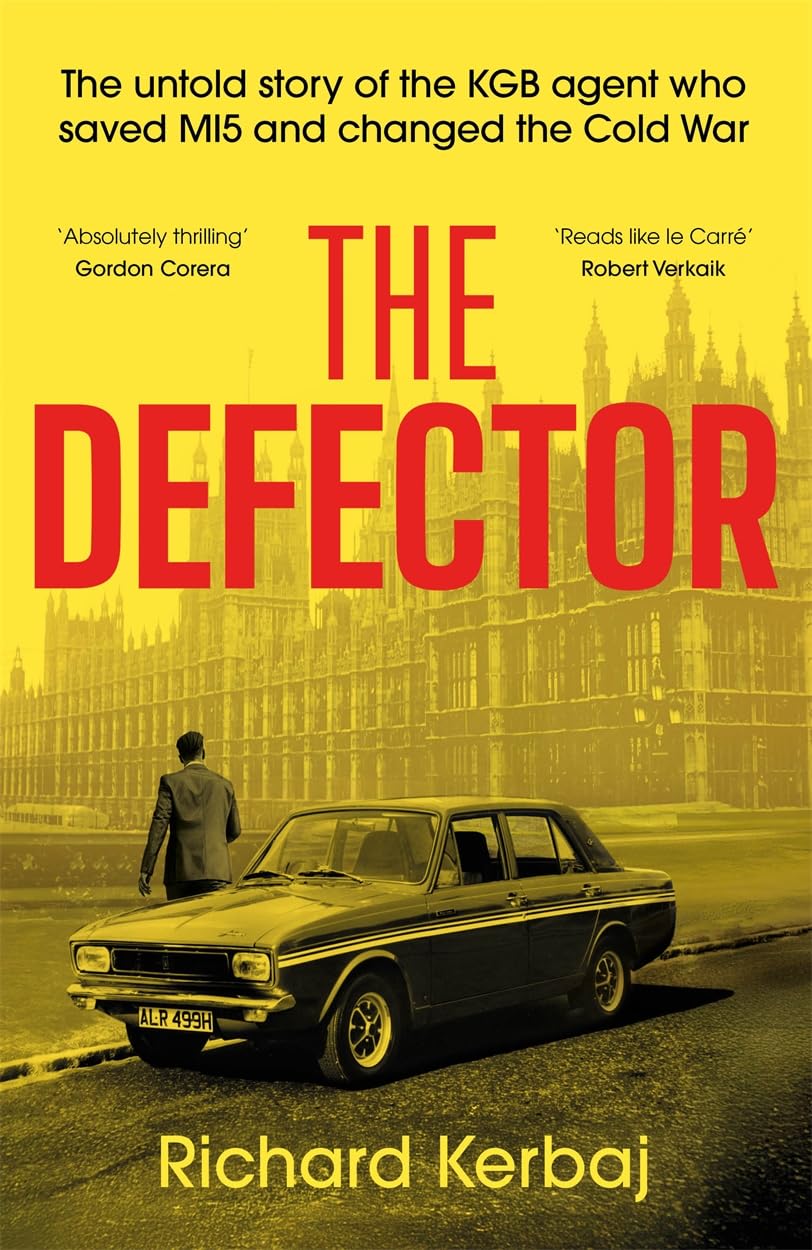
The Defector by Richard Kerbaj. Published by Blink Publishing, 304pp, £25.

Share this article:

Subscribe to our newsletter to not miss articles like this one:
 SUBSCRIBE