


Written by:

Review: The General Strike revisited one hundred years on
 Reading time: 4 minutes
Written by:
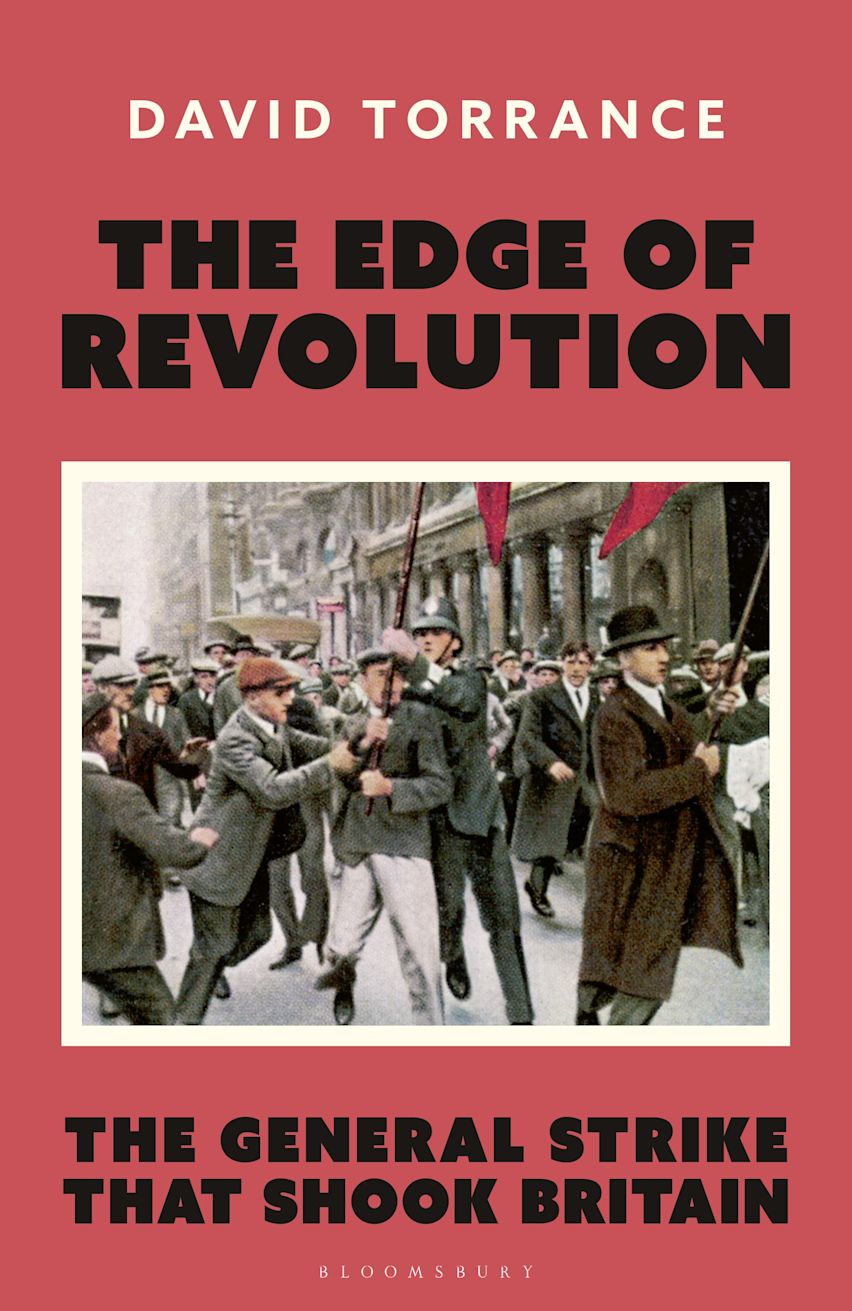
On Tuesday 4 May 1926, two million British workers withdrew their labour in one of the great failures of industrial management. Politically, many thought events were indicative of something sinister to come, a rising similar to the Russian Revolution of 1917.
The historic nature of the strike lay in the whole of society being deprived of gas and electricity; the buses, trains and trams all stopped; newspapers ceased publication; and workers absented themselves from mines and iron, steel and chemical works everywhere.
This concise work by David Torrance is not new history – the strike was a monumental action that immediately entered the national consciousness. Even though it lasted only nine days, it left a legacy of bitterness that, for generations, had a profound impact on politics.
Does the general strike resonate at all now? Torrance argues that the challenge for contemporary historians is to bring the world of 1926 back to life. There is more than ample material including ‘a batch of academic studies’ in 1976 on the fiftieth anniversary.
One major point about the anniversary of the general strike fifty years ago, and the literature then of the earlier event, was that there were still many private individuals and politicians alive who had experienced it closely or had even participated personally.
In 1976, the earlier general strike was still a potent political event: there seemed at junctures to have been no middle way. Even though it lasted only nine days, it left a legacy of bitterness; and such subjectivity may have had an influence on the history.
Torrance has written a balanced introduction to the event. That is important as the central problem of the complex political action was the mutual intransigence of miners and mine-owners. Each side was bound to have rejected any conciliatory offer by the other.
There was also a degree of misapprehension: the mine-owners seemed to have been sure that the strike was a signal for a political revolution that was to follow. The miners’ unions did not emphasise sufficiently the battle was indeed centred on maintaining pay and conditions.
This was not an event that could be described as an intellectual battle of wits: Torrance does not hide from the violence known to be associated with the strike. There were many arrests and prosecutions, he asserts that these were often for tenuous reasons.
That was matched by minor vandalism that moved on to serious criminal damage, including the derailing of the Flying Scotsman that resulted in convictions carrying sentences of penal servitude and a campaign to free those responsible lasted for years.
Emphasising then that the strike was not merely gesture politics, as there was too much at stake, Torrance shows how the effects of modernity affected the outcome; increased motor car ownership, for example, diminished railway dependency for many to get to work.
The rounded view of the general strike includes a recognition of the constitutional position of matters, including the inherent legality of the event and its various parts, discussion of which at the time became a lightning rod for political attitudes.
A concluding chapter surveys the general strike overall. The failures amounted to the government intervening too little and too late; the trade unions lacking a clear goal; and the miners believing that compromise could be avoided indefinitely.
Yet, it is to be recalled that the general strike of 1926 was followed by the Wall Street crash in 1929. The latter led to extensive, prolonged economic depression with mass unemployment internationally. This era was a continuously difficult time for everyone.
The Edge of Revolution: The General Strike that shook Britain by David Torrance. Published by Bloomsbury, 304pp, £20.

Share this article:

Subscribe to our newsletter to not miss articles like this one:
 SUBSCRIBE