


Survey: Planning consent delays threaten infrastructure delivery despite stronger investor confidence
 Reading time: 3 minutes

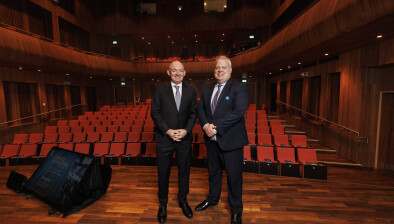
Alasdair Henderson, BAM UK & Ireland's executive director of BAM Ireland; Peter Rowe, executive director, Morgan Stanley and Vanessa Byrne
Planning consent delays remain the biggest barrier to infrastructure delivery in Ireland, despite stronger investor confidence and a series of reforms aimed at speeding up delivery, a new Mason Hayes & Curran survey has found.
The survey, based on 300 stakeholder responses at the firm’s Built Environment Summit, showed that two-thirds (66 per cent) see consenting delays as the main barrier to delivery. Procurement was selected by 14 per cent, followed by funding certainty at 12 per cent and workforce capacity at eight per cent.
The findings also show improved investor sentiment towards Ireland. Seven in 10 respondents (70 per cent) said their confidence in Ireland as an investment destination is higher than 12 months ago.
Vanessa Byrne, partner and co-head of real estate at Mason Hayes & Curran, said: “Ireland does not lack infrastructure ambition or investment appetite. The real test is whether projects can move through the consenting pipeline with enough certainty to attract capital and sustain investor confidence.
“In our work advising stakeholders on major infrastructure and real estate projects, we are seeing continued international interest in Ireland. However, delivery and consenting timelines are facing closer scrutiny. Today’s discussions showed the scale of the opportunity ahead, along with the need for greater certainty if Ireland is to deliver on its infrastructure plans.”
The results follow a series of positive policy and legislative interventions aimed at speeding up housing and infrastructure delivery, including the Accelerating Infrastructure Report and Action Plan, the updated National Development Plan, the Critical Infrastructure Bill and reforms to the Planning & Development Act.
Only one in five respondents said Ireland is trying to deliver too many major projects at the same time, showing there is wide support for significant investment in infrastructure.
Instead, the concern is whether projects can move through the consenting system fast enough to support growth. Energy and transport were seen as the main infrastructure constraints on economic growth, with more than four in ten respondents selecting energy capacity (42 per cent), followed closely by transport connectivity (41 per cent). Water capacity was selected by almost one in five (17 per cent).
David Gunn, partner in the construction, infrastructure and utilities team at Mason Hayes & Curran, said: “The results show strong support for the scale of Ireland’s infrastructure plans. The market is saying that projects need a clearer route through the approvals process, planning and delivery. Planning delays and judicial reviews affect the whole commercial case for major projects. They add cost, extend timelines and make it harder to secure contractors and capital. Our water, energy and transport systems also have a direct bearing on Ireland’s capacity for growth. Delays in these areas affect where homes can be built and where businesses can invest.”
Almost half (49 per cent) of respondents said the availability and scale of opportunities is the biggest obstacle to commercial property investment in Ireland. A third (33 per cent) pointed to the pricing gap between buyers and sellers, with 18 per cent citing interest rate uncertainty.
Alan Burns, partner in the financial services team at Mason Hayes & Curran, commented: “In a smaller market like Ireland, a shortage of suitable assets can hold back activity even when confidence improves. Investor appetite is there, but it needs somewhere to go.
“We are advising local and international investors who are looking for projects large enough to justify serious capital and realistic enough to get built. That means reducing delivery risk and bringing more viable projects to market.”

Share this article:

Subscribe to our newsletter to not miss articles like this one:
 SUBSCRIBE