



Written by:

Review: How Germany tamed the Baader-Meinhof gang
 Reading time: 5 minutes
Written by:
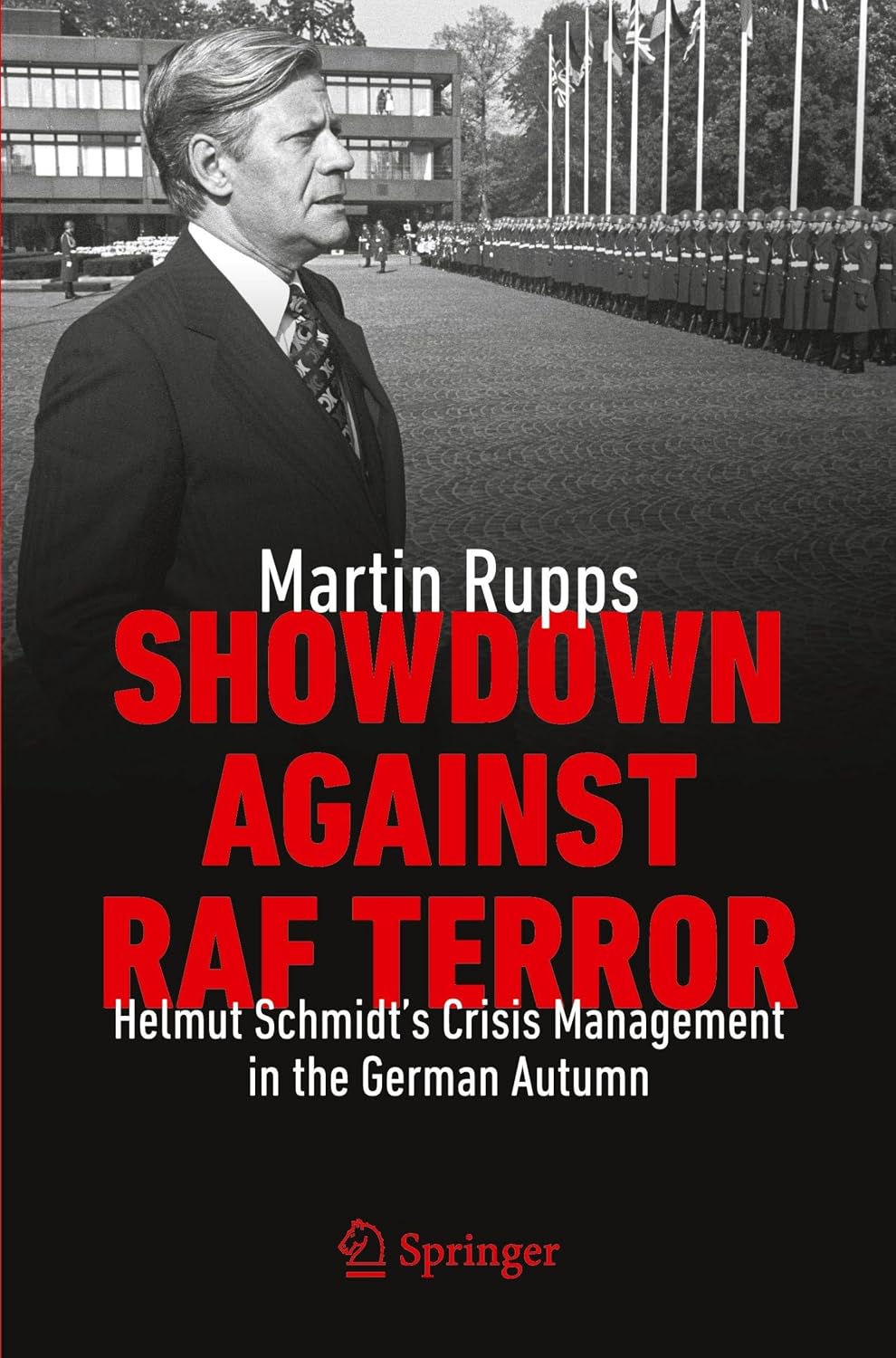
Please note a preliminary point: the title of this book refers to ‘RAF Terror’. The list of abbreviations in the book does not assist the reader with the relevant meaning of ‘RAF’. There is only a brief mention of the full name of the organisation well into the book.
The particular RAF here was the once well-known Red Army Faction, a West German far-left militant group active from 1970 to 1998: it was known for bombings, assassinations, and kidnappings aimed at challenging what it saw as a fascist state.
The politics of the RAF were those of destroying a capitalist and inhumane system, necessarily they thought, by means of violence against the state and the individual. There were only a few main or core RAF participants but they were assisted by a sizeable number of sympathisers.
The RAF, also referred to in the media as the Baader–Meinhof Group, was founded in 1970 by Andreas Baader, Ulrike Meinhof, Gudrun Ensslin, and Horst Mahler, emerging from the radical student protest movements of the late 1960s in West Germany.
Political and security matters have moved on since the RAF was active, at least a generation ago. In a crowded field, there have been many other terror organisations. The RAF, however, seem to have set the European standards of executive dilemma.
They carried out a sustained campaign of terrorism, included bombings, assassinations, kidnappings, and bank robberies. The peak of activity was known as the German Autumn of 1977. In that year, the German industrial leader was kidnapped and later a plane was hijacked.
On 13 October 1977, the Lufthansa twin-engine, short-haul, aircraft, named ‘Landshut’, to fly from Palma de Mallorca to Frankfurt am Main in 135 minutes. The 86 passengers and five crew (less some too injured to fly immediately) reached their destination 105 hours later after a diversion to several countries.
Hanns-Martin Schleyer, the industrialist, was murdered by his abductors, as was Jürgen Schumann, the Lufthansa captain. The ‘Landshut’ hostages were freed dramatically by state intervention. All these events gave the Federal Republic of Germany in world view a serious test of crisis management.
Martin Rupps is a political scientist and historian, and in his book, he offers insights into the thoughts and actions of Chancellor Helmut Schmidt and the members of the core and extended crisis teams of the West German government.
The narrative is seriously interesting for those who might recall the story, and others who do not. It was reported at the time as a wholly new development in criminality with added political motivations. The resolution of the immediate issues was not awash with precedents.
The German government had two problems: first, the RAF had abducted and threatening the life of a serious trade representative in society. Secondly, some Palestinians who were sympathetic to the RAF hijacked a plane and threatened the crew and passengers.
Rupps is good on the details of the hijacked plane passing through various airspaces while, and its scarcely believable now, trying to find an airport to land. The lax preparation of the whole hijacking venture is exposed in these events.
Any political inconsistencies between the groups were irrelevant: the consistencies were that they threatened the credibility of the state to deal with them. That was the deeply political point facing Helmut Schmidt.
The concluding view of this book is, as understood by your reviewer, that the collegiate view of the inner and larger advisory groups of German government was resolved not to accede to any political demand made under threat, even although lives were at risk.
Collegiate views are a safety net but ultimately the decision on the balance of relevant issues lay with Helmut Schmidt as Federal Chancellor. In later life he talked of the moral dilemmas of the time. However, it seems then that he was resolute: the Prussian idea of reasons of state prevailed, even at the risk to individuals.
The lessons of the story include the tone of the rhetoric of the political leadership when announcing matters to the public; the free discussion necessary at executive level when dealing with the crisis; the necessity of a collegiate style of decision-making; and the sensitivity necessary with the nearest relatives of any hostages.
These may be early issues for security people, as suggested earlier, and overtaken by events since but the book is still important in laying out the nature and extent of decision-making that may at a moments notice be put before our elected representatives.
The main problem for the general reader of English text is that the book needs a more rigorous translation. As the admirable Helmut Schmidt might have said of the text: “Es ist gut, aber nicht gut genug”.
Dear reader, that means via Google translation services, possibly used extensively by Rupp; “It’s good but it’s not good enough.” Rupp with a good narrative, sadly, has sold himself short: “Er hat sich selbst unterschätzt”.
Showdown Against the RAF Terrorists: Helmut Schmidt’s Crisis Management in the German Autumn by Martin Rupps. Published by Springer, 288pp, £20.99.

Share this article:

Subscribe to our newsletter to not miss articles like this one:
 SUBSCRIBE