

Mason Hayes & Curran: Four in five back mandatory refunds for payment scam victims
 Reading time: 3 minutes
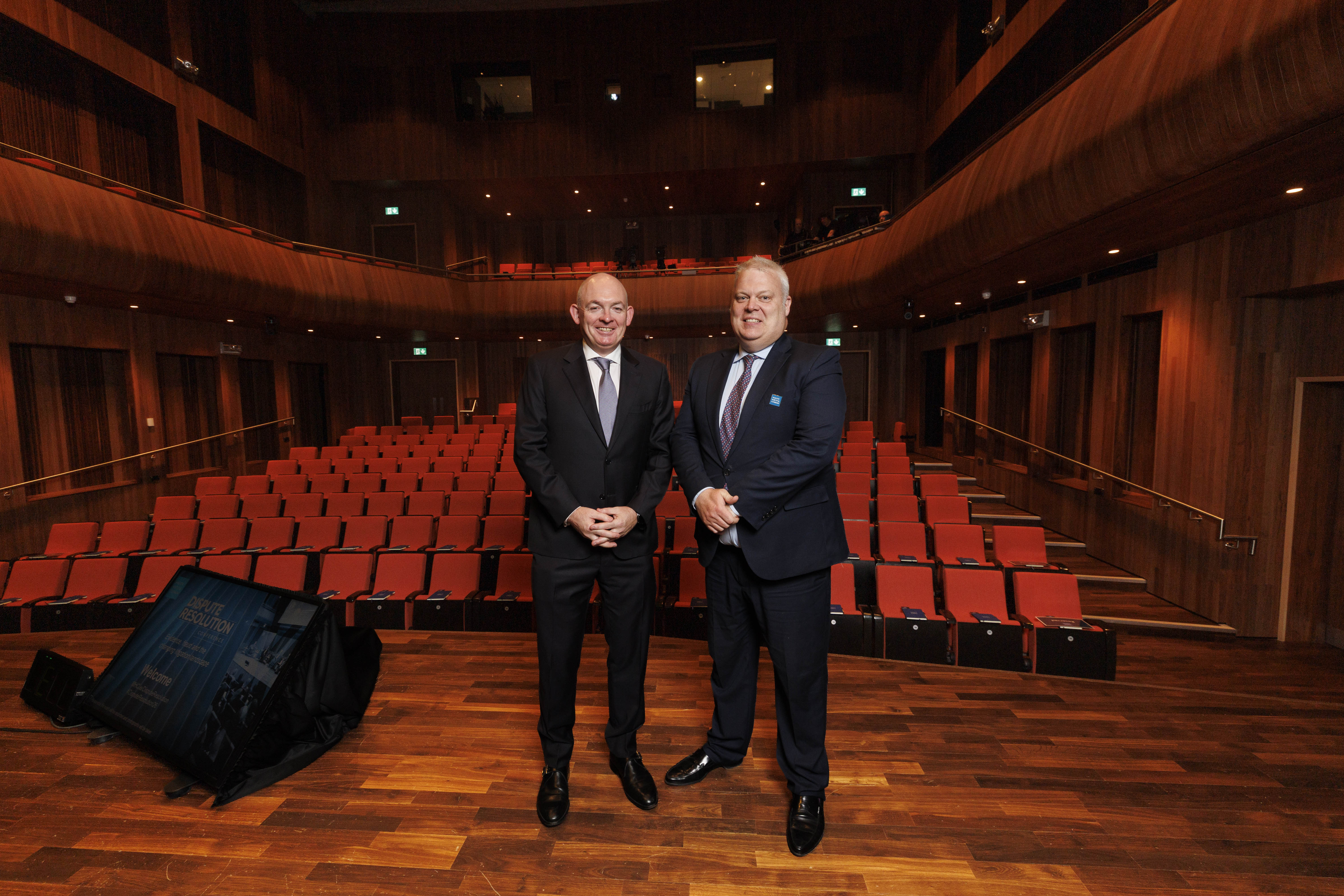
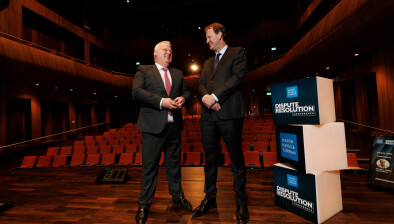
Attorney General Rossa Fanning SC and Gerard Kelly SC
More than four in five legal and business professionals (81 per cent) believe Ireland should introduce mandatory refunds for victims of payment scams.
The finding comes from a poll of over 100 attendees at Mason Hayes & Curran’s annual Dispute Resolution Conference. Respondents were asked about authorised push payment (APP) fraud, where people are deceived into sending money to criminals.
Such fraud reached €74.86 million in 2025, according to Central Bank figures published in September. Total payment fraud rose 27.2 per cent to €179.04 million.
Gerard Kelly SC, partner and co-head of dispute resolution at Mason Hayes & Curran, said: “Someone who has been deceived into transferring money can face a difficult legal battle to recover it. A reimbursement scheme would give eligible victims a more direct route to getting their money back. Any Irish scheme would need careful consideration of who qualifies and how the cost is shared. Its treatment of payments sent abroad would be particularly important.”
The UK introduced mandatory reimbursement for eligible APP fraud claims in October 2024, covering transfers through specified domestic payment systems.
More than half of respondents (54 per cent) believed responsibility for payment fraud should be shared.
Conor O’Leary, dispute resolution partner at Mason Hayes & Curran, commented: “By the time a victim instructs their bank to transfer money, the fraudster may have spent weeks earning their trust. A convincing investment website or an intercepted supplier email can make a fraudulent payment appear entirely legitimate. Preventing these scams requires information to move quickly between banks and those who first identify the deception. Online platforms and telecommunications providers also have a role in stopping criminals from reaching potential victims.”
Strong support for joint experts to reduce costs
Almost nine in ten respondents (88 per cent) said they would use a court-appointed joint expert if doing so reduced costs.
Gearoid Carey, dispute resolution partner at Mason Hayes & Curran, said: “Paying for competing expert reports can add substantial expense to a dispute, particularly where there is considerable common ground. A court directed joint expert could reduce duplication where the parties need an independent answer to the same technical question. The suitability of that approach depends on the case. Where separate experts are needed, pre-trial engagement between the experts can narrow the disagreement and avoid spending court time on undisputed points.”
Disclosure matters when it comes to AI trust
Six in ten respondents (60 per cent) said they would trust an AI-assisted expert report to the same degree if the use of AI was properly disclosed.
Gerard Kelly SC added: “Disclosure matters because those assessing an expert report need to understand how it was prepared, including the role of AI. The expert must be able to explain the reasoning and stand over the sources relied upon. Lawyers instructing experts should ask how AI contributed to the report and how its output was checked. Indeed, it is now a requirement under a court practice for expert reports to identify the use of AI. An error that survives into evidence can damage the expert’s credibility and the case that depends on it.”
Attorney General Rossa Fanning SC delivered the opening keynote at the conference on technology and dispute resolution, held in Dublin on Wednesday 30 September.

Share this article:

Subscribe to our newsletter to not miss articles like this one:
 SUBSCRIBE