


Legal Aid Board marks 40 years of Family Mediation Service
 Reading time: 2 minutes
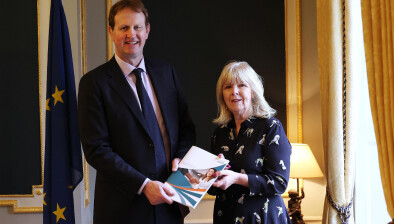
The Legal Aid Board has marked the 40th anniversary of its Family Mediation Service (FMS), celebrating four decades of supporting families across Ireland through some of life’s most challenging transitions.
Established in 1986, the Family Mediation Service has become a cornerstone of family justice in Ireland, providing a free, confidential and impartial service to couples who are separating, divorcing or living apart. Through mediation, families are supported in reaching mutually acceptable agreements regarding parenting arrangements, finances, property and other issues arising from family breakdown.
Over the past 40 years, the service has evolved in response to the changing needs of families and society. What began as a pioneering initiative has grown into a nationwide service delivered by highly trained mediators committed to helping families resolve disputes constructively and minimise conflict.
Speaking at the celebration, the Legal Aid Board’s CEO Joan Crawford said: “It is a great pleasure to mark 40 years of the Family Mediation Service and to recognise the contribution of the many people who have supported and developed the service over four decades.
“At its core, mediation is about human connection. It creates a space where people can speak and be heard, listen differently and find common ground when relationships have become strained. It helps families move forward, not as opponents, but as parents and individuals who must continue to navigate life together.”
Going on to highlight the impact of the Legal Aid Board’s Family Mediation Service on the justice sector as a whole, Ms Crawford continued: “If we believe in the value of mediation, we must also ensure that more people know about it. Too many people still do not fully understand what mediation is, how it works, or how it can help them.
“We need clearer pathways into mediation and stronger connections between legal services, court services and mediation services, so that people encounter mediation earlier, before positions become more entrenched and conflicts more difficult to resolve.”

Share this article:

Subscribe to our newsletter to not miss articles like this one:
 SUBSCRIBE