
Legal leaders urge major expansion of community law centres
 Reading time: 5 minutes
Ireland can and should do more to meet the legal needs of under-served people, a panel of legal experts has said, with consistent funding required to ensure that every county has its own free community law centre.
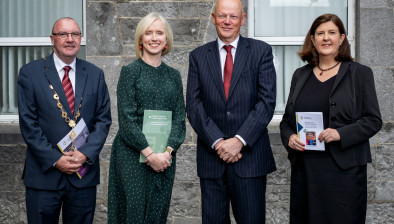
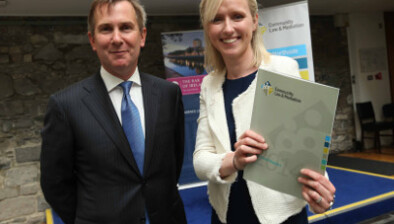
Speaking at the launch of legal and advocacy group Community Law & Mediation (CLM)’s 2025 Annual Impact Statement yesterday, President of the Law Reform Commission, the Honourable Mr. Justice Frank Clarke SC, said that ensuring access to justice and ensuring legal assistance for those who need it requires a “significant expansion of community law centres and proper funding for those centres.”
Furthering his remarks, the Honourable Mr. Justice Clarke, a former Chief Justice of Ireland (2017 to 2021) who also serves on the board of CLM, highlighted the positive impact that community-based legal groups have, including “the ability to reach places that a state-organised system finds more difficult to.” However, he cautioned that consistent funding is needed to ensure Ireland can provide a basic level of equal access to legal services.
“One of the things that has most struck me as a member of the Community Law & Mediation board is the precarious nature of our funding. There is no doubt that if we had more secure resources over a period of time, we would be able to enhance the work we do in essential areas, and to add some additional areas.”
Discussing the importance of equality of access to justice, President of the High Court, the Honourable Mr. Justice David Barniville, remarked, “A society committed to the rule of law must concern itself not only with the rights it confers, but with whether people have a meaningful opportunity to exercise those rights in practice.” He noted, “Community legal education, outreach services, early legal advice, advocacy and mediation help people to understand their rights, address difficulties at an earlier stage and, where possible, prevent problems from developing into crises. That preventative function may not always be the most visible aspect of access to justice, but it is often among the most valuable.”
Speaking about Community Law & Mediation’s work specifically, he said: “The Annual Impact Statement details a jaw dropping amount of work undertaken by CLM and its volunteers in 2025 and records assistance having been provided in more than 4,000 legal matters during 2025 across a broad range of areas, including housing, homelessness, employment, social welfare, equality and children’s rights (as well as work done in the environmental field and climate justice).
“Particularly striking is the fact that 43 per cent of the organisation’s advocacy work related to housing and homelessness. Behind these figures are individuals and families seeking to address difficulties that can have profound consequences for their daily lives and wellbeing.”
Both experts’ comments were echoed by acting CEO of CLM, Louisa McGeehan, and managing solicitor for the organisation, Jane O’Sullivan, with both calling for an expansion of the community law centre model across Ireland, particularly in light of rising inequality, poverty, and inadequate access to justice.
“In addition to reform of the civil legal aid scheme and improving access to justice for the people that we work with, which has always been an overarching theme of our law reform work and of our casework, we’re regularly serving people for whom civil legal aid is just not an option,” Ms. O’Sullivan explained, noting the lack of legal aid available for Workplace Relations Commissions (WRC) cases – including for employment cases and all discrimination cases under the Equal Status Act – some environmental claims, the Residential Tenancies Board (RTB) and social welfare appeals.
“In practical terms, what that means is that, for example, a family who is left with no choice but to take a case under the Equal Status Act for failure to provide education for their autistic children is not entitled to legal aid. This leaves families with no option but to try and represent themselves in really complex and stressful cases, often against full legal teams. It also leads to many workers on very low wages having no choice but to represent themselves against large corporations with very expensive legal teams, when their employment rights are violated.”
Expanding the reach of free legal advice centres, such as CLM, is vital to help in such cases, Ms. McGeehan explained. “The community model works so well by integrating across a range of services and needs. The work of CLM in bringing together advice, advocacy and representation along with mediation, policy influencing and strategic litigation, is vital to make the changes that we want to see for the benefit of those who rely on our services.”
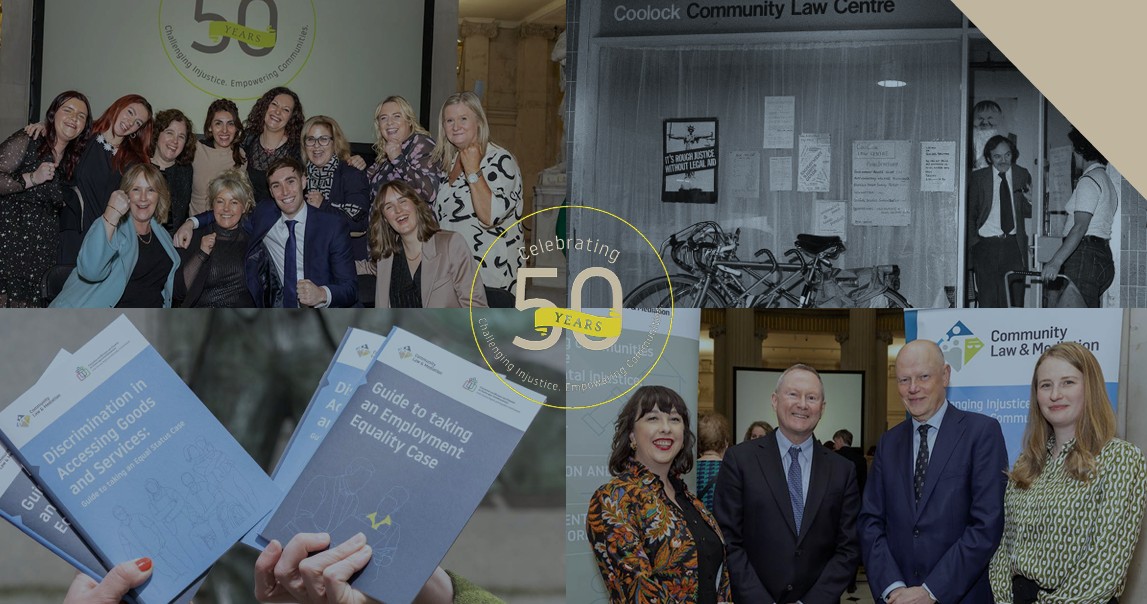
CLM is an independent community law centre and charity, working since 1975 with communities impacted by disadvantage and inequality. They provide free legal, mediation and education services and work in partnership with a number of organisations to provide targeted outreach services. They currently operate out of two locations, Dublin and Limerick, but services are available nationwide.

Share this article:

Subscribe to our newsletter to not miss articles like this one:
 SUBSCRIBE