

Law Society tells judge it has no power to appoint prisoner’s solicitor
 Reading time: 4 minutes
Rosemarie Loftus
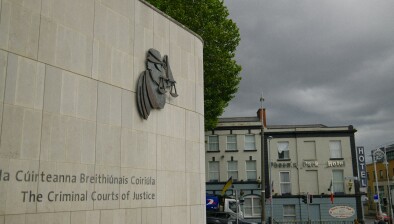
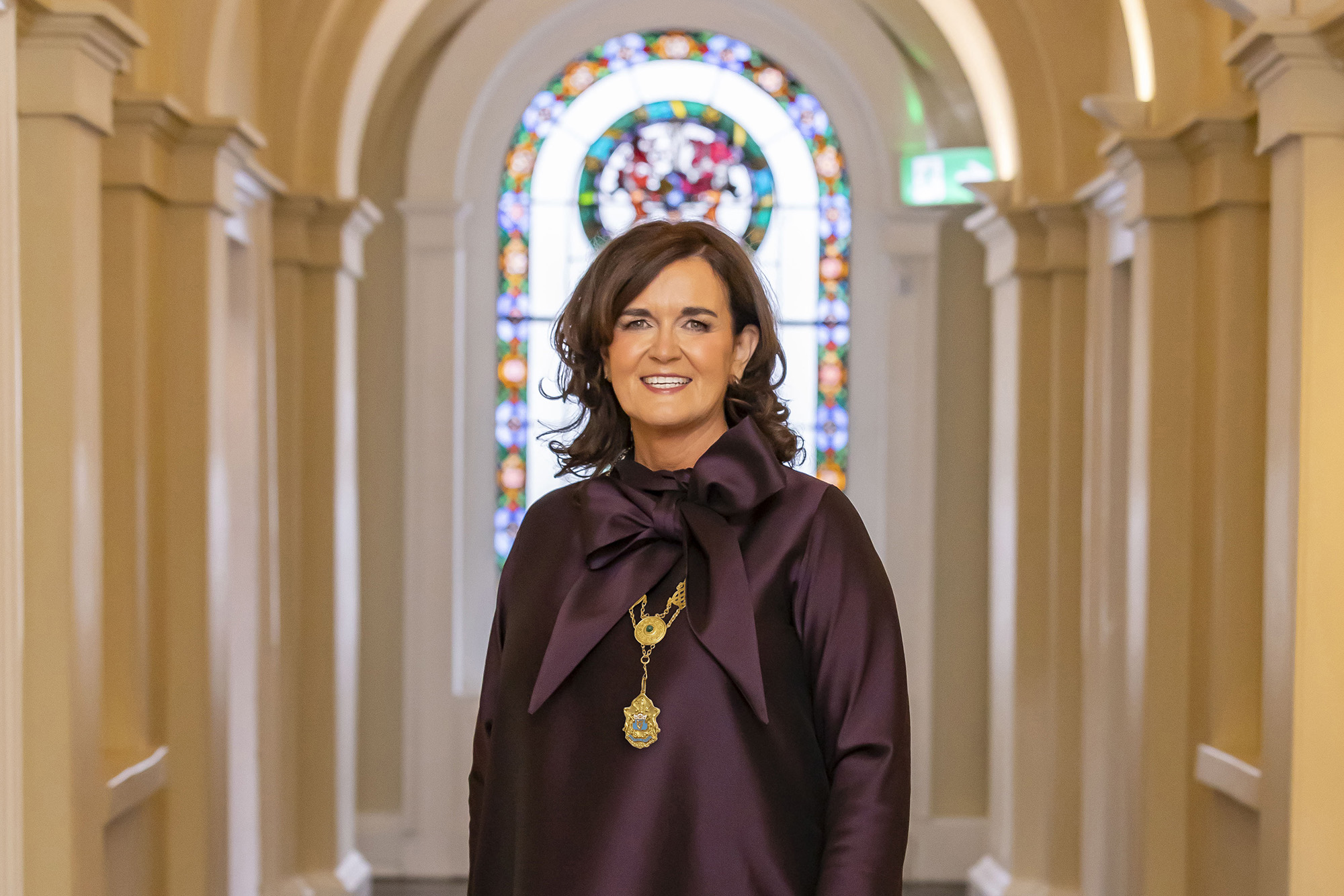
President of the Law Society of Ireland, Rosemarie Loftus, has responded to a judge who ordered that a letter be sent to the society asking it to nominate a solicitor for an unrepresented prisoner amid the ongoing solicitors’ withdrawal of services.
Ms Loftus stated that the society lacks the authority to assign solicitors to defendants and that this is not the institution’s role.
Sitting at Cloverhill District Court, Judge Alan Mitchell, had commented that when doctors and nurses go on strike they always provide cover and that when he had been in practice the Law Society could nominate a solicitor to act for a defendant if they could not secure representation.
Criminal defence solicitors are continuing their withdrawal of services in opposition to the “one accused, one fee” model that was introduced by justice minister Jim O’Callaghan on 1 July.
Under the new scheme solicitors will receive one fixed fee of €520 for representing a legally aided person before the District Court. Previously solicitors were paid €239.38 for a first appearance and €59.86 for each subsequent appearance.
Mr O’Callaghan has already introduced changes to the scheme allowing the payment to be split, with two thirds to be paid at the start of a case. However, the dispute remains ongoing.
Mr Nasim Sulemankhil, 27, was originally before Cloverhill District Court on a charge of possession of a knife, but this was upgraded to affray and production of a flick-knife which the Director of Public Prosecutions determined serious enough to be heard before the Circuit Court. As the new charges come under the new legal aid payment scheme Mr Sulemankhil now has no solicitor to represent him.
Judge Mitchell authorised a letter to be sent to the Law Society requesting that it nominate a solicitor to act for Mr Sulemankhil.
Ms Loftus stated in her response to Judge Mitchell: “It would be inappropriate of the Law Society to nominate a solicitor to act for a particular individual. More fundamentally, such an action would fall outside the powers conferred upon the Law Society by statute and would therefore be beyond its legal authority.”
Judge Mitchell stated that he found the response “regrettable and very unfortunate” adding: “I made reference to circumstances where groups, maybe providing essential and urgent services, even if they were on strike, would arrange for a minimal level of cover to be available. I mentioned if doctors or nurses were on strike, or fire officers. It is always an understanding that there should be some minimal level of service provided for essential services. I would consider legal representation of someone who is in custody an essential service.”
Judge Mitchell continued: “I would have hoped as a result, even if there was a dispute, that the Law Society, as a representative body, and the various solicitors involved, would have agreed that a minimal level of service for people who are in custody, to enable them to be represented – to enable a bail application to be made on their behalf, where they might get released as a result, would be possible to be made.”
Judge Mitchell read portions of Ms Loftus’ letter to the defendant wherein she welcomed the judge’s concern about access to legal representation, but stressed that, pursuant to the Criminal Justice Legal Aid Act 1962 “responsibility for ensuring that persons appearing before the criminal courts have access to legal representation is a constitutional and statutory responsibility solely of the State”.
Ms Loftus added: “The provision and administration of the criminal legal aid scheme are matters for the Minister [for Justice] and the Department [of Justice], and not the Law Society. It has no role in assigning, appointing, nominating or directing individual solicitors to act for individual defendants under the criminal legal aid scheme. Indeed, the Society is precluded from intervening in the creation of a solicitor-client relationship”.

Share this article:

Subscribe to our newsletter to not miss articles like this one:
 SUBSCRIBE