

Written by:

Gillian O'Hanlon BL
Case Reporter
High Court: New criminal legal aid regulations “illogical” and “grossly unfair”
 Reading time: 6 minutes
Written by:
Gillian O'Hanlon BL
Case Reporter
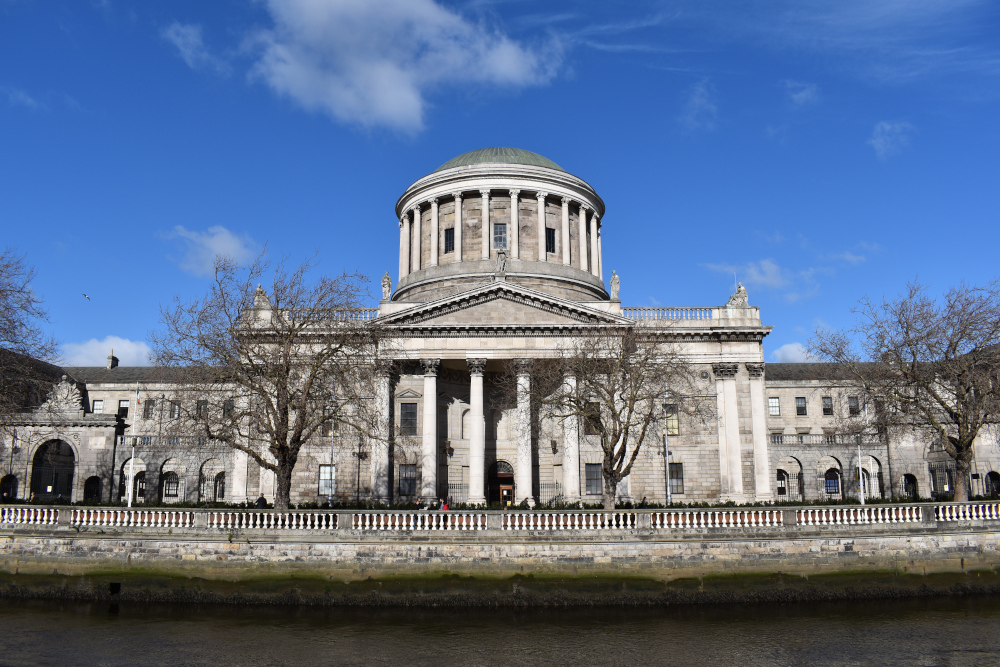
The High Court has determined that certain of the hotly disputed criminal legal aid regulations introduced in July 2026 are illogical and grossly unfair.

About this case:
- Citation:[2026] IEHC 723
- Court:High Court
- Judge:Ms Justice Mary Rose Gearty
Delivering judgment for the High Court, Ms Justice Mary Rose Gearty considered that the provisions were grossly unfair and illogical in providing for a single payment at the point when a final order is made and in requiring certification based on the time of the listing of cases alone.
Mr. Feichin McDonagh S.C. and Mr. Karl Monahan B.L. appeared for the applicant, instructed by John M. Quinn & Co., Mr. Eoin McCullough S.C. and Mr. Davy Lalor B.L. appeared for the respondent, instructed by the Chief State Solicitor’s Office, and Mr. Shane Murphy S.C. and Mr. Frank Kennedy B.L appeared. for the notice party, instructed by Ms. Elise Martin Vignerte, the Law Society of Ireland.
Background
The applicant, a solicitor practising mainly in the field of criminal law, removed his name from the Criminal Justice Legal Aid Panel following the introduction of the Criminal Justice (Legal Aid) (Amendment) Regulations 2026 (S.I. 303 of 2026) on 1 July 2026.
Prior to that date, the State’s Criminal Justice Legal Aid Scheme was provided for by the Criminal Justice (Legal Aid) Regulations 1965 (S.I. 12 of 1965).
The effect of the 2026 Regulations was that a single certificate for free legal aid would be granted in respect of all charges relating to the same accused before the District Court which are listed together at the commencement of a particular court date.
The single certificate would lead to a single flat fee of €520 which would only become payable at the final order of the court concerned. As such, an accused facing multiple unconnected offences would obtain one certificate and one payment only, regardless of the amount of work and court appearances required, if the charges were listed together at the commencement of the proceedings.
The applicant and the notice party alleged inter alia that the 2026 Regulations were ultra vires the respondent in their provision for the payment and certification of legal aid in a manner going beyond the boundaries of the parent legislation, the Criminal Justice (Legal Aid) Act 1962, and that the provision for payment only at the time of a final order rendered the 2026 Regulations arbitrary, capricious and unjust.
The applicant further alleged inter alia that 2026 Regulations breached his constitutional right to earn a livelihood.
The High Court
At the outset, Ms Justice Gearty recognised that the main objective of the parent legislation was to vindicate the right to legal assistance in suitable cases and not to restrict that constitutional right, whether on financial or other grounds.
The judge determined that the provisions were “grossly unfair”, highlighting that “While the Respondent may prescribe that certification of suitability for legal aid be recorded in a single document, the new scheme provides for a single payment at the point when a final order is made, and there is no evidence of any discretion in any person or body to review the time at which a fee is paid, or the solicitor to whom it is paid.”
The court considered that the requirement that qualifying cases be listed at the commencement of proceedings creates a “demonstrably illogical process, which requires certification based on the time of listing alone. This fails to create a rational system under the Act and fails to achieve the Respondent’s stated objective of curtailing an abuse of the previous system in respect of multiple certificates.”
Finding that the applicant’s challenge was not barred by lack of standing or by the rule against jus tertii, the court was satisfied that while the applicant’s economic interests would be affected by the 2026 Regulations, his constitutional right to work or to earn a livelihood was not infringed as he would not be prevented from seeking or undertaking work.
The court was further satisfied that s.2 of the 1962 Act required the District Court to determine whether the statutory conditions for legal aid are satisfied, and that nothing in the 2026 Regulations, including in Regulation 9(7), displaced that judicial function.
As to the payment of a single omnibus fee in Regulation 3(1), Ms Justice Gearty noted that s.2 of the 1962 Act did not require that a separate fee be paid for every offence or certificate, and that s.10 conferred a broad power on the respondent to prescribe the payment rates or scales for legal services provided under the Scheme. In the circumstances, the setting of an omnibus fee under Regulation 3(1) was valid.
However, the judge stressed that the section must be read in the light of the constitutional right to legal assistance incorporated into the right to trial in due course of law under Article 38, as set out in State (Healy) v. Donoghue [1976] I.R. 325, Carmody v. Minister for Justice, Equality and Law Reform [2010] 1 IR 635; [2009] IESC 71; [2010] 1 I.L.R.M. 157 and Joyce v. Brady [2011] 3 IR 376.
Insofar as charges were grouped by their being listed at the commencement of the proceedings, with no discretion for certificates to reflect a multiplicity of complex cases, or that in multiple certificates the alleged conduct may be the same, the court found that Regulation 3(1) was ultra vires the objectives of the 1962 Act as it illogically removed flexibility in respect of certification and created the potential for abuse.
The court was further satisfied that the provision under Regulation 3(2) for the payment of a fee only at the time a final court order is made was grossly unfair and ultra vires the respondent, in that it would result in fees being paid at some uncertain future date in every case, with some fees being delayed and some never becoming payable as “final order” excludes bench warrants, transfers of cases to a different jurisdiction, the substitution of solicitors and other interim orders.
The court declined to make final orders pending submissions from the parties on the severability of the invalid provisions, and in particular whether the condition that payment be made on final order could be severed from the fixed flat fee provisions in Regulation 3(1), whether the omnibus fee could operate if the single-certificate provision falls on grounds of illogicality, whether the proposed relief leaves any lawful payment mechanism, and whether severing specified words would distort the legislative scheme.
Ms Justice Gearty also invited submissions on the appropriate declaratory relief, the form of the orders and their temporal effect, including whether a declaration with suspended effect was sought or appropriate, the status of fees or certificates already processed under the 2026 Regulations, and the issue of costs.
Conclusion
Accordingly, the High Court determined that the provisions were ultra vires the power conferred by s.10 of the 1962 Act, but declined to make a final order until the parties had addressed severability, the appropriate form of the orders and their temporal effect, and the status of completed or pending claims.
John Quinn v The Minister for Justice, Home Affairs and Migration & Anor [2026] IEHC 723
Join over 12,400 lawyers, north and south, in receiving our FREE daily email newsletter

Share this article:

Subscribe to our newsletter to not miss articles like this one:
 SUBSCRIBE