


High Court finds justice minister acted outside his powers with flat fee Criminal Legal Aid Scheme
 Reading time: 4 minutes
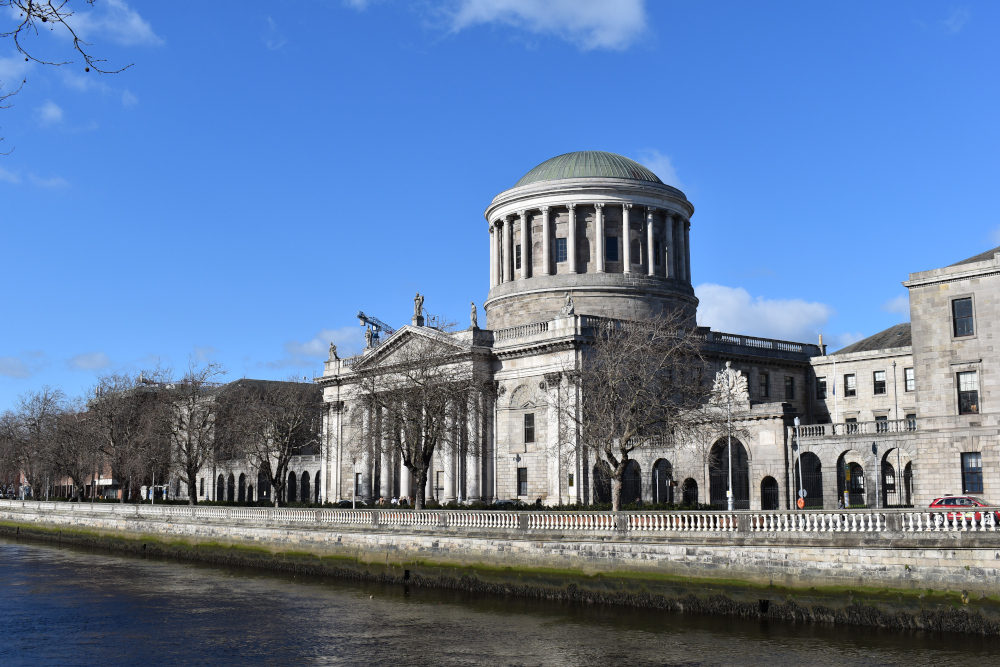
Delivering judgment in a judicial review brought by solicitor John Quinn Ms Justice Mary Rose Gearty found that the provision in the new scheme for the issuing of a single payment in respect of each legal aid certificate no matter the number or charges is outside the objectives of the 1962 Act.
Solicitors have been withdrawing their services since June in opposition to the “one accused, one fee” model for criminal legal aid that was introduced by justice minister Jim O’Callaghan on 1 July. Under the new scheme solicitors will receive one fixed fee of €520 for representing a legally aided person before the District Court. Previously solicitors were paid €239.38 for a first appearance and €59.86 for each subsequent appearance.
Mr O’Callaghan has since made provision for two thirds of the fee to be paid at the beginning of the case and the remainder at the close or 12 months thereafter.
The ongoing dispute has caused a backlog in the criminal courts and has led to concerns being raised in various quarters about the impact that it is having on the administration of justice. The Law Society offered to engage in mediation to resolve the dispute, but this offer was not been accepted by Mr O’Callaghan.
In bringing the judicial review Mr Quinn argued that Mr O’Callaghan had acted outside his powers under the Criminal Justice (Legal Aid) Act, 1962 in providing for a flat fee regardless of the number of court appearances. That the provision of payment only at the time a final order is made renders the regulations arbitrary, capricious and unjust. That the 2026 Regulations constitute a breach of Mr Quinn’s constitutional right to earn a livelihood and create a risk that a solicitor who agrees to remain on the legal aid panel is guilty of professional misconduct.
Ms Justice Gearty held that the provision of a single payment to a solicitor when the final order was made is “grossly unfair” and the issuing of one legal aid certificate no matter the number of court appearances is “demonstrably illogical”, fails to create a rational system, fails to achieve the objective of curtailing abuse of the previous system and exceeds the minister’s powers under the 1962 Act.
On the issue of the right to work Ms Justice Gearty held that the right was a “narrow one” and is established in case law as “merely a right not to be prevented from working” rather than engaging in a particular job or task.
As regards disciplinary concerns Ms Justice Gearty held that Mr Quinn had not established that accepting work under the 2026 Regulations would contravene a currently operative professional rule or create a real risk of disciplinary liability.
The Law Society of Ireland, who were a notice party to the proceedings, issued a statement welcoming the judgment adding that: “Criminal Legal Aid is a cornerstone of the justice system and a vital means of upholding the right to legal representation.
“The judgment is an important affirmation that changes to a scheme on which victims and defendants rely must be made lawfully and with proper process”.
The statement concludes that the Law Society is “committed to working constructively” with the justice minister and his officials.
Mr O’Callaghan issued a statement saying that he is considering the judgment and that the court has requested further submissions from the parties in advance of any final orders being made.
He added: “It should be noted that aspects of the new scheme have already been adjusted or are the focus of ongoing discussions with the Law Society of Ireland.”

Share this article:

Subscribe to our newsletter to not miss articles like this one:
 SUBSCRIBE