
Law Library Annual Report: Proportion of female barristers unchanged in 10 years
 Reading time: 4 minutes
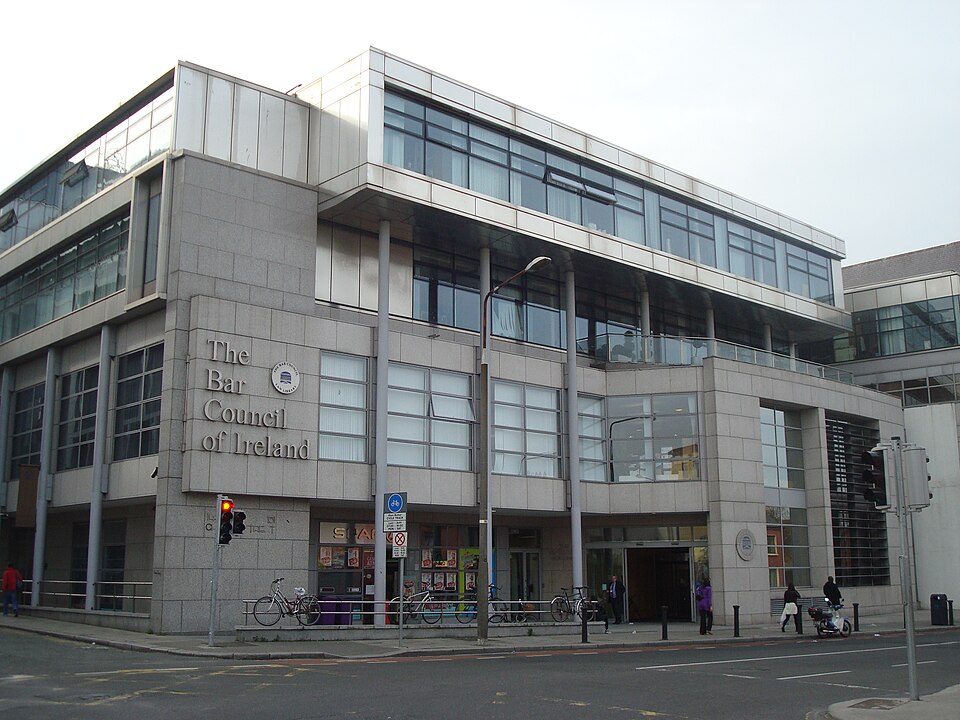
Bar Council of Ireland [CC0.10]
The proportion of women among Law Library members has remained unchanged for almost a decade, its latest annual report shows.
The Law Library has released its Annual Report for 2025/26 highlighting the successes of and challenges facing the profession over the past year.
There has been a strong focus on advocating for the profession amid legal reforms. In October 2025 a report commissioned by the Bar of Ireland and the Law Society was launched by the justice minister Jim O’Callaghan. It emphasised the legal sector as a key contributor to long-term economic growth with €1.4 billion of legal services exported internationally.
The Bar has also continued its public affairs and political engagement work drafting submissions to the government on a range of matters including; the new costs scale for environmental judicial reviews, the Civil Reform Bill, resourcing the civil legal aid system, the flat fee model for criminal legal aid and the use of AI in the justice system. Member, Aoife O’Leary BL, appeared before the Oireachtas Joint Committee on Justice, Home Affairs and Migration to discuss bail laws in Ireland.
The report also addressed the Legal Services Regulatory Authority’s Breaking Down Barriers report on the reform of professional legal education which made 32 recommendations aimed at improving equity of access into the legal profession and improving diversity over time.
The Law Library report made specific responses to recommendations; 5, 6, 7, 16 and 32. Five and six are of note as they are concerned with financial support for pupils and pupilages outside Dublin. The report stated that the Bar supports a “meaningful system of pupil financial support” but that it must be “externally funded rather than imposed on masters or the wider membership”.
As regards recommendation 6 that pupils should be allowed to undertake pupillages with barristers whose practices are not predominantly Dublin based the Bar responded that while the matter has been considered carefully “the current evidence does not support the removal of the Dublin-based requirement at this time”. The reason given was “the need to ensure consistent access to the range of work, supervision and professional integration required for a high-quality pupilage”.
No response, however, was noted to recommendation 19 that the barrister’s profession consider initiatives to make a career as a self-employed barrister more sustainable in the early years in particular for women.
The issue of women at the Bar was addressed by a working group established by the Council of the Bar of Ireland in 2015, the results of which were published in the The Bar Review in April 2016.
At that time female members accounted for 39 per cent of total Law Library membership, 42 percent of junior counsel and 16 per cent of senior counsel. It was noted that the rate of attrition for women was higher than that of their male counterparts.
A survey of female members established four key areas of concern; access to work, childcare family responsibilities and maternity leave, working environment and culture and stability and culture.
Respondents noted a preference among solicitors for male counsel, feeling that clients would be more impressed by a man or that having female counsel would appear “weak”. The self-employed nature of practice made maternity leave difficult with some women feeling the pressure to return very soon after the birth of a child or suffering a loss of work for those took a longer time off. Once children were born inflexible creche hours left mothers feeling “less visible, less reliable, less dedicated and less successful” as they were unable to attend early morning consultations and late night CPD events.
Some women also felt that they had experienced direct or indirect discrimination and that the self-employed nature of the profession made these issues difficult to address. Overall it was felt that the inconsistency in work and income made it difficult to sustain a practice.
Although work has been undertaken to address these issues in the following ten years, notably in the Bar of Ireland’s Equality Action Plan, the overall picture of membership remains relatively unchanged. In 2026 women account for 38 per cent of overall Law Library membership 42 percent of junior counsel and 20 per cent of senior counsel. Women, however, make up, 45 per cent of the Young Bar and made up 58 per cent of new entrants to the profession in October 2025. Figures that would suggest that the rate of attrition also remains relatively unchanged.
The Law Library report stated: “These figures underline both the stability of the profession and the importance of continuing to support members at every stage of practice, particularly those in the early years of their careers.”

Share this article:

Subscribe to our newsletter to not miss articles like this one:
 SUBSCRIBE