
Written by:

Lawyer of the Month: Lisa Ann Wilkinson
 Reading time: 7 minutes
Written by:
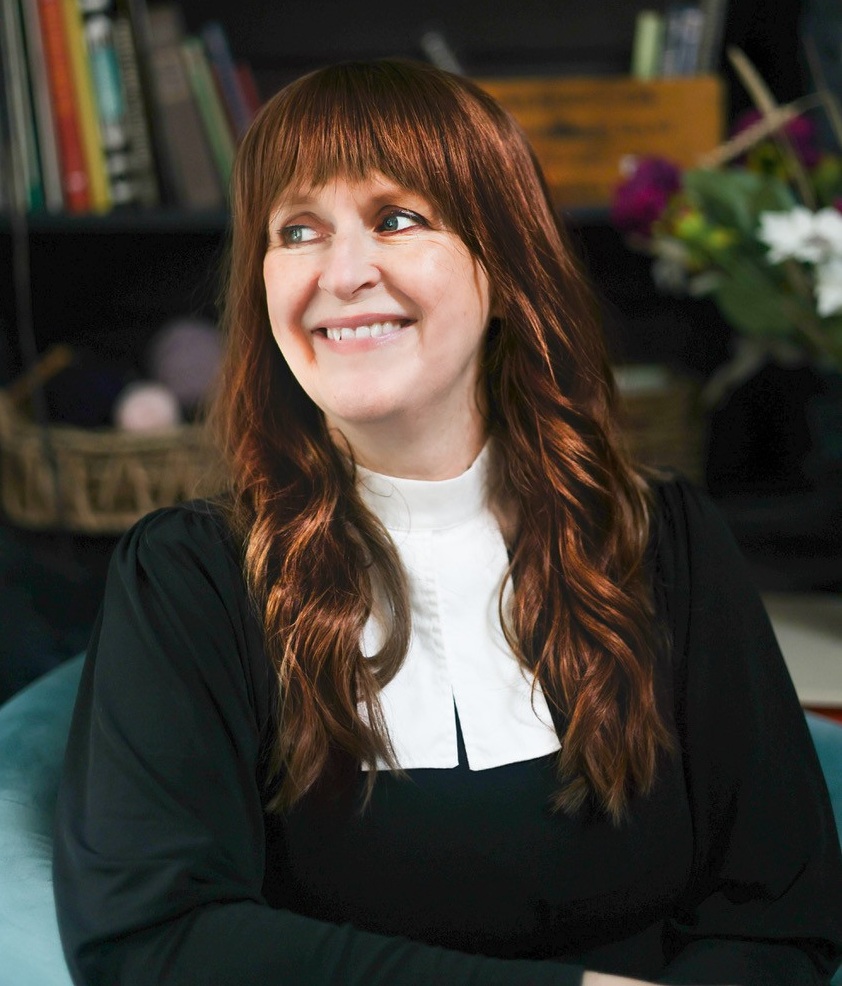
Lisa Ann Wilkinson
Lisa Ann Wilkinson became a barrister after a decidedly varied career path – but like everything else she’s done, she immersed herself in the law with a passion. The Dublin-based Junior Counsel describes herself as a mother, feminist, barrister and entrepreneur and her legal career is focused on supporting families in perinatal medical negligence and family law, with a focus on women escaping abusive and coercive relationships.
Originally from Staffordshire, Ms Wilkinson attended school in London and took a Bachelor’s degree at the University of Hertfordshire. When queried as to why she has moved to Ireland more than 30 years ago her reply is surprisingly matter of fact.
“I met a man on a plane travelling back from India,” she says. “He was coming back from Australia, I was sitting beside him – and that was that was it, really.”
Employed in the technology sector, she was headhunted to San Francisco where she worked for Oracle and Baltimore Technologies in internet security programming. Then she went into marketing and product management before being headhunted back to Ireland.
“That was during the Celtic Tiger boom years and I found that I’d moved from quite a relaxed industry to a financial sector which was very high pressured and misogynist.” Ms Wilkinson admits that she became “really quite stressed”.
Reaching the point of burnout, someone suggested she went to a yoga class, which she found beneficial. She smiles: “I read the Dummy’s Guide to Stress Management and as I’m quite a black and white person, when I came to recommendation number 32 – ‘if all else fails, run away’ – that’s what I did. I quit my job and apartment, ran off to the Bahamas and trained to be a yoga teacher.”
Returning to Ireland she was infused with a passion for delivering health and happiness and a desire to leave the corporate world behind, founding the elbowroom in Dublin’s Stonybatter, a wellbeing centre that provides yoga training courses and comprises The Diverse Minds Academy with childcare and neuro-affirmative services.
Then came the launch of The Wicklow Escape in 2016, a mountain lodge with weddings, family gatherings and corporate team building among its services, the Manor Picture House in Dublin with a multidisciplinary clinic and the Diverse Minds Academy.
With that daunting catalogue of interests and responsibilities she still found the resolve to become a lawyer. “I’ve been involved in social justice for 24 years now and have been advocating specifically for women’s rights,” she explains.
“In the elbowroom, I became immersed in the rights of women in maternity services and was active in different movements around the informed choice around maternity services – the rights of women to give birth at home, their rights to have midwifery-led care and informed consent within the maternity services.
“I had spent many years advocating for women and working with hospitals and we ended up training midwives within the elbowroom to engage in a more holistic birth practice.”
Her decision to study law coincided with the Covid-19 lockdown. “We couldn’t operate the elbowroom during that period as everything went online, so I was left for 18 months with an opportunity to study.
“I did my diploma online, and when everything started opening again, I made the choice to do the BL full time at the Kings Inns, which was absolutely crazy,” she recalls.
“It was probably the hardest thing I’ve ever done because not only was I studying for the degree with the demands of essays, assignments and exams but at the same time all my businesses were reopening after being closed during the pandemic.”
With her experience and as founder of the elbowroom and the Manor Picture House, it was natural to specialise in supporting families in perinatal medical negligence and family law and work for those escaping abusive and coercive relationships.
During her pupillage her master was Doireann O’Mahony, who authored the book Medical Negligence and Childbirth. “I chose her because I’d spent so many years advocating for maternity rights and most of her practice is around medical negligence in birth and maternity,” she says.
“In my second year I had a more informal master in Jane Barron, probably one of the most experienced family law barristers in Ireland.”
Ms Wilkinson was called to the bar in 2023 and quickly asked to take on a family law case. “Whilst I was nervous about, it I went ahead and took it on,” she says. “That case was my first one. It was an absolute eye opener and two and a half years later led to a Judicial Review”.
She found the District Court a very different proposition to appearing at the High Court. “There’s much more time in the High Court to prepare for a case,” she says. “The judge hearing the case also has more time to consider your argument, and appropriate time is allotted for it to be heard adequately.
“Whereas in the district court, I found that people would arrive in the morning and practitioners would be given a pile of files with only a few minutes to talk to the client. The Family Law Court and its practitioners are very overstretched. This along with the underfunding of Legal Aid Services has family lawyers at near breaking point.”
Having personally witnessed domestic violence between the ages of 12 and 17 and coercive control later in life, Ms Wilkinson’s practice unsurprisingly gravitated to these areas, working predominantly with women who have left coercive, controlling, and abusive relationships.
She recently stepped down as chairwoman of the charity SiSi founded by Mary Louise Lynch, Ireland’s appointed expert to the European Women’s Lobby Observatory on Violence Against Women and in May this year co-founded The Right to Transparency campaign, with Síle Ní Dhubhghaill, seeking changes that include the removal of the in-camera rule while maintaining anonymity for those involved.
The campaign also aims to highlight the lack of legal and professional training in coercive control, and Intimate Parter Violence and Abuse and she points out that often when women report coercive control – especially in rural areas – gardai are not adequately trained and tend to dismiss their allegations.
She welcomes the publication of the first Family Law Reporting Project, led by Dr Carol Coulter which aims to increase public understanding of family law proceedings in the District, Circuit and High Court by providing anonymised reports on a representative sample of family law cases, ensuring the privacy of families is upheld.
An Englishwoman, albeit one who has been in Ireland for 33 years, she has found the legal profession in the country to be a welcoming one. “There’s a huge amount of collegiality and one of the most remarkable things is that you can go to a colleague, ask them a question and even if they’re your opposite number in a case, know they’ll be incredibly helpful.
“Someone rang me recently looking for a steer on a particular aspect of the discharge of wardship, and I spent 20 minutes talking her through it. That happens across the board and where I sit in the Law Library people are happy to help one another.”
That, she says is something that runs throughout the profession and what makes her gratified to be a part of it. “I’m also happy to have so many women coming back to me thanking me for the changes that have been made. I spend a lot of my time referring people to different barristers and solicitors because I wouldn’t be able to handle the caseload.
“But giving people a voice is important, especially in family law for domestic abuse victims and giving them that voice has been probably the thing I’ve been proudest of.”

Share this article:

Subscribe to our newsletter to not miss articles like this one:
 SUBSCRIBE