


High Court president commends ‘very valuable’ dental mediation service
 Reading time: 3 minutes
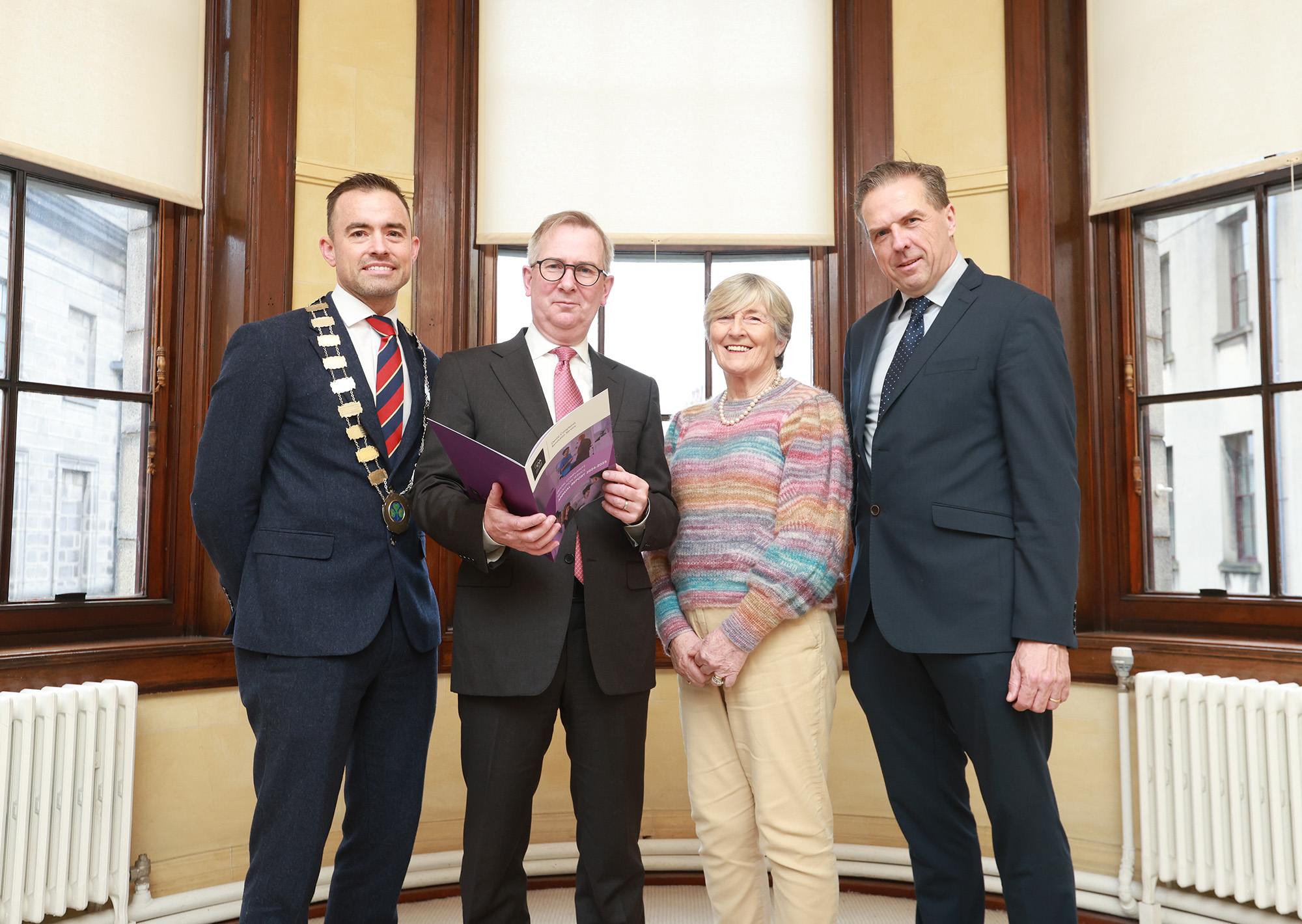
Pictured: Irish Dental Association president Will Rymer, High Court president Mr Justice David Barniville, Dental Complaints Resolution Service facilitator Mary Culleton, and Irish Dental Association CEO Fintan Hourihan.
More than 760 complaints and queries have been handled over the past two years by a dental mediation service supported by the Irish Dental Association.
The independent, confidential Dental Complaints Resolution Service (DCRS) managed 398 cases in 2024 and 365 in 2025, according to its latest annual report.
While the DCRS does not investigate malpractice or award compensation, it facilitates practical, agreed resolutions between patients and dentists when complaints arise.
In many cases, disputes are resolved quickly, avoiding lengthy and protracted litigations, with some patients choosing not to pursue complaints further after speaking to their dentist about any potential issues that have arisen.
High Court president Mr Justice David Barniville launched the DCRS report today.
“I was very interested to hear recently about the work of the DCRS since its establishment as an independent and voluntary service with the support of the Irish Dental Association back in 2012 and to read about the very valuable work which the service has done in resolving disputes between dentists and patients since then,” the judge said.
“The establishment of the DCRS showed great foresight at the time and the extent of its use by patients and by dentists shows just how valuable the service has been.”
He added: “The support of the Irish Dental Association for the DCRS is critical and it is very significant that there appears to be a growing willingness on the part of dentists to refer patients to the Service or to seek guidance themselves from the service.”
The report finds that most complaints are not driven by negligence, but instead arise from issues caused by miscommunication, unclear expectations, and delays in responding to patient concerns.
Notably, almost every complaint contained an element of dissatisfaction with communicate on, underlining the importance of clear, consistent dialogue before, during and after treatment.
The most frequent issues raised included cost and pricing, clinical care, and hygiene and continuity.
Dr Will Rymer, president of the Irish Dental Association, said the increase in the figures points to a growing trust in early intervention and mediation, rather than an increase in serious clinical incidents.
He said: “The service embodies leadership, responsibility and respect, for patients, for clinicians, and for the integrity of the profession. Patients know there is a pathway to resolution, and dentists increasingly recognise the value of engaging constructively before positions harden.
“The DCRS is an essential pillar of modern dental practice, reflecting a wider shift towards resolution, transparency and patient trust in healthcare.
“With demand remaining steady and engagement increasing from both patients and practitioners, the service is expected to play an even greater role in managing disputes as expectations around communication and care continue to evolve.”

Share this article:

Subscribe to our newsletter to not miss articles like this one:
 SUBSCRIBE