

Written by:

Gillian O'Hanlon BL
Case Reporter
High Court: Life support ordered to be withdrawn from 51-year-old woman
 Reading time: 5 minutes
Written by:
Gillian O'Hanlon BL
Case Reporter
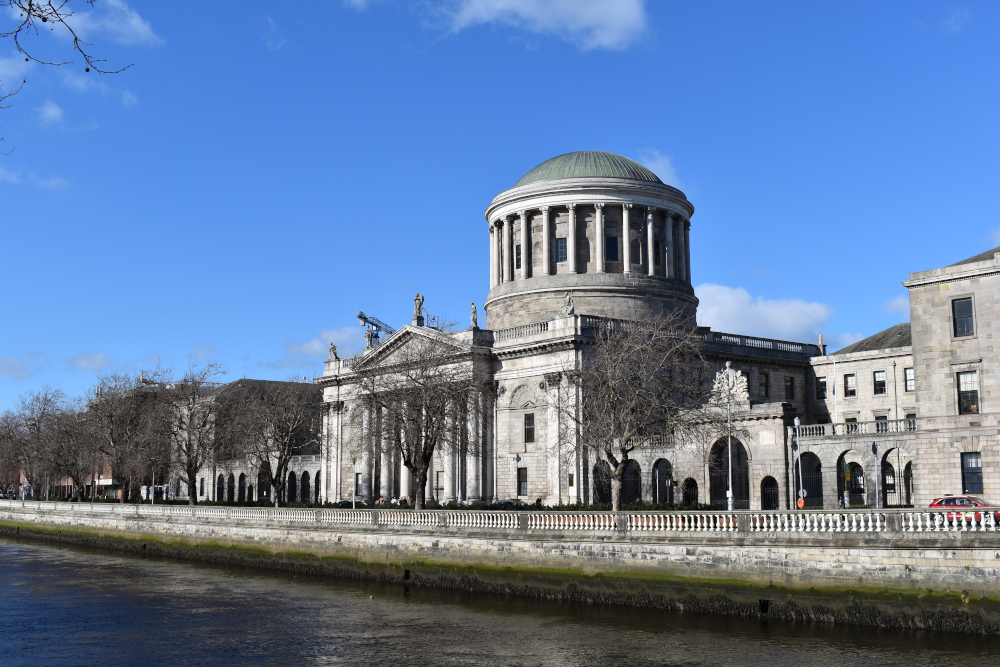
The High Court has granted orders permitting the withdrawal of life-sustaining treatment and active supportive care from a woman who suffered hypoxic brain injury following cardiac arrest.
Delivering judgment for the High Court, Mr Justice David Barniville explained: “The court must take into account all of the rights involved here, including Ms SM’s right to dignity in circumstances where the evidence is very clear that no interventions now will lead to a positive benefit or outcome for Ms SM. She would simply be left in a position where she would be having all these active and invasive interventions with no positive benefit or result and which will only serve to prolong the inevitable, her death.”
Background
SM, a 51 year-old woman with a mild intellectual disability and emotionally unstable personality disorder, had been a ward of court since February 2023.
SM began to experience respiratory problems which required her admission to St Vincent’s University Hospital on 4 November 2025 and she remained in the hospital until 21 November 2025, when she was discharged back to her placement.
On the morning of 25 November 2025, she had a cardiac arrest in her placement and was found unresponsive by staff. She received CPR for 53 minutes before being transferred by ambulance to the hospital. SM was diagnosed with blood clots in both of her lungs which may have triggered her cardiac arrest, and thereafter, suffered another cardiac arrest whilst in hospital.
With SM having suffered a severe hypoxic brain injury as a result of her cardiac arrest and having become deeply comatose and unresponsive off sedation, the HSE applied to the High Court seeking orders for the withdrawal of life-sustaining treatment from and to cease active supportive care of SM.
The High Court
Mr Justice Barniville considered the evidence, noting that all tests carried out on SM suggested that her condition would be permanent and that she would never recover or regain consciousness.
The court was satisfied that all efforts had been made to provide active supportive care for SM, and that the updated position was that the consultant in charge of SM’s care and his team were advising that she should be moved to palliative care, for reasons including the risk of another cardiac arrest and of potentially serious infections in hospital.
The court considered that the continued provision to SM of a ventilator, nasogastric feeding, cardiovascular and other supports were all very active and invasive supports and that pursuant to the ethical code issued by the Medical Council, there were ethical issues from the clinicians’ perspective in continuing to provide those active interventions when they would not produce a positive result or a benefit for SM, “and where they are, potentially, and actually, denying her a dignified death”.
Mr Justice Barniville had particular regard to paragraph 46.4 of the Medical Council’s Guide to Professional Conduct and Ethics for Registered Medical Practitioners (9th Edition, 2024), which states that a doctor should not start or continue treatment, including resuscitation, or provide nutrition and hydration by medical intervention if the doctor considers the treatment is “unlikely to work”, “might cause the patient more harm than benefit” or is “likely to cause the patient pain, discomfort or distress that will outweigh the benefits”.
Being satisfied that the application was very appropriate and proper and that all the evidence “points one way”, the court was satisfied that the consultant’s evidence and opinion was corroborated and strongly supported by a second consultant’s opinion.
The court was further satisfied with the approach of the independent solicitor instructed by the ward’s committee in wardship.
Noting that the ultimate legal test concerned the best interests of SM, having regard to her constitutional rights to life, to bodily integrity, to privacy, self-determination and the right to refuse medical care or treatment, Mr Justice Barniville emphasised: “None of these personal rights are diminished or extinguished by virtue of Ms SM’s status as a ward of court. However, since she is a ward, the tasks falls to the court to determine what is in Ms SM’s best interests, within the constitutional parameters, and in light of the clear and undisputed medical evidence.”
Finding that Re a Ward of Court (withholding medical treatment)(No. 2) [1996] 2 IR 79 provided strong support for that approach, Mr Justice Barniville was reassured that moving to palliative care would not lead to any diminution in the level of comfort and care provided to SM and that the hospital staff would continue to be sensitive to SM and to her family and carers.
Conclusion
Accordingly, the High Court granted orders permitting the withdrawal of life sustaining treatment from SM, the cessation of her active supportive care and her switch to palliative care.
Mr Justice Barniville further noted that since the delivery of his judgment, SM had passed away, expressing his condolences to her family, friends, carers and loved ones.
In the matter of SM [2025] IEHC 717

Share this article:

Subscribe to our newsletter to not miss articles like this one:
 SUBSCRIBE