


Written by:

Gillian O'Hanlon BL
Case Reporter
High Court: Interim access order can be considered without report conveying ‘views of the child’
 Reading time: 6 minutes
Written by:
Gillian O'Hanlon BL
Case Reporter
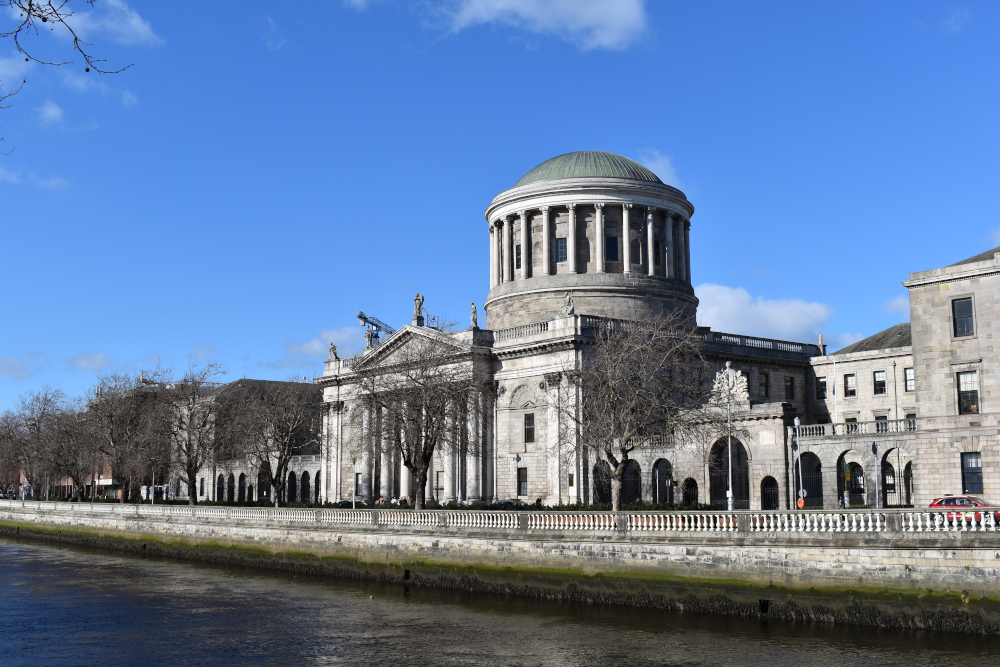
The High Court has determined that the court is not precluded by the provisions of the Guardianship of Infants Act 1964 from considering an application for access to a child in the absence of an expert report conveying the “views of the child”.
Delivering judgment for the High Court, Mr Justice Oisin Quinn explained: “The words of the provision refer to the “views of the child” and this encompasses in its ordinary meaning, evidence of those views relayed by others such as, in this case, the parties themselves.”
Background
The applicant and respondent were in a same sex relationship for over 10 years and in 2019, had a child (Z) born through surrogacy. The respondent was the genetic father of the child, who at the time of the judgment, was over six years of age. The child suffered with some developmental issues, including autism.
The respondent enjoyed a successful career in his profession, and the applicant was a “stay at home Dad” in the context of their family.
The relationship ended during the summer of 2025. The applicant, who had modest resources, moved back in with his parents who lived some distance from the home where the parties and child had lived together. The respondent and the child continued to live in the home which the respondent owned.
The parties settled into a routine by Autumn 2025 in respect of the care of the child. However, in November 2025, the applicant was upset to learn that the respondent was in a new relationship and an exchange took place following which the respondent decided that the applicant should not have further access to Z.
The respondent believed that the applicant was not suitable to be around the child, alleging that the applicant had threatened to “destroy” him by the release of private material.
The applicant issued proceedings in December 2025, including a motion seeking inter alia interim access to the child and directions pursuant to s.32(1) of the Guardianship of Infants Act 1964 in relation to obtaining an expert report on the child.
Shortly before the commencement of the motion, the parties agreed that the court could make an order pursuant to s.32(1)(a) and (b) of the 1964 Act directing the procurement of a report from an agreed professional on the welfare of the child and to determine and convey the child’s views.
At the commencement of the motion, the respondent then raised a preliminary legal issue, to the effect that the court was precluded by s.11B of the 1964 Act from making any interim access order where it did not yet have the benefit of the report outlining the “views of the child”.
Submissions
The respondent submitted that having regard to the Supreme Court decision in BU v BE [2010] IESC 38, once a child is at least six years of age, then, combined with the professional assessment being planned, the court must await that professional assessment before making any decision on interim access in favour of a person, like the applicant, who was not a natural parent of the child.
The respondent explained that this legal point had not yet arisen for consideration by the High Court.
The applicant contended inter alia that his case was distinguishable from the Hague Convention cases relied upon by the respondent, in circumstances where he was making an application for interim access and had been in the position of a parent from the child’s perspective.
The High Court
Mr Justice Quinn considered the relevant principles of statutory interpretation and set out s.11B of the 1964 Act, finding that pursuant to s.3 of the 1964 Act, the “paramount consideration” for the court in any access application is the “best interests of the child”.
As to the best interests of the child, the judge examined s.31 and s.32 of the 1964 Act. Having done so, the court was satisfied that the interpretation relied upon by the respondent was incorrect.
The court highlighted that the applicant had not seen the child for over three months, a significant period in the context of the amount of contact prior and the age of the child.
The court further highlighted that each party in their oral evidence had set out what they believed was the view of the child, and that “It is a matter for the Court in any case as to how much weight to attach to that evidence.”
Mr Justice Quinn recognised that “the Applicant, while not a natural parent, has performed, for a substantial period of the life of the child, the role of a parent. He had been living with the child in a capacity similar to that of a natural parent. He was there for the child’s birth and the child being raised and navigating the various milestones of life and in addition has performed the ordinary function of a parent in the context of the day-to-day routine of the child.”
Turning to Heather Hill v An Bord Pleanála [2022] IESC 43, the court considered that s.11B must be considered in the context of the 1964 Act as a whole and especially in light of s.3.
Noting that an expert report could take several months to obtain, Mr Justice Quinn found that it could not be in the paramount interests of a child that in practice “they could be deprived of access to a person who has been in a quasi-parental role with them without all of the circumstances being considered”.
The judge observed that the respondent’s argument precluded the concept that the evidence of the parties themselves could reference the views of the child, but that in the context of a child who is only six years of age, “inevitably the views of the child are likely to be primarily conveyed to the court through adults, who either know or are familiar with the child and/or a professional expert”.
The court explained: “The words of the provision refer to the ‘views of the child’ and this encompasses in its ordinary meaning, evidence of those views relayed by others such as, in this case, the parties themselves.”
The court further considered Article 42A.4.2 of the Constitution, which states inter alia that as far as practicable, in proceedings concerning a child who is capable of forming their own views, their views shall be ascertained and given due weight having regard to their age and maturity.
The judge opined that Article 42A.4.2 “does not envisage an absolutist position” which would preclude the laws allowing a Court to make an interim access order in relation to a child in advance of a professional report being available.
Turning to s.11B, Mr Justice Quinn did not believe that the 1964 Act precludes a court from considering an interim access application in the absence of a professional report indicating the views of the child, but simply requires the court to have regard to that issue.
Conclusion
Accordingly, the High Court made an order for interim access in favour of the applicant.
A.C. v D.C. [2026] IEHC 98

Share this article:

Subscribe to our newsletter to not miss articles like this one:
 SUBSCRIBE