

Two issues remain critical to resolving solicitors dispute over criminal legal aid
 Reading time: 2 minutes

The Law Society of Ireland has told justice minister Jim O’Callaghan that two issues remain critical to resolving the ongoing dispute over the new flat fee system for criminal legal aid.
Over 200 criminal defence solicitors are continuing their withdrawal of services in response to the changes.
The “one accused, one fee” model was introduced by Mr O’Callaghan 1 July. Solicitors will receive one fixed fee of €520 for representing a legally aided person before the District Court. Previously solicitors were paid €239.38 for a first appearance and €59.86 for each subsequent appearance.
Mr O’Callaghan has already introduced changes to the scheme allowing the payment to be split with two thirds to be paid at the start of a case.
However, the Law Society has indicated that issues remain with separate and distinct cases and complex cases.
For separate and distinct cases the Law Society gave the example of where a defendant was charged with three offences involving different times and locations, but which were listed before the court on the same day.
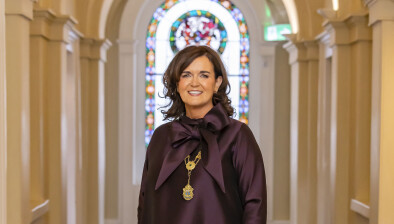
Despite requiring separate preparation, consultation with the client, examination of evidence, legal analysis, and representation, these would now only attract one fee. In a letter to the minister president of the Law Society, Rosemarie Loftus, proposed that separate legal aid certificates be issued in such instances with a cap of five certificates for one defendant before the court on one day.
Complex cases are those cases of extended duration, involving children, those with mental health issues or those persons remanded in custody which involve multiple court appearances. The Law Society proposed that a further legal aid certificate be issued where a case exceeds ten court appearances.
Ms Loftus concluded that the Law Society remains committed to engagement with Mr O’Callaghan: “The Law Society’s objective is to support a criminal legal-aid system that is sustainable, fair, and capable of ensuring access to justice across the country.”

Share this article:

Subscribe to our newsletter to not miss articles like this one:
 SUBSCRIBE