




Written by:

Gillian O'Hanlon BL
Case Reporter
Supreme Court: Implications of amended climate action legislation considered for first time
 Reading time: 8 minutes
Written by:
Gillian O'Hanlon BL
Case Reporter
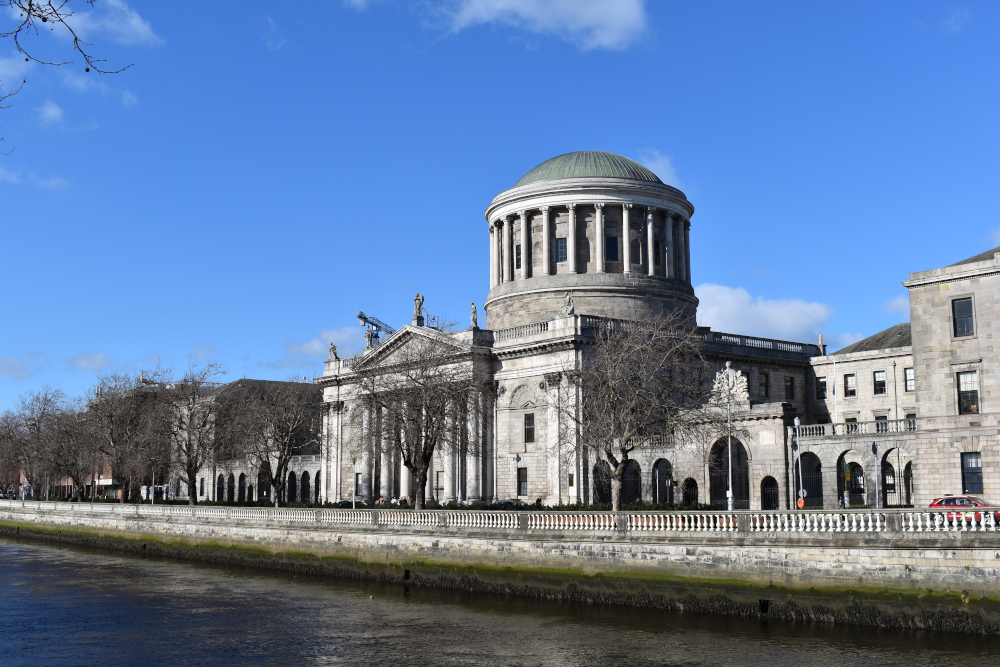
The Supreme Court has, for the first time, clarified the implications of amended climate action legislation for bodies such as An Coimisiún Pleanála.

About this case:
- Citation:[2026] IESC 5
- Judgment:
- Court:Supreme Court
- Judge:Mr Justice Donal O'Donnell
Delivering judgment for the Supreme Court, Chief Justice Donal O’Donnell explained that s.15 of the Climate Action and Low Carbon Development Act 2015, as amended, “creates a legal obligation binding upon the Commission and enforceable, if necessary, by action, to ensure that any decision it makes to grant or refuse permission is consistent with the climate objectives set out in s. 15”.
Background
On 23 August 2024, the Planning Commission refused planning permission to Coolglass Wind Farm Limited for the development of a 13-turbine wind farm in Co Laois.
The proposed development was refused on the basis that it would materially contravene certain objectives of the Laois County Development Plan 2021-2027 prohibiting the development of wind farms in “areas not open for consideration” due to their overall sensitivity arising from landscape, ecological, recreational and/or heritage resources.
In this regard, the Commission followed the approach of its inspector who concluded that the development plan must take precedence over national climate policy.
Coolglass challenged the respondent’s decision on seven grounds before the High Court.
The High Court
The High Court quashed the decision on five grounds, being core grounds 1, 3, 4, 5 and 7.
Mr Justice Richard Humphreys found inter alia that s.15(1) of the Climate Action and Low Carbon Development Act 2015, as amended, now imposed an elevated duty on bodies such as the Commission to perform functions “so far as practicable…in a manner consistent with” the most recently approved climate action plans, climate action strategy, national adaptation strategy and approved sectoral adaptation plans in furtherance of the national climate objective and the “objective of mitigating greenhouse gas emissions and adapting to the effects of climate change in the State”.
On a “leapfrog” appeal to the Supreme Court, the core issue for determination was the interpretation of s.15 of the 2015 Act, as amended.
The Supreme Court
At the outset of his judgment, Mr Justice O’Donnell noted that the significance of the appeal could not be overstated as it presented the Supreme Court with its first opportunity to consider the implications of s.15(1) following its amendment by the Climate Action and Low Carbon Development (Amendment) Act 2021.
As to core ground 3, the Supreme Court found that the Commission did not abdicate its obligations under s.15 of the 2015 Act either to the Office of the Planning Regulator (OPR) or the Minister for Local Government and Heritage.
In particular, the court found that the Commission’s observation that neither the OPR nor the minister had intervened in relation to development plan’s designation of areas as “not open for consideration” was not a manifestly irrelevant consideration where the assessment and evaluation of local development plans was one of the primary statutory functions of the OPR, and that the Commission had not suggested that it was bound by the OPR.
In relation to core ground 4, the court determined that while the Commission erred in placing reliance on s.37(2) of the Planning and Development Act 2000 instead of s.37G(6) thereof, the former subsection permitting the Commission to depart materially from the terms of a development plan if certain conditions are satisfied and the latter provision giving the Commission “a freer hand”, that error arose from an erroneous submission made by Coolglass.
The court observed that Coolglass did not demonstrate that this error led to any failure to consider a ground for material contravention that could have been considered under s.37G(6). Accordingly, the finding of the High Court on core ground 4 was set aside.
As to core ground 5, the Supreme Court determined that contrary to the finding of the High Court, the Commission did not fail to exercise its functions in a manner compatible with Articles 2 and 8 of the European Convention on Human Rights (ECHR) in accordance with s.3 of the European Convention on Human Rights Act 2003 by refusing to exercise its discretionary power under s.37G(6) to grant a permission.
In particular, Mr Justice O’Donnell noted that in Verein KlimaSeniorinnen Schweiz v Switzerland [2024] ECHR 304 ([GC] No. 53600/20 9 April 2024, the European Court of Human Rights determined that systemic failures of the Swiss Confederation in respect of climate change at national, legislative and administrative levels led to a violation of Article 8 ECHR, and that it “was on this basis however that the High Court made a finding that the Commission failed to perform its statutory obligations”.
Highlighting that the High Court’s finding was made against the Commission and not Ireland, the Chief Justice explained: “On its face, the decision of the High Court would appear to represent a significant expansion of the jurisprudence of the ECtHR.”
In respect of core ground 7, the court found that the Commission did not breach its duty of sincere cooperation under Article 4(3) of the Treaty on the Functioning of the European Union by refusing to exercise its discretion under s.37G(6) and/or s.37(2)(b) of the 2000 Act.
The court considered inter alia that there was simply no question of any inconsistency with EU law, whether specific or general, and that for the issue to arise at all, it would be necessary to demonstrate that EU law required a presumption in favour of granting permission in respect of renewable energy projects unless impracticable.
As to core ground 1, the Supreme Court determined that the Commission failed in its obligation to consider whether permission should be granted notwithstanding that it would amount to a material contravention of the development plan having regard to its duty under s.15(1) of the 2015 Act, as amended.
The Chief Justice observed that the purpose and effect of the amended s.15 was to strengthen the obligations imposed on bodies such as the Commission and to make the performance of their functions consistent with climate objectives insofar as is practicable, by creating an enforceable legal obligation to ensure that that any decision to grant or refuse permission is consistent with the climate objectives set out in s.15.
The court observed that while the language “in a manner consistent with” looks to the outcome of the performance of the relevant function, “it also implies that there is a range of possible outcomes open to the relevant body which may satisfy the application, and a degree of tolerance in the manner in which it is achieved”.
Noting that that tolerance is further reinforced by the inclusion of the words “in so far as practicable” in s.15, the Chief Justice reasoned that this wording contemplates that there may be circumstances in which a relevant body may not be required to perform its functions in a manner consistent with the s.15(1) objectives.
The court outlined a “legal test”, noting that “the question for a court where it is asserted that the actions of any relevant body failed to comply with s. 15(1), is whether the performance of the functions of the relevant body in that regard falls within the spectrum of possible outcomes that could be said to be consistent, in so far as is practicable, with the objective of s. 15”.
Finding that the question of consistency with s.15 is much more complex than a “traffic light system of climate friendly ‘go’ (unless impracticable), and climate unfriendly ‘stop’”, the court emphasised that the constructions of s.15 urged by the State parties and by Coolglass could not be accepted as it would result in a strong presumption favouring the grant of permission for any renewable energy project, subject only to considerations of practicability and the exclusion of any other consideration.
The Chief Justice highlighted that the function being exercised is the grant of permission for a development which materially contravenes the development plan, and that it is this function which must be performed so far as is practicable, consistent with the climate change objectives in s.15(1).
Finding that a central part of the High Court’s reasoning could not be upheld, the court considered that: “The duty on the Commission to perform its function in a manner consistent with the climate objectives set out in s. 15(1), while real, effective and enforceable, cannot be converted into the simple formula advanced by Coolglass and accepted by the High Court.”
The Chief Justice outlined that the fundamental question was whether the Commission should exercise its power under s.37G(6) in light of the climate benefit of the proposed development, highlighting that it was not apparent that the Commission had properly engaged with that question, and instead had seemingly erroneously relied on the fact that the development would contravene the development plan as a reason to refuse the permission in itself.
Conclusion
Accordingly, the Supreme Court dismissed the appeal and upheld the High Court’s decision to quash the Commission’s decision on “different and narrower grounds”.
The court indicated that it would remit the matter to the Commission.
Coolglass Wind Farm Limited v An Coimisiún Pleanála [2026] IESC 5

Share this article:

Subscribe to our newsletter to not miss articles like this one:
 SUBSCRIBE