

Right to Transparency 300 Silenced Voices Campaign reaches 100 testimonies
 Reading time: 5 minutes
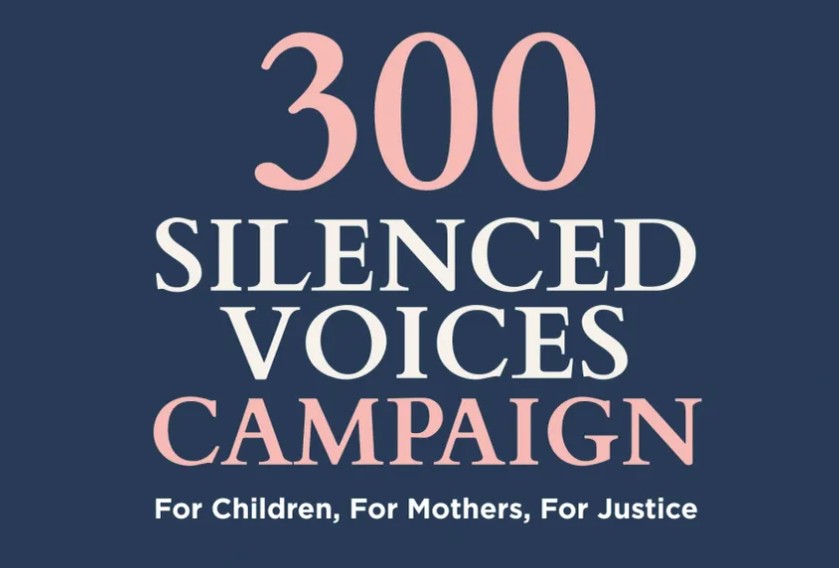
On Saturday 6 October Right to Transparency launched the 300 Silenced Voices Campaign seeking to gather 300 testimonies of mothers who believe that they and their children have been failed by the Irish family justice system. In just a few weeks the campaign has gathered 100 testimonies. Those testimonies will form part of a planned submission to the United Nations Committee Against Torture.
The campaign was launched on 6 October at a Survivor Forum in Dublin, attended by around 30 survivors of intimate partner violence (IPVA) and coercive control alongside a panel of experts that included: Lisa Ann Wilkinson, barrister; Susan Leahy, professor in the School of Law at the University of Limerick; Dr Ian McCabe; James Brannigan, retired PSNI Detective Sergeant and founder of the Katie Trust; Professor Sonja Ayeb-Karlson, Professor of Intersectional Justice at University College London and Mary Louise Lynch, founding director of SiSi.
The initiative aims to gather testimony from IPVA survivors who believe the family law process failed to adequately recognise or respond to risks facing them and their children.
As part of The UN’s monitoring of states’ compliance with the Convention Against Torture and Other Cruel, Inhuman or Degrading Treatment or Punishment, civil society organisations can submit information to the UN Committee Against Torture.
The ‘300 Silenced Voices’ campaign will document issues reported by survivors, including allegations of domestic abuse or child safety concerns being ignored, minimised or dismissed; lack of trauma-informed courts; prolonged and costly litigation and concerns around the use of biased expert evidence.
The women in attendance, most of whom are still going through the family courts, gave powerful and often tearful accounts of their experiences. Children passed into the hands of abusers, powerful and questionably qualified experts, a system inclined to believe anyone but the mother, the financial and emotional burden of it all and an in camera rule that prohibits them from telling anyone about it.
Mary Louise Lynch spoke to this when she said that the mother “holds the entire picture of a child’s life” and will do anything to protect their child, but often in the family courts that protection is repurposed and reframed as parental alienation.
Professor Sonja Ayeb-Karlson, who has a research interest in emotional and psychological entrapment in family violence, also spoke to parental alienation stating that it is a pseudoscience and that almost anything can be used and reframed as parental alienation.
Ms Lynch added that research undertaken by SiSi in 2022 revealed cases where mothers were told that breastfeeding was a form of alienation and were court ordered to stop breastfeeding so as not to interfere with the bond with the father.
Right to Transparency says the 300 Silenced Voices initiative is designed to identify whether recurring patterns within family law proceedings raise wider questions about Ireland’s obligations to protect survivors and children from cruel, inhuman or degrading treatment.
“For too long, individual mothers have believed they were fighting these battles alone. What we are hearing repeatedly is that many women describe strikingly similar experiences once domestic abuse enters the family court system,” said Lisa Ann Wilkinson, barrister and founder of Right to Transparency.
“This project is about documenting those experiences properly, identifying recurring patterns and bringing that evidence to an international human rights forum.
“We are asking 300 mothers to come forward. Not because every case is the same, but because the scale and consistency of what survivors are reporting deserves rigorous examination.”
Right to Transparency says some of the most serious accounts involve mothers reporting that children disclosed sexual abuse but were later subjected to changes in custody or contact arrangements with the perpetrator. Other reported issues include children being required to maintain contact with, or been transferred into the care of, a parent charged with domestic violence offences.
Concerns are also regularly raised about how domestic abuse and coercive control were completely overlooked, minimised or inadequately recognised during expert assessment and court proceedings.
“These are extremely serious allegations, and they need to be carefully evidenced and examined. The purpose of 300 Silenced Voices is to build that evidence rather than allow each family’s experience to remain isolated behind closed doors,” said Ms Wilkinson.
The campaign will collect testimony through a structured process, with participants asked to provide supporting documentation where available. The material will then be analysed for recurring themes and systemic concerns.
The Irish initiative follows similar survivor-led efforts internationally to bring greater scrutiny to the handling of domestic abuse and child protection concerns within family justice systems.
“Family courts quite properly protect the privacy of children and families. But privacy must not mean that systemic problems cannot be identified,” said Ms Wilkinson.
“Where the same experiences are being reported by large numbers of survivors, there has to be a mechanism for examining whether something deeper is happening.”
Since the campaign’s launch 100 women have already come forward and shared their testimonies.
Women who believe that their experiences or safety concerns relating to their children, were inadequately addressed through family law proceedings are being invited to participate in 300 Silenced Voices at: https://righttotransparency.com/

Share this article:

Subscribe to our newsletter to not miss articles like this one:
 SUBSCRIBE