

Written by:

Review: The Woman behind the Cambridge Five
 Reading time: 5 minutes
Written by:
Treason pays it would appear – for publishers at any rate. This year has seen a slew of new books on the the young idealists who spied for the Soviet Union. Stalin’s Apostles by Antonia Senior, currently Radio 4’s book of the week, fairly rattles along providing a valuable new overview of the Cambridge Five marred by a slight over reliance on supposition. Piers Blofeld’s Master of Lies turns the spotlight on the remarkable career of Anthony Blunt in a racey tale that includes some uncalled-for crudities and is heavily peppered with speculation. In The Writer and the Traitor, Robert Verkaik presents a well-written and thoroughly researched account of the friendship between Graham Greene and Kim Philby.
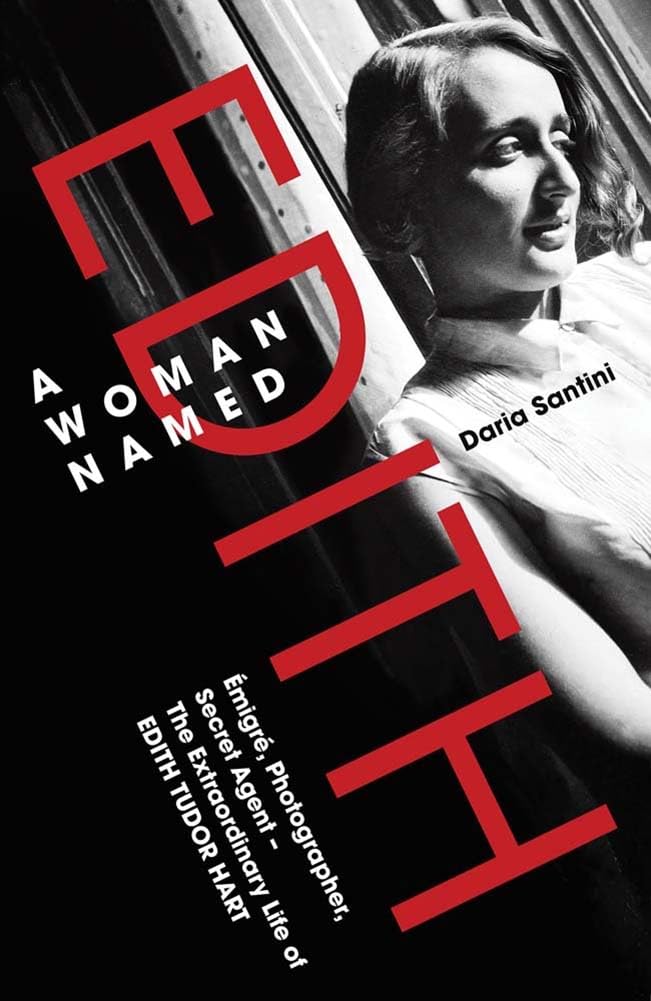
But for this reviewer, it is Edith, Daria Santini’s brilliant biography of Edith Tudor Hart that stands out. Until now the woman Anthony Blunt described to his MI5 interrogators as “the grandmother of us all” has appeared as little more than a footnote in the story of the Cambridge Five. Ms Santini has rectified that with a meticulously researched, and long-overdue, account of the extraordinary and tragic life of Edith Suschitsky, a young jewish communist from Vienna who pursued a career as a gifted photographer and and an even more successful career as an agent for the KGB’s forerunner, the NKVD.
Edith first came to London in the late 1920s to study new systems of child education. A member of the Austrian Communist Party, she promptly reported to Bob Stewart the Dundee joiner who was the Comintern’s chief agent in Britain. Stewart was the éminence grise of British communism. A graduate of the international Lenin School in Moscow, he was trained in spy craft and recruited Edith as a courier sending her on missions to the continent including to fascist Italy where Mussolini had driven the Communists underground.
She popped up on MI5’s radar for her Communist associations and was expelled back to Austria where fascism was on the rise. She returned to Britain as the wife of Alexander Tudor Hart, a communist doctor and, we learn, Bob Stewart’s next-door neighbour. Her friend Litzi Friedmann, another Viennese Jewish communist, escaped Austria using the same route. She too married a communist Englishman, in her case one Kim Philby who became a colonel in the KGB while acting as the head of the UK’s counter-Soviet intelligence unit at MI6. Edith introduced Philby to her colleague Arnold Deutsch, also an Austrian Jewish communist and NKVD officer, and the rest is history. Deutsch, incidentally, had gained access to Britain thanks to his wealthy uncle Oscar who pioneered an eponymous chain of cinemas — Oscar Deutsch Entertains Our Nation!
Edith would act as a talent-spotter to recruit not just the Cambridge Five but also a host of spies at Oxford and elsewhere. One legal historian has suggested that the reason so few of the Soviet spies from this period were prosecuted was not just in return for their cooperation with the authorities and to spare embarrassment but also because there were so many of them!
She was extraordinarily prolific in her espionage activities and not terribly professional. When the police cracked a Soviet spy ring at the Woolwich arsenal one of her cameras was discovered at the home of the chief suspect Percy Glading who was eventually jailed for seven years. The success of the Soviet spies owed as much to the inefficiency of British intelligence as to their dedication.
Back in Moscow, the KGB literally could not believe its luck as it was overwhelmed by a mountain of sensitive British material. The minutes of UK cabinet meetings reached Moscow the same day. The Russians had difficulty in dealing with the sheer amount of the intelligence gleaned and began to wonder if some of it had been planted by the British.
When the link between the Cambridge Five and Moscow was disrupted in 1940 Edith stepped in passing information from Anthony Blunt etc to Stewart who ensured it got back to Moscow promptly. One of the greatest successes of the spy-ring was another Scot, John Cairncross, a brilliant Cambridge graduate from Eaglesham, whose prodigious offerings to Soviet intelligence included the positions of the Luftwaffe in the run up to the critical battle of Kursk allowing the Red Air Force to destroy 500 German planes on the ground thus paving the way for victory in the greatest battle of the war.
While working for the Soviet Union, Edith was also building a reputation as an exceptional social documentary photographer whose work has become celebrated in recent years although she destroyed much of her archives in the 1950s as MI5 closed in. Santini captures Edith’s photographic career and also her somewhat tragic personal life to present a rounded portrait of a fascinating woman in the highly-charged era of the fight against fascism.
After the war, an exhausted Edith drifted away from the Communist Party but retained her “love and admiration” for Bob Stewart who had become a father figure to her following the death of her own father Wilhelm, Vienna’s foremost left-wing publisher, who shot himself as the Nazis closed in.
After Anthony Blunt confessed in 1964, Edith and Stewart were once again interviewed by MI5. They gave nothing away. Edith died in 1973 at the age of 64 in Brighton where she ran an antique shop. Daria Santini’s account of Edith’s life is a brilliant contribution to the literature surrounding the Cambridge Five but one which also records Edith’s contribution to documentary photography.
A Woman Named Edith: Emigre, Photographer and Secret Agent – The Extraordinary Life of Edith Tudor Hart by Daria Santini. Published by Yale University Press, 384pp, £20.

Share this article:

Subscribe to our newsletter to not miss articles like this one:
 SUBSCRIBE