


Written by:

Review: The unsolved murder that tarnished the reputation of Alain Delon
 Reading time: 4 minutes
Written by:
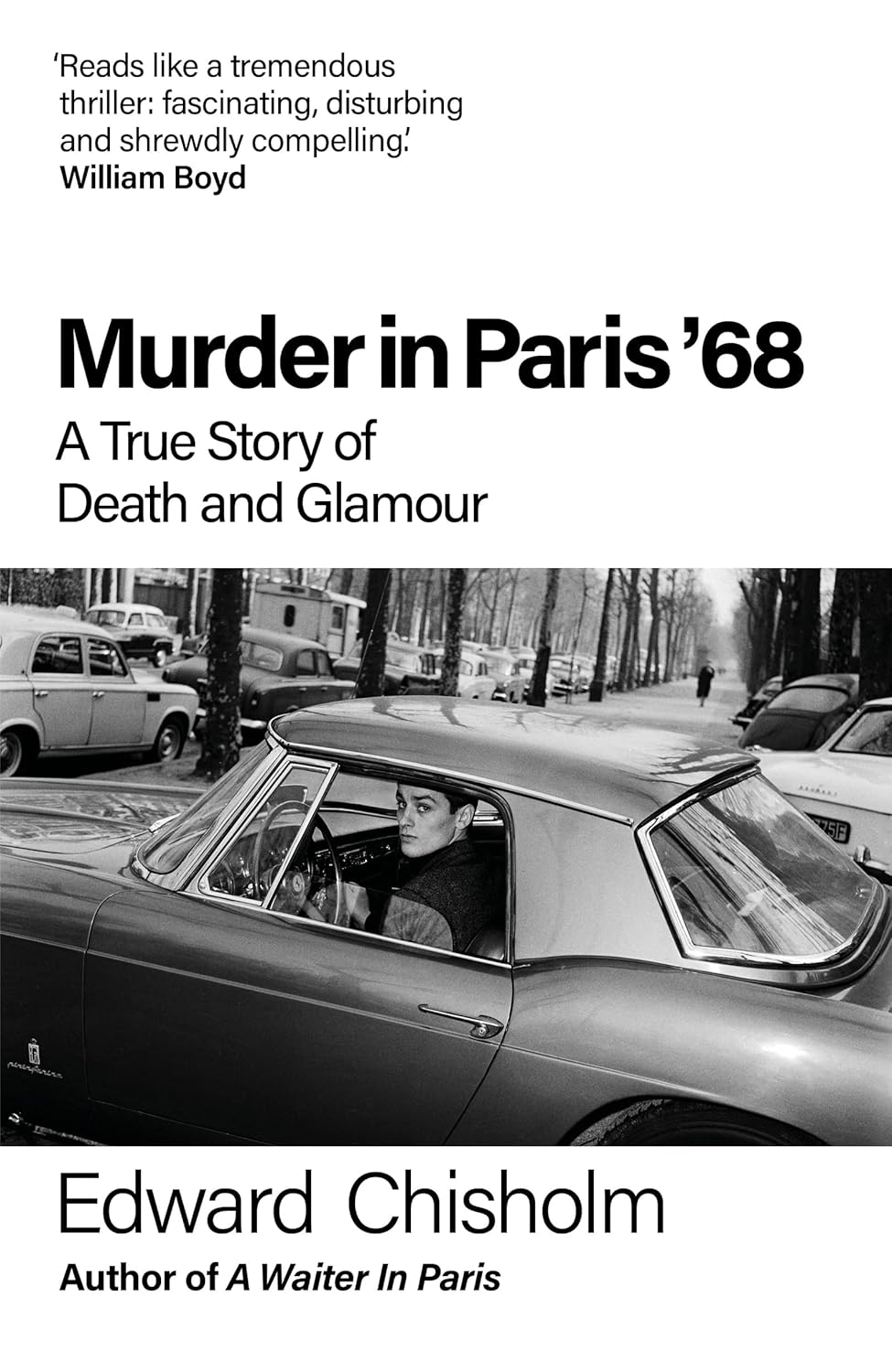
The unsolved murder of Stevan Markovic, the Serbian bodyguard and associate of French film star Alain Delon, became an immense scandal in the Paris of 1968 engulfing the highest politicans in the land and highlighted Delon’s connections with gangsters. Rumours also abounded about orgies organised by Markovic that were said to include Madame Pompidou, the president’s wife as an unlikley participant, and hinted at Delon’s bisexuality.
Who killed Stevan Marković? Edward Chisholm writes with confidence about the city of Paris, in the 1950s and 1960s and explains when and how the death at the centre of his book became known as The Marković Affair. It is, perhaps, the first book in English on the subject.
The volume of material on the scandal is colossal: one historian has estimated the archive at five tons. Chisholm has taken the vivid descriptions of life in that era of French society and politics and arranged the material into a narrative. Therein may lie a modern problem.
Chisholm has been careful, he asserts, not to invent what was not there. “I have never put words in anyone’s mouth that could distort the facts – though for clarity, some things may have been said on a different day than the one portrayed, because the character has expressed their view point more articulately in an alternative source.”
These interviews were numerous and not just by the police but by the media too. Chisholm reassures us that these instances have been “used sparingly, and they are always drawn from contemporary testimony, not hindsight recollections offered decades later”.
Further, to establish the ground rules as it were, where “gaps in the record existed – and there were many – I’ve used informed judgement to bridge them, always rooted in the evidence and the psychology of those involved”.
As if that was not enough, Chisholm advises: “Of course, some of the cigarettes smoked, coffees sipped or sidelong glances thrown may not have occurred exactly as described, but they do not alter the outcome.”
In short, this is, he advises, “not a traditional history book. It is a work of narrative non-fiction, built from the record but shaped like a novel – an attempt to reconstruct a lost world and chart the emotional, psychological and political terrain beneath the headlines.”
Chisholm has then produced an “immersive narrative”, without a list of contents and consisting of a very large number of short episodic descriptions, all in chronological order. Yet, there is no doubt, given the extent of the sources specified that the literature is indeed extensive.
The irony of the circumstances of the death of Stevan Marković is that the event seems to have involved those in the film industry where in the 1960s it was, according to Chisholm, difficult to know where film ends and life began, or if the high-life and low-life separated.
It was a time of glamour, expensive sports cars, casinos and night clubs with a cast of actresses, petty criminals, high-level gangsters and compromised politicians. French cinema was in the ascendancy and the actor at the dark heart of it all, Alain Delon, was an enigmatic film star.
On 1 October 1968, the body of Stefan Marković, by then Delon’s bodyguard, was found in a public dump in a village on the western outskirts of Paris. Delon and a known Corsican gangster, were investigated, because of comments in a letter from Marković to his brother.
The remains of the deceased were discovered by chance, and the nature of the injuries contributing to and causing death were suggestive of serious attacks before the final event. Moreover, discoveries at the scene contributed to identification of a participant in the murder.
Delon achieved stardom playing the stylish and murderous Tom Ripley and that did not go unnoticed. Was art imitating life or was life imitating art? As The Marković Affair began to spiral out of control it began to not only to pull down Alain Delon but everyone in his orbit.
The narrative of disparate events in and around Paris, and in the south of France adds to the tension in the investigation by authorities who were under great pressure. The political interest at the highest level, and therefore widely across French society, is a crucial element.
Extensive original sources are cited at the end of the book, but there is no system of referring in the text to where any of the purported facts came from. It is ironic then that Chisholm writes of finding Delon difficult to understand because of the overlap between fact and fiction.
Murder in Paris ’68: A True Story of Death and Glamour by Edward Chisholm. Published by Monoray, 408pp, £22.

Share this article:

Subscribe to our newsletter to not miss articles like this one:
 SUBSCRIBE