



Written by:

Review: The privileged lawyer who murdered his family
 Reading time: 6 minutes
Written by:
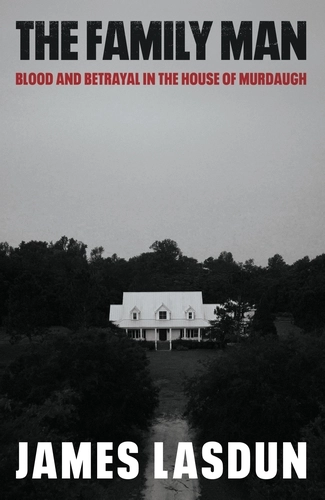
In March 2023, Alex Murdaugh (pronounced ‘Murdock’ by Americans), an attorney, was found guilty of the murders of his wife Maggie and their younger son Paul at their home in South Carolina. The circumstances of the deaths were violent; both having been shot.
The news outlets produced a narrative that went around the world, particularly with revelations of corruption in high places, massive fraud, opioid abuse, fake suicides, suspicious accidents, and the generational recklessness of the wealthy legal dynasty at its centre.
James Lasdun, as he explains in the Premise, found himself giving ‘real thoughts’ to the implications of ‘a business premised on destruction, dysfunction, malice, misery, and loss.’ Murdaugh’s family firm of attorneys was found to have been in severe difficulties financially, once someone looked closely.
Lasdun’s story started originally as an article for the New Yorker, published just before the criminal trial. That allowed for ‘an open-endedness’ that reflected the author’s ‘unresolved feelings.’ The true explanation of events was based upon irresistible inferences.
The essential point is that serious crime by wealthy people, those who lack for nothing, often flies in the face of easy explanations. On Lasdun’s explanation, the Murdaughs in South Carolina represent the misuse of the power of (legally qualified) entrenched privilege.
Lasdun has produced a fine example of reportage: that is to say, the reporting of news, especially by an eyewitness. It is an analysis of news or information of an event that has been reported already. He did reports extensively on the main places and the people.
As part of the scene-setting, Lasdun explains the place of the Murdaugh legal firm in the political and establishment firmament of South Carolina. In itself, the story shows good reason for the avoidance of hereditary appointments, particularly of public prosecutors.
Lasdun’s understanding of South Carolina in his first-person descriptions has caught the particular tensions and politics in the counties and the state there. A map and a few photographs might, however, have assisted understanding the narrative.
The complexity of events is based in the machinations of the legal mind of the accused Alex Murdaugh over the years. Further, his son’s unstable behaviour was causing difficulties, and one major disaster leading to a civil claim that threatened to wipe out the Murdaugh assets.
Much of the immediate family problems followed from that behaviour due to his ADHD, an anacronym that needs no explanation now. Yet there was more: as an adult, in law at least, the son was also taking alcohol in excess with friends, and his physical reaction was ‘saucer eyes and jazz hands’.
The author suggests, doubtless on advice, that the description sounds like ‘a form of the muscle-locking neuropathy known as focal dystonia, a condition that can be triggered by alcohol abuse’.
The journalistic skill of Lasdun is notable in reducing a vast quantity of material to an interesting summary of moral dilemmas. The deviousness of Murdaugh as the major player, and the others, shows in the main action in this complex story of local power and influence.
Murdaugh was hardly likely to be able to solve his family and professional problems even with a clear mind: his opiate dependence was long-seated, and expensive, although that seems to have been a self-serving admission, but not with medical evidence in support.
In all the mess, chicanery of a high order was required by Murdaugh to try to ensure that other stories were not inconsistent with the major explanation of the death by shooting of Murdaugh’s wife and son.
At the heart of the known events there was a void, almost exactly at the time the shootings took place. Murdaugh gave evidence and denied responsibility for the deaths, leaving possible a degree of speculation, which is a given with any case of notoriety.
Ultimately, the two deaths were held proved as murders and Murdaugh sentenced to life imprisonment without the possibility of parole. He accepted his guilt of embezzlement charges and he was jailed separately for many years for these.
Two matters in Lasdun’s narrative are likely to appeal to legally-qualified readers. First, the emerging suggestion of crime by Murdaugh led to dissatisfied clients taking their business to ‘a malpractice attorney’ who specialised in the ‘misbehaviour’ of lawyers.
Lasdun opines that there is ‘plenty’ of that misbehaviour about, ‘judging from the palatial scale of his Versailles-style home in a gated community’. The malpractice attorney, he says, ‘does not usually write Hallmark letters.’ He often gives the recipient four hours to reply.
Secondly, the best laid plans of the police and the prosecution were productive. However, the clerk of court engaged in ‘some serious malfeasance of her own’. In December 2025 the clerk pleaded guilty to obstruction of justice, perjury, and misconduct in office. She admitted to revealing sealed court exhibits to a member of the media and then lying about it.
She also admitted to using her office to promote her book of the trial, which included plagiarism. She was sentenced to three years’ probation, though the judge said he would have imposed a harsher sentence had evidence come to light that she had tampered with the jury.
On 13 May 2026, the South Carolina Supreme Court overturned Murdaugh’s murder and weapon possession convictions and ordered a new trial, citing ‘shocking jury interference’ by the clerk. The unanimous opinion criticised prejudice, which the State was unable to rebut. The interference was outwith the presence and knowledge of the ‘outstanding trial judge’. A new trial was ordered. A ‘sprawling American saga’ indeed.
The order for a new trial came after the publication of Lasdun’s book and it must surely be only a matter of time before a new edition covers the clerk’s behaviour and the retrial. There is no hurry, Murdaugh still has 40 years in a federal jail for his financial crime convictions.
Murdaugh’s counsel began his jury speech alluding to the not proven verdict, still competent then in Scotland, which suggested to Lasdun that counsel had already given up hope of an outright acquittal. In any event, there was not a lot for the defence to develop favourably.
The State evidence included much objective technical mobile phone data that showed up lies, and the lies to cover the earlier ones, and so on, that in context justified the guilty verdicts. Lasdun ends a little ungraciously with the assertion that ‘it appears’ that Murdaugh did indeed murder his wife and son.
The Family Man: Blood and Betrayal in the House of Murdaugh by James Lasdun. Published by Jonathan Cape, £22.

Share this article:

Subscribe to our newsletter to not miss articles like this one:
 SUBSCRIBE