

Written by:

Review: The appalling career of Roy Cohn – low life, liar and lawyer
 Reading time: 6 minutes
Written by:
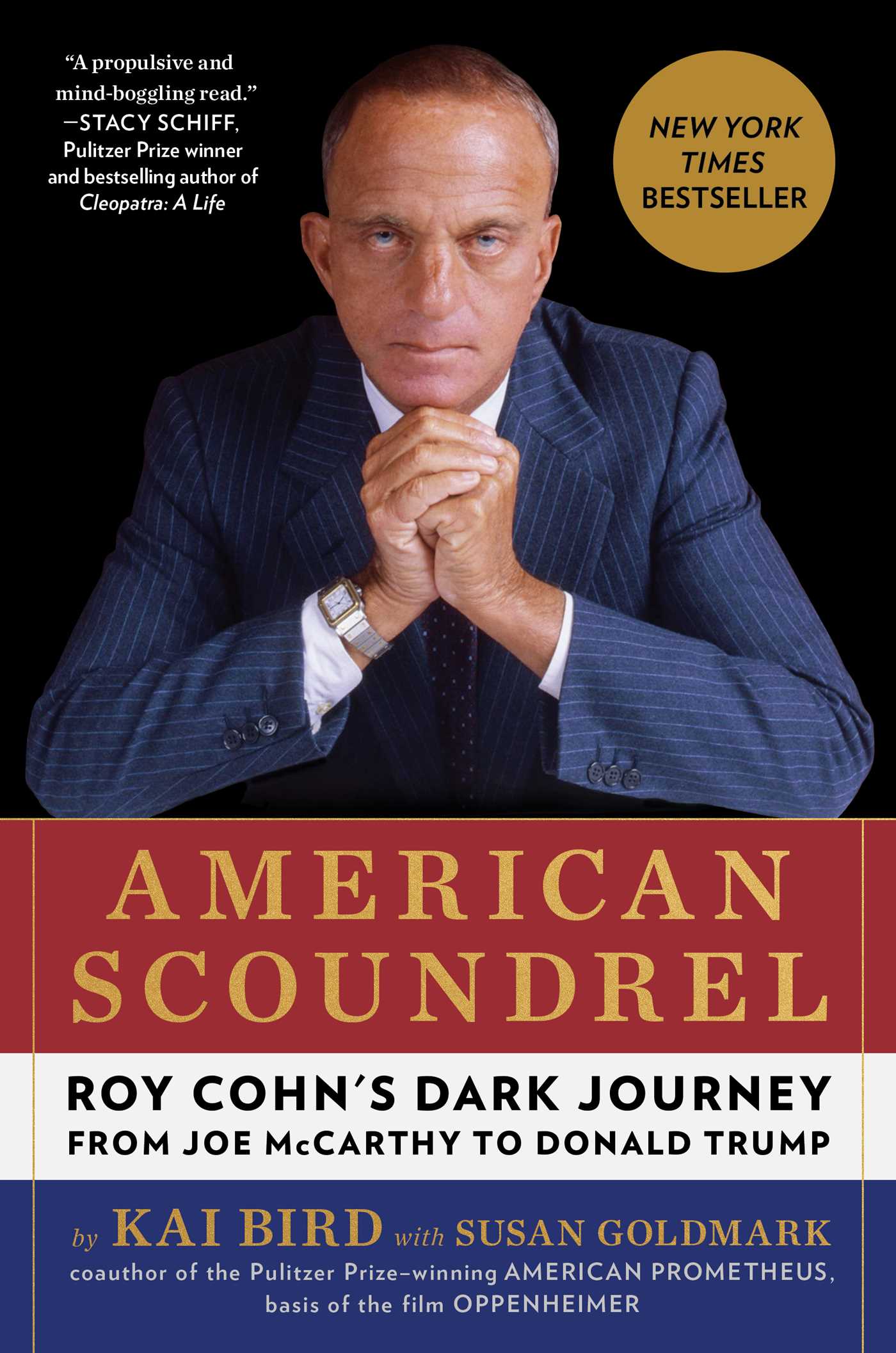
Roy Cohn turned aggression, deception and contempt for professional restraint into instruments of power. In American Scoundrel, Kai Bird and Susan Goldmark trace his path from the Rosenberg prosecution and McCarthy hearings to a lucrative legal career marked by intimidation, ethical misconduct and lasting damage to American law and public life.
Roy Cohn’s immediate family had all worked hard and succeeded in the short period that they had been in America. He benefited from their position and wealth. He made an effort for his legal qualification, but played the system to avoid the draft, towards the end of the war.
From the early 1950s to the 1980s, the many high dramas of American political life had Cohn present in some official capacity. At the astonishingly young age of 24 years and with little experience, Cohn prosecuted the Rosenbergs, a left-wing couple who were sent to the electric chair as Soviet spies.
Even at this early point in Cohn’s career, in the Rosenberg trial, ethical questions arose. The sensitivity of the case, for reasons to do with the divisions in American society, resulted in ex parte communications between Cohn as prosecutor and the trial judge during the case.
Cohn was later an aide to Senator Joe McCarthy. The patent unfairness of those proceedings, and the casual indifference to the personal consequences for individuals appearing before the tribunal were matters of great indifference to McCarthy, Cohn and others.
Cohn’s strategy and attitude in these high-profile cases demonstrated, in the context then and now, professional excess. Moreover, while engaged in these cases he was also in receipt of a salary as a partner in a firm of attorneys; “with another $7,500 from a mysterious source”.
The appalling unfairness around the McCarthy inquiry into communist influence are well-known; but reasserted and focused on Cohn’s activities, the history of the period must surely amount to an appalling condemnation of the legal profession for tolerating excesses.
In an FBI memo of July 1953 Cohn was assessed as “extremely intelligent and has an outstanding memory - but he is crude, brash and inexperienced … [he] is very dangerous”. Stated differently; Cohn was completely out of control, and continued to be so.
It is almost certain on the extensive grounds set out in this excellent biography that Cohn knew what other individuals thought of him, but he did not care. Undiluted aggression, rudeness and an unflinching pursuit of an outcome irrespective of professional duties drove Cohn.
By his thirties, Cohn had begun working as an attorney for the Mafia. In his forties, he was an informal adviser to Richard Nixon. In his fifties, he partied with the glitterati at Studio 54 and visited the Reagan White House where he traded gossip with the first lady.
Somewhere in all this, Cohn carried on his legal practice. The other partners in the firm may have had to carry Cohn to a degree, and yet his clients were themselves often highly successful and his strategy of bullying often snatched victory from the apparent certainty of defeat.
Much the same might be said of his own indictments: he was tried three times for various fraudulent actions and, on each occasion, he was acquitted. Cohn ran risks in practice before these trials and ran risks at his own trials; and contrary to expectations he succeeded.
The luxurious New York premises of the firm, with Cohn’s executive home on the upper floor, seem most impressive but it is disturbing, or may be for some, to learn that from 1972 Cohn failed to renew the firm’s subscription to Westlaw, and the law books were all out of date.
There are earlier biographies of Cohn: notably, however, since their publication attention has been given to Cohn having mentored the young Donald Trump, who telephoned the older man daily and studiously emulated not only Cohn’s mannerisms but core attitudes.
In that respect, Bird and Goldmark summarise Cohn’s approach: “always respond in the public arena. Attack your critics personally, even if they are public officials. Delay the courts with repeated challenges and appeals. Accuse the accuser. Accuse your adversary of waging a vendetta. Loudly deny the facts and create your own counterfactual narrative. Above all, play the game aggressively – deny everything and never apologise”. Familiar?
One established New York journalist thought that Cohn was “a master of situational immorality. He worked with a three-dimensional strategy: 1. Never settle, never surrender. 2. Counter-attack, counter-sue immediately. 3. No matter what happens, no matter how deeply into the muck you get, claim victory and never admit defeat”. Even more familiar?
Cohn’s aggression, his surly defence or defiance of authority, as required, were frequently flourished to conceal vast insecurities, particularly regarding his closeted sexuality. After the death of his mother (his father having died some years earlier) Cohn lost any inhibitions.
Bird and Goldmark do not spare the reader many of the intimate details of the personal life of Cohn, in so far as that complicated part of the story can be discovered now, and a lot has been found. Cohn died in 1986 in distressing circumstances from AIDS-related complications.
Other more kindly character assessments of Cohn are available; although certainly not in the same number as those who loathed him. He acted as a mentor to Robert Cohen (same name different spelling) who spoke highly of Cohn’s kindly assistance when he began as an attorney.
Cohn, on the explanation of Bird and Goldmark personified opportunism and chicanery: his fees, for example, were taken as ‘loans’, and he never expected to make repayment. His use of the phrase: ‘to be absolutely frank’ was generally taken to precede a lie.
Cohn was a fine example of an individual who, as the authors say, “poisoned the atmosphere” wherever he went. He bought and sold a number of companies as going concerns in a sort of business career running parallel to that of law.
There came a point when all this and more was simply too much and Cohn was disbarred; not an easy task. He lived on but owed significant sums in unpaid income tax and after his death his business partners were left to sort out a big financial mess.
Cohn was a serious threat to the ordinary workings of the law. His clients welcomed his obtaining results for them but the irresponsible and unethical ruthlessness in all the legal and commercial spheres that he operated in is notable. He was not an idealogue.
Notwithstanding the dislike that Bird and Goldmark patently have for Cohn, it is odd that he should be referred to throughout the book by his surname, or, just as often, as ‘Roy’. The title of the book also pulls a punch: Cohn was far, far beyond being just a ‘scoundrel’.
American Scoundrel: Roy Cohn’s Dark Journey from Joe McCarthy to Donald Trump by Kai Bird and Susan Goldmark, London: Simon & Schuster, 528pp, £19.00

Share this article:

Subscribe to our newsletter to not miss articles like this one:
 SUBSCRIBE