

Written by:

Review: Nuremberg’s women
 Reading time: 6 minutes
Written by:
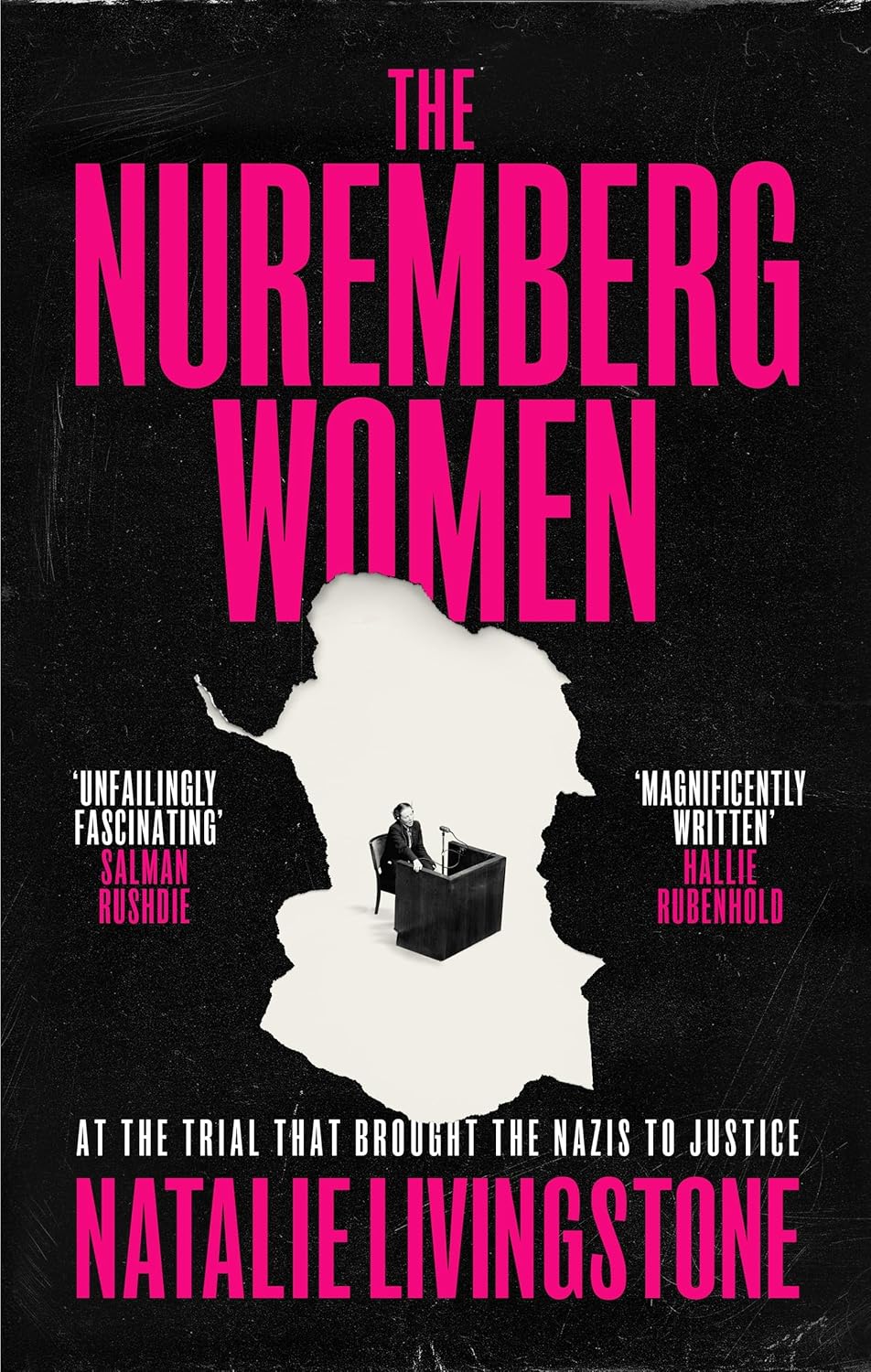
Natalie Livingstone’s vivid retelling of the Nuremberg trials shifts the focus from the Nazi defendants to the remarkable women who witnessed, interpreted, chronicled and shaped the proceedings, revealing how their experiences illuminated the moral, political and human legacy of the twentieth century’s most consequential courtroom.
American lawyer, Harriet Zetterberg studiously compiled legal arguments and attended prison interrogations preparing for the court hearings. Exiled German, Erika Mann wrote furiously, despatching copy to her editors from the women press camp’s castle and the court room. Ingeborg Kálnoky tended to the needs of those called to testify for both sides from the ‘witness house’ she managed on the outskirts of Nuremberg. Marie-Claude Vaillant-Couturier was front and centre at the International Military Court (IMT) blowing open through her eye-witness testimony the details of what she and others had endured inside the concentration camps.
Britain’s Laura Knight put paint to canvas from the back of the court room capturing and interpreting the characters involved in this year-long trial. Tatiana Stupnikova listened intently, simultaneously interpreting from German to Russian, carefully and precisely always with an ear to her family’s predicament at home in the Soviet Union. As a German reporter, Ursula von Kardoff attempted to get under the skin of the German perspective on the trial. And Rebecca West, although a late comer to the court room, was adamant that the testimonies, evidence and outcomes of the IMT should not succumb to the “limits of human attention” which had been tested to the utmost.
These eight women are the voices Natalie Livingstone has chosen to provide a completely different perspective on the Nuremberg trials which track a loose chronology of events over the course of late November 1945 to early October 1946. It was an entire year of hearing dense legal arguments in the prosecution of 22 of the Nazi regime’s highest ranking, surviving, officers. They were not on trial for the specifics of their actions; that was moral and ethical guilt. Instead, the IMT was interested in legal guilt; a more theoretical approach which looked at the evidence for crimes against peace, against humanity and war crimes. If those on trial were attempting to defend the indefensible, it begs why hold a trial, to which the response is to establish the theories of international law that we have enjoyed ever since. These prominent Nazis’ individual perpetrations would be prosecuted at the subsequent Nuremberg Trials in the following years.
The distinction between theory and action is important because as Livingstone and her ladies frequently note, over the course of the year of the IMT, the public had lost touch with the proceedings and even those attending court, all busy people, had become bored. As Rebecca West remarked, Nuremberg and the court room had become the ‘citadel of boredom’. Erika, Ursula and Rebecca, all journalists, attempted to see the IMT through a different lens – not really the men and politics, but observations on the German population surviving in bombed-out Nuremberg, the behaviour of the press camp and the conditions they lived in. The difference between capitalist women’s use of the bathrooms and that of the Soviet female delegates – privacy for the former, “a feeling of community” for the latter which got them to court on time – emphasises the difference yet willingness of the Allies to collaborate at Nuremberg, the most important trial of the twentieth century and to re-set the world’s moral order.
However, while the press corps enjoyed the freedom of parties and liaisons, Ingeborg Kálnoky kept her ‘guests’ at the witness house closely entertained. Chosen for her pre-war society credentials, she had been rescued, pregnant and hungry, on the Czech border as she tried to enter west Germany shortly after the German surrender. Ingeborg’s experience of the IMT included food and comfort, but also the stresses of keeping the house on an even keel with opposing witnesses under the same roof, and the entitled male advances of one Major P which she side-stepped. Moments of sexual advances, assault and rape pepper this book, but an enduring fact of the testimony provided by the immensely emotionally strong Marie-Claude Vaillant-Couturier is that rape was named a ‘crime against humanity’ in 1948 and “codified as a war crime” in the Rome Statute in 1998. It might have taken a further fifty years, but of all the women heard here, Marie-Claude’s voice feels like it has endured with the greatest efficacy.
In 1942, French resistance fighter, Marie-Claude was sent to Auschwitz. Her IMT testimony was the nail in the legal coffin for those on trial. She described first-hand her ordeal and especially that of the Jewish women and children in extermination Block 25. She broke the detail on the workings of the gas chambers and how the ‘Gas Kommando’ had thrown living children into the flames when the gas ran out. The court was astounded that this could be a woman’s experience.
Marie-Claude’s enduring campaign against Holocaust denial recognised that gassing millions was ‘so monstrous’ that it is unsurprising people then and now cannot grasp the enormity of such evil, but she pressed on until genocide was adopted by the United Nations as a prosecution without statutory limitation. Her work led directly to the prosecution of Klaus Barbie in 1987 and Paul Touvier in 1994. For Tatiana, her legacy had a slower fuse, but on the collapse of the Soviet Union in 1990, now in her 70s, she published the whole truth of what she had so intently interpreted at the IMT. The full ghastliness of Soviet culpability in the Katyn Massacre was now public knowledge, a fact that had brewed in her soul for fifty years and which led her to equate Stalin’s actions with those of Hitler.
This is an important new perspective on Nuremberg with numerous details that deserve never to be forgotten, among which a small selection: from the Soviet perspective, “Nazism was the child of capitalism”; the Nazis rose to power “offering false answers to widespread discontents”, and that Nuremberg was less about then but more an “instruction for the future”. The father distracting his tearful ten-year-old son as they queued for the gas chamber at Dubno, Ukraine by pointing to the sky is soul-seering. That too is a lesson for our future.
The Nuremberg Women: At the Trial that Brought the Nazis to Justice by Natalie Livingstone. Published by John Murray, 432pp, £25.

Share this article:

Subscribe to our newsletter to not miss articles like this one:
 SUBSCRIBE