




Written by:

Review: 1873 – a highly readable account of the bust that followed the world’s railway boom
 Reading time: 3 minutes
Written by:
As the AI boom begins to wobble with vast valuations of non-profitmaking companies now being questioned, Robert Shiels, enjoys a timely study of the world’s first global crash.
Over the course of the 1850s and 1860s, during the first era of globalization, the world experienced an unprecedented economic boom. Fuelling this expansion was an explosion in the extensive availability of money to borrow.
The workings of the markets internationally produced giant sums of capital provided through the bond market. These assets were necessary to build the seriously major projects of their time, steel plants, and bridges, and railways themselves.
The first International Monetary Conference held in Paris in 1867 had taken place at the height of the global boom. Liberal economic ideals, such as free trade, were in the ascendancy and international trade and capital were, along with gold supplies, plentiful.
Yet, these transformative investments also let loose a frenzy of speculation, massive over-investment, and wasteful borrowing by governments. As night follows day, such vast economic transactions, and the associated duties led to irregularities on a comparable scale.
In the early 1870s the bubble burst. Stock markets from Vienna to New York crashed, and dozens of railway companies and many governments defaulted. Financial officials responded by blundering into a precipitous remaking of the global currency system.
That all exacerbated the ensuing economic collapse and set in place the causes of decades of a punitive deflation which in turn sparked waves of anti-globalist populism. Ostensibly about economics, international and national politics naturally feature as related issues.
The crisis of 1873 was, among other things, a death blow to the era known as Reconstruction, following the civil war, in the United States and the proximate cause of the slow downward spiral of the Ottoman Empire.
However, the immediate economic impact of all the financial turbulence proved to be relatively modest. The global economy had been buffeted by successive shocks but the global economy seemed to possess a natural resilience that allowed it to rebound.
Liaquat Ahamed in his very readable history of the crisis of 1873 uncovers in the severe events a range of human attributes from ambition to greed. Not least of the range of emotions, however, is euphoria leading to disappointment, both on excessive scales.
Ahamed explains the growth of the House of Rothschild and the importance of the constituent parts across Europe. It would be difficult to narrate events without recognising the financial importance of the international bankers, including the Houses of Baring, and of Morgan.
Ironically, though the Rothschilds had presciently kept a low profile during the era of growth, when the financial depression came, they bore the brunt of a hatred directed at ‘Jewish finance’, a clear strain of antisemitism that would come far more obvious sometime later.
Financial history requires a narrative that balances the technical aspects (and terminology) of the movement of money and its effects, and the general context within which general readers might be able to keep their attention on the developments.
Ahamed finds that tricky balance and he is able to render interesting to the general reader the complex financial aspects and the causes and effects of the international and domestic political circumstances.
This history of 1873 does not explain events in our time now, but it reveals what happened in the mid-century world then, and how the roller coaster of world events made a smooth functioning of the international trade and monetary system difficult.
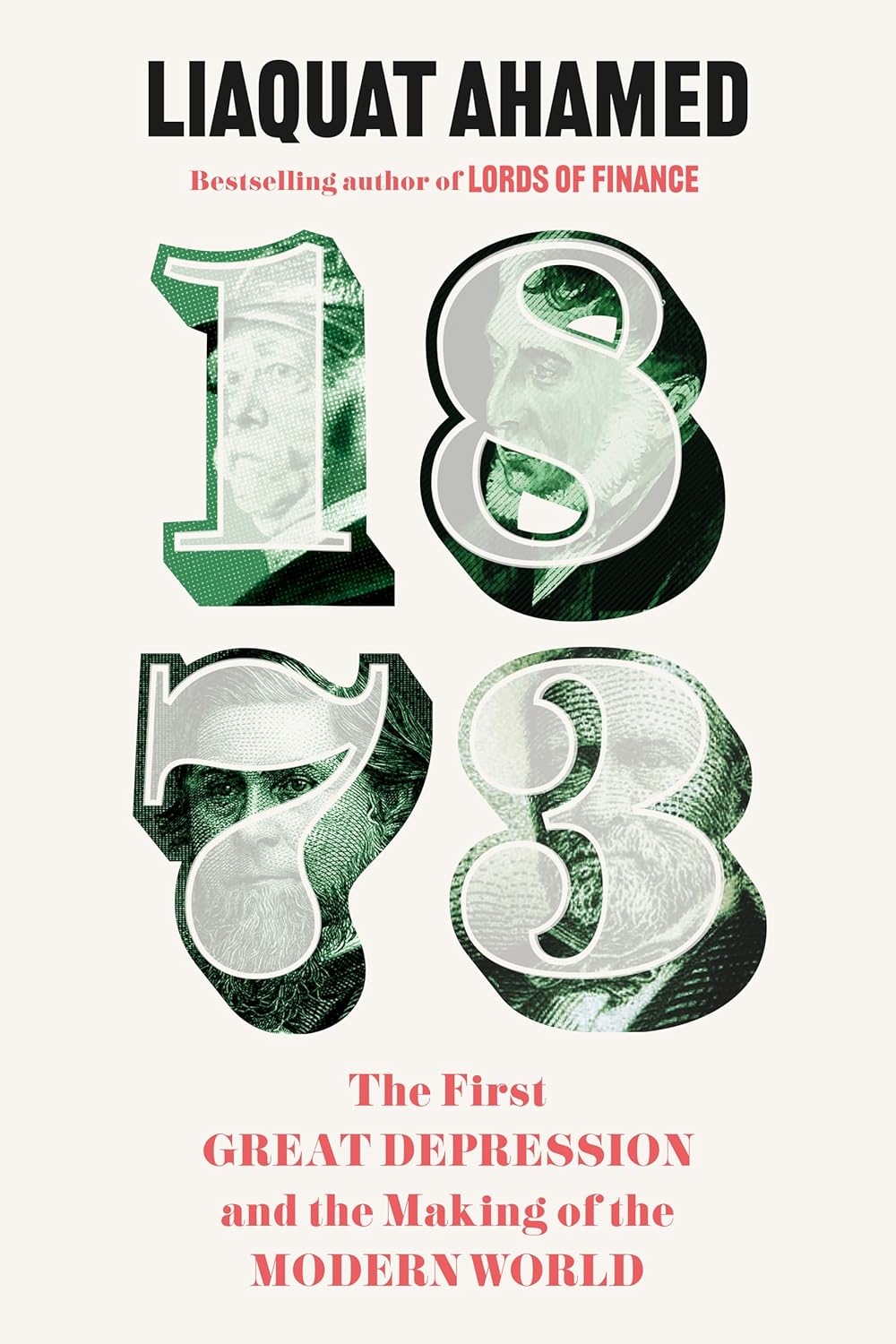
1873: The First Great Depression and the Making of the Modern World by Liaquat Ahamed. Published by Hutchison Heinemann, 346 pp, £19.99.

Share this article:

Subscribe to our newsletter to not miss articles like this one:
 SUBSCRIBE