

Podcast: Darragh Mackin on legacy, law and the fight for accountability
 Reading time: 3 minutes
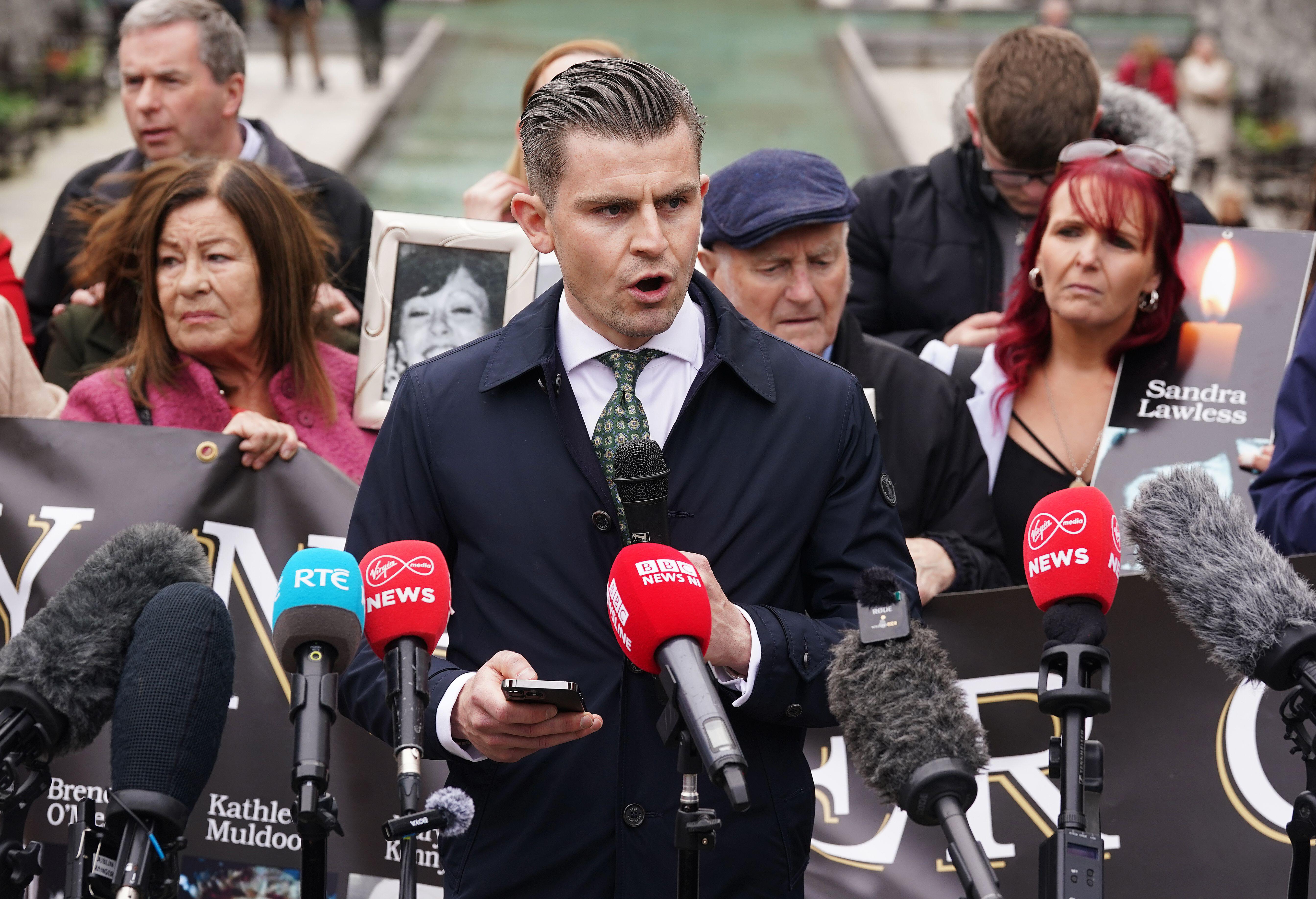
Darragh Mackin
Across Northern Ireland and beyond, the legacy of conflict continues to raise difficult questions about truth, accountability, and the role of law in divided societies.
In the latest episode of Irish Rule of Law International’s podcast The Justice Edit, human rights lawyer Darragh Mackin reflects on the enduring challenges of addressing the past – and what it takes to build meaningful reconciliation.
He says: “28 years after the Good Friday Agreement, we still have not reached a resolution about how we deal with the past.”
Mr Mackin is director and co-founder of Phoenix Law, a Belfast-based firm specialising in human rights, public law, and international litigation. Described by The Irish Times as “a rising star on the international legal scene”, his work has placed him at the centre of some of the most significant legal cases in Ireland and internationally.
In the conversation, Mr Mackin reflects on growing up in South Armagh and Newry, and how those experiences shaped his commitment to justice. He discusses the evolving role of law in Northern Ireland – from the constraints of the pre–Good Friday Agreement era to the opportunities and limitations that exist today.
He says: “To allow reconciliation to happen, we can’t just simply put a plaster over the previous cracks – we must address them.”
The episode explores whether the legal system has provided a degree of stability in the post-Agreement period, particularly in contrast to ongoing political uncertainty, and considers the legislation and landmark cases that have advanced human rights protections since 1998.
Mr Mackin also discusses several defining cases from his career, including his work on The Hooded Men litigation, efforts to challenge legacy provisions in recent legislation, and his role in securing justice for families affected by the Stardust fire in Dublin.
Reflecting on the 2024 inquest outcome, he recalls a moment that captured decades of perseverance: “When the verdict was read out, the whole room just erupted… and in the middle of it all, I heard one woman say two words: ‘At last.’”
The discussion also examines growing global pressure on the rule of law and the risks posed when legal norms are weakened or disregarded.
“And I think that if we effectively disregard the rule of law, we will enter a very, very dangerous place. Because then we are entering into a world where there are no rules,” he warns.

Share this article:

Subscribe to our newsletter to not miss articles like this one:
 SUBSCRIBE