

Written by:

Gillian O'Hanlon BL
Case Reporter
NI Crown Court: Jeffrey Donaldson sentenced amid “catastrophic descent into disgrace.”
 Reading time: 5 minutes
Written by:
Gillian O'Hanlon BL
Case Reporter
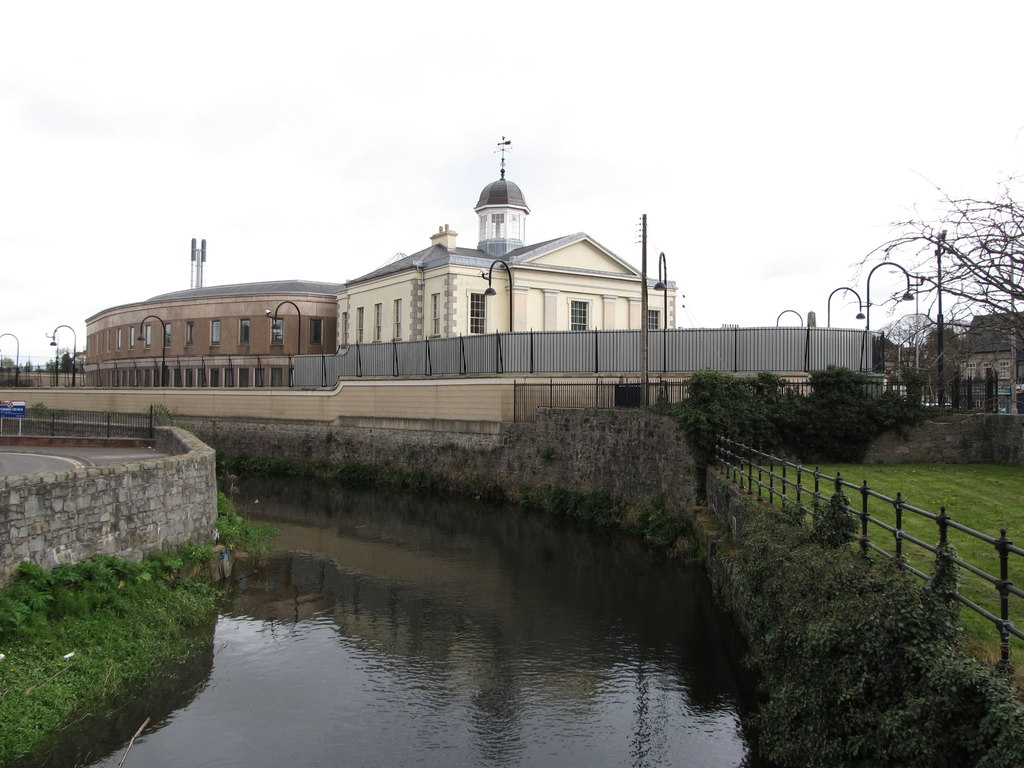
Newry Courthouse/Teach na Cuirte,
by Eric Jones [CC-BY-SA 2.0]
Northern Ireland’s Crown Court has sentenced Jeffrey Donaldson to prison in respect of his sexual abuse of two children between 1985 - 2008.

About this case:
- Citation:[2026] NICC 21
- Judgment:
- Court:NI Crown Court
- Judge:His Honour Judge Paul Ramsay
Delivering judgment for the Crown Court, His Honour Judge Paul Ramsay highlighted that “There has not been and doubtless will not be one word of regret, apology or shame from this man to at least provide his victims with some crumb of comfort.”
Mr Vaughan KC appeared with Mr Smith for the Defendant instructed by John McBurney Solicitors, and Ms Walsh KC appeared with Ms O’Kane for the Crown instructed by Public Prosecution Service.
Background
The defendant, the former leader of the DUP, was arrested in 2024 following complaints made to the police by two young women concerning sexual assaults perpetrated against them by the defendant between 1985 – 2008 when they were children.
The offences on the defendant’s indictment included one rape offence and nine counts of indecent assault against victim B, along with four indecent assaults and four counts of gross indecency against victim A. The offences included instances of vaginal penetration, putting his tongue in the mouth of one of the children and undressing and fondling the breasts of the other child, which act was witnessed by his wife.
Victim B was between 9 - 10 years of age when the offending was said to have started, and victim A was 7 – 8 years of age. The defendant was between 25 – 41 years of age at the time of the offences.
The defendant was unanimously convicted of those offences by a jury following a four-week trial. The jury also unanimously concluded that the defendant’s wife Eleanor Donaldson carried out acts against both children, though she was ruled unfit to stand trial.
The Crown Court
Judge Ramsay examined the defendant’s pre-sentence report which set out that the defendant “stoutly” maintained his denial of guilt notwithstanding the jury verdict and made it clear to the probation officer that he intended to appeal his convictions.
The defendant was assessed as being at a medium likelihood of re-offending due to inter alia distorted reasoning and thinking skills, lack of responsibility for offending, lack of victim empathy, breach of trust, and beliefs which enabled him to deny facts about the offending.
Turning to the victim impact reports, Judge Ramsay highlighted that criminal trials are never easy for the participants, “but all the more so when witnesses as here are subject to hurtful allegations. This was entirely the doing of the defendant.”
The judge opined, “in addition to having these reports before the court which I have taken into account I also, as all trial judges have, an unrivalled advantage of not only seeing and hearing the testimony of both victims but also being able to observe their demeanour and reaction to giving evidence and being cross-examined. Accordingly, I am in no doubt about the permanent mark that this abuse has left on each of them.”
The court examined the many aggravating factors in the case, identifying no mitigating factors and emphasising that while the major and most important mitigating factor in cases such as that which was before the court is an admission of guilt, the defendant “has doubled down in his denials. There has not been and doubtless will not be one word of regret, apology or shame from this man to at least provide his victims with some crumb of comfort.”
Moving to consider the appropriate sentence, Judge Ramsay set out that the defendant’s level of culpability, the degree of harm to his victims and the risk posed by the defendant to society required consideration.
Noting that there was no dispute as to the application of an eight-year starting point to the case, the court acknowledged that there was a degree of preparation in the defendant’s acts and when taken together with the aggravating features of the case, his culpability was high.
In handing down the defendant’s sentence, Judge Ramsay remarked that the defendant had reached the heights of public office and that this was “on any view a catastrophic descent into disgrace.”
Pointing out the necessity for the court to arrive at a global figure properly reflecting the offending, the Crown Court imposed a sentence of 11 years’ imprisonment in respect of the rape offence as against victim B, and sentences of between 18 months and 4 years’ imprisonment for the indecent assaults on victim B running concurrently with the sentence for rape.
As to the offences against victim A, the court imposed a sentence of 2 years’ imprisonment for gross indecency, a sentence of 4 years’ imprisonment for the indecent assaults on victim A, and two years’ imprisonment for the gross indecency offences involving kissing.
Conclusion
In totality, the defendant was sentenced to 11 years’ imprisonment for the offences committed in respect of victim B and 4 years’ imprisonment in respect of the offences against victim A, with the latter sentences to run consecutively to the sentences imposed in respect of victim B in order to reflect “the culpability of the accused and the harm that he has caused and is commensurate with the gravity of the case as a whole.”
The court did not believe a custody probation order to be appropriate, granted a Sexual Offences Prevention Order and noted that the defendant may be placed on the Children’s Barred List, the Vulnerable Adults Barred List and would remain indefinitely on the sex offenders’ register.
The King v Jeffrey Donaldson [2026] NICC 21

Share this article:

Subscribe to our newsletter to not miss articles like this one:
 SUBSCRIBE