


Written by:
Lawyer of the Month: Seán Brassil
 Reading time: 7 minutes
Written by:
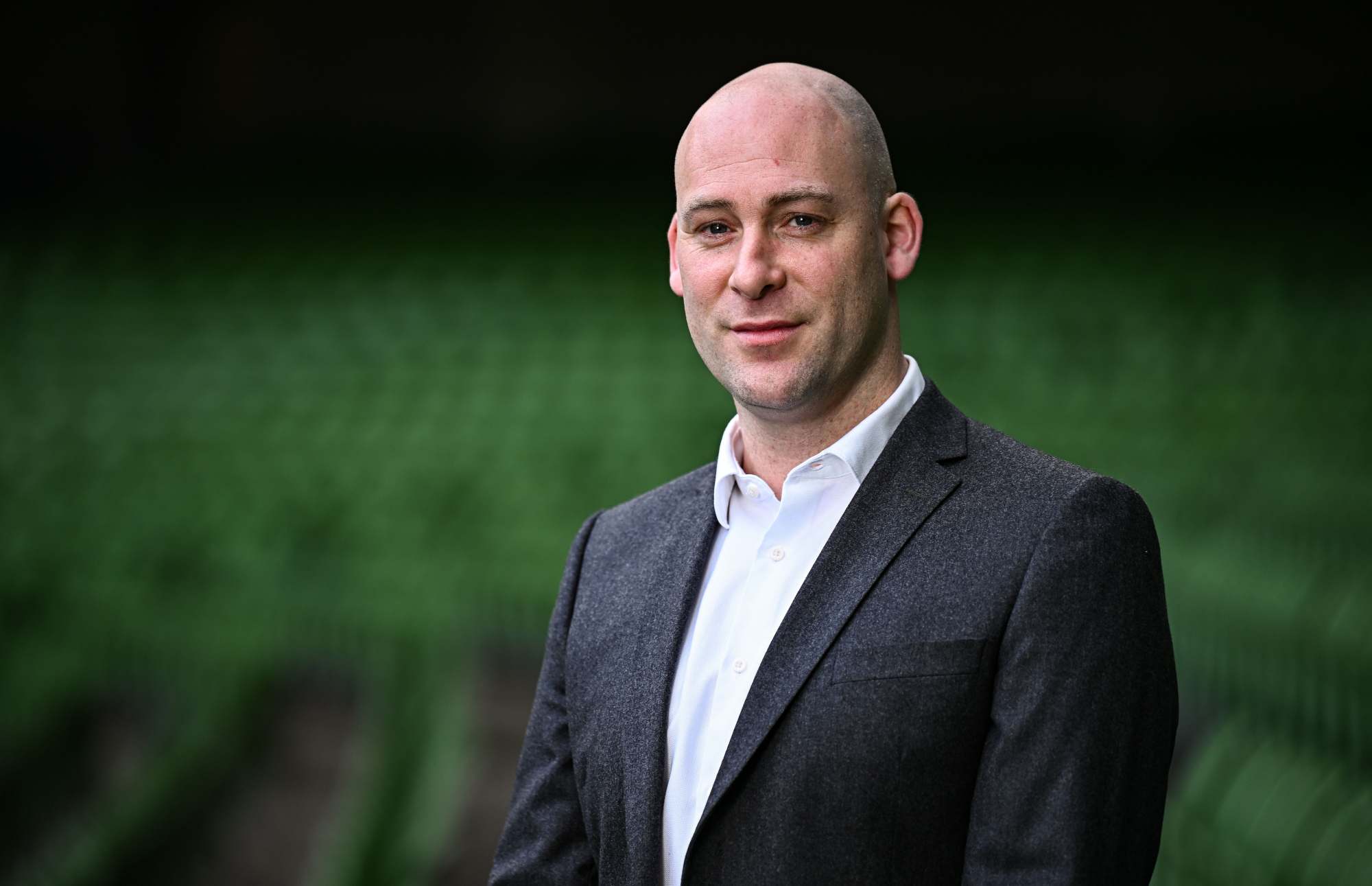
Pictured: Seán Brassil, general counsel at the Irish Rugby Football Union.
February is proving a busy time for Seán Brassil. Last month he was appointed general counsel at the Irish Rugby Football Union, 10 years after first writing to the IRFU offering his services during the court vacation period with a view to gaining experience in an industry about which he’s clearly passionate.
He has achieved that. A lawyer with extensive experience in employment, commercial, personal injury and sports law, he now represents the IRFU in all its in-house legal matters concerning the IRFU and the Aviva Stadium.
Mr Brassil is responsible for the management of all the union’s commercial matters, including the drafting and reviewing of sponsorship agreements and media rights agreements as well as the protection of the IRFU’s intellectual property and trademark rights.
It’s a broad remit and he’s especially generous with his time in talking with Irish Legal News as it’s the day before the Six Nations Championship kicks off — which brings a separate raft of challenges for Irish rugby.
His place as general counsel sees him lead the IRFU’s legal function, advising on strategic issues and contributing to the development, governance and regulatory excellence in Irish rugby.
It’s not a professional position the younger Seán Brassil might have anticipated. “My sporting interests probably got in the way of my early education — and in particular my Leaving Cert results,” he recalls ruefully.
“Family and guidance counsellors initially thought I might make a good teacher, while I also had an interest in studying journalism.”
Undecided, he went on to take a BA in English and Geography at UCD before completing postgraduate diplomas in legal studies, then law at the Technological University of Dublin and qualifying as a barrister at the King’s Inns.
His decision to pursue the advocacy route, he says, was influenced by a family friend in his native Drogheda, a solicitor who — citing the numbers of CVs he had stacked on his desk from people seeking internships to complete the solicitor FE-1 exams — suggested he became a barrister.
“It was a way to give me more control about what I subsequently did and allowed me to keep my options open,” he says.
“And I really enjoyed being a barrister. You’re very aware that you’re self-employed and constantly hear the narrative about how difficult it is to generate and maintain work but I certainly found it to be, overall, a positive experience.”
It also suited his competitive instincts, and his love of sport was always in the background. At school he had played soccer, including for the national team at under-15 and under-16 level, and he later also played Gaelic at UCD and Louth, so had a wider passion for team sports.
“During the summer vacations I was writing to the FAI [Football Association of Ireland] and GAA asking to join them to gain experience and when I wrote to the IRFU in 2015, fortunately my letter landed on the right desk at the right time,” he says.
“My predecessor was finding himself under increasing pressure with the increasing workload and I joined initially on a three-day a week basis while continuing to build my practice as a barrister.”
The job clearly engrossed and intrigued Mr Brassil, as he became legal counsel for some eight years, then head of legal before his most recent appointment.
“The variety and nature of being a barrister means you don’t know what the next phone call will bring you,” he says. “You could be involved in a criminal trial one day and dealing with an employment dispute the next.
“When I joined the IRFU I realised it offered a similar variety of work and that has made it so attractive — and so easy — to stay in an organisation like this for 10 years.
“There’s no typical day: there are different phone calls, issues and stakeholders with priorities that they need help with and it’s usually about prioritising, managing risks, finding solutions to unique problems and trying to get things turned around as quickly and efficiently as possible.”
These stakeholders include major corporates, due to sponsorship arrangements with the likes of Vodafone, Bank of Ireland and Diageo. “You’re very much in the middle of those negotiations when they come up for renewal,” says Mr Brassil.
His diverse responsibilities included developing the legal framework for the IRFU’s first collective agreement for professional players in 2017, advising on the introduction of professional contracts for female players, and more recently leading negotiations for the newly established Nations Championship tournament.
“Back in 2017 the only female professional players were those on our women’s Sevens team and that was the first real change in terms of how we conducted contracting with our professional players.”
Since then, players on the women’s 15s team have received professional contracts and he believes these developments are important for the game. “The growth is there; the ambition is there and as a lawyer you do what you can to facilitate that and be there to enable that growth.”
As part of the Six Nations competition there is an international element to Mr Brassil’s work. “We’re members of World Rugby so with issues like the 20-minute red card or the smart gumshields, we all have a say in how these things work their way through the governance structures and become a reality on the field.”
As the IRFU is a non-profit making organisation, he’s also conscious of the need to look after the sport on a local level. “The last thing you want to see is money being spent on a legal budget as opposed to being allocated to the grassroots, where the real ambition is to grow and develop the game.”
His interests beyond sport are, with a one-year-old son, understandably focused on the family. “I’m trying to juggle with that but enjoying fatherhood immensely and most of my down time still centres around following different sports, travelling and catching up with friends for a coffee.”
And as his wife Michelle is also a lawyer who works for a US technology company, there’s a shared understanding when work emails arrive at weekends. “I don’t really see them as work emails though,” he says. “It’s an opportunity to find out what’s happening and how I can help in a particular situation.
“My interest is in a sport that’s still very new in terms of its professionalism and there are inevitably issues it’s never faced before. And ultimately we’re a people industry; I love working with our people, helping to address their challenges and trying to move the needle in whatever way I can to help rugby grow and be successful.”

Share this article:

Subscribe to our newsletter to not miss articles like this one:
 SUBSCRIBE