
Irish Rule of Law International: Justice must not compound trauma
 Reading time: 8 minutes

Maria McCloskey
As the world marks the 16 Days of Activism against Gender-Based Violence, Irish Rule of Law International (IRLI) explores how justice systems can protect survivors, prevent re-traumatisation, and uphold fair trials — and how its work in Malawi, Zambia, and Tanzania is helping to put these principles into practice.
For survivors of sexual and gender-based violence (SGBV), seeking justice can be a daunting experience. Reporting violence is often only the beginning of a difficult process that may involve recounting traumatic events, navigating unfamiliar legal procedures, and giving evidence in court.
Yet the justice system should be a place where survivors can seek protection and accountability, not a process that compounds the harm they have already experienced.
The scale of the challenge is immense.
According to the World Health Organisation’s latest global assessment, an estimated 840 million women worldwide — nearly one in three — have experienced intimate-partner or sexual violence during their lifetime. Progress in reducing violence against women has been painfully slow over the past two decades.
Recent high-profile prosecutions have also brought renewed attention to the treatment of survivors of sexual violence within the criminal justice system, raising important questions about how courts can protect vulnerable witnesses, minimise re-traumatisation and uphold the rights of all parties.
These questions are central to IRLI’s work with local justice institutions and legal professionals in Malawi, Zambia, and Tanzania. Across these programmes, IRLI is supporting approaches that recognise the effects of trauma, strengthen judicial practice, and improve access to justice, while safeguarding the fundamental principles of the rule of law.
What does survivor-centred justice mean?
Survivor-centred justice begins with a recognition that the experience of violence can profoundly affect how someone engages with the legal system. Trauma can influence memory, communication, emotional responses, and the ability to recount difficult experiences. Survivors may struggle to give evidence in unfamiliar or intimidating environments, particularly when required to repeat traumatic accounts to different institutions or professionals.
The way proceedings are conducted therefore matters. How questions are asked, how witnesses are treated, and how courts respond to vulnerability can influence both the experience of those giving evidence and the effectiveness of the justice process. Importantly, survivor-centred justice does not mean compromising the rights of the accused, presuming guilt, or lowering evidential standards. Rather, it means creating conditions in which survivors and vulnerable witnesses can participate meaningfully, give their evidence effectively, and be treated with dignity and fairness throughout legal proceedings. This is not a departure from the rule of law. It is an essential part of ensuring that justice is fair and accessible to everyone.
Zambia: Understanding trauma and preventing re-traumatisation
In Zambia, IRLI’s Avoiding Re-traumatisation judicial training programme focuses on how judges and magistrates can recognise and respond to the effects of trauma in courtroom proceedings. For survivors of sexual and gender-based violence, giving evidence may involve recalling distressing experiences, facing challenging questions, and navigating procedures that can feel unfamiliar or intimidating. The programme encourages judicial professionals to reflect on how courtroom practices can either reduce unnecessary distress or risk compounding it.
Through experiential learning, practical exercises, and role-play, participants explore the experiences of vulnerable witnesses and consider how proceedings can be managed more sensitively and effectively. A train-the-trainer approach also enables participating judges and magistrates to share their learning with colleagues, supporting the development of judicial practice beyond individual training sessions.
The emphasis is not on changing the burden of proof or restricting legitimate questioning. It is on improving the understanding of trauma, supporting effective evidence-giving, and ensuring that judicial proceedings remain fair to all parties.
Tanzania: Strengthening judicial responses to vulnerable witnesses
In Tanzania, IRLI supports judicial training on gender-based violence, trauma, and the treatment of vulnerable witnesses. The training explores how trauma, unconscious bias, and courtroom procedures can affect survivors’ experiences of the justice system, including their ability to give evidence. Understanding trauma is particularly important because survivors may not respond to violence or recall traumatic experiences in ways that others expect.
Emotional responses, communication difficulties, or apparent inconsistencies may require careful consideration within the evidential and legal framework. Judicial professionals have a central role in managing proceedings, ensuring appropriate treatment of vulnerable witnesses and maintaining impartiality. By strengthening understanding of these issues, the training aims to support judicial processes that are sensitive to vulnerability while preserving the rights of the accused and the integrity of the trial.
Malawi: Bringing justice closer to communities
For women and girls in rural Malawi, geographical distance can present an additional barrier to accessing justice. Reaching a court may involve lengthy journeys, travel costs, and time away from work or family responsibilities. These practical obstacles can make seeking legal protection or pursuing a case particularly difficult.
Through the Malawi Irish Consortium on Gender-Based Violence, which IRLI chairs, and in partnership with the Women Judges Association of Malawi (WOJAM), IRLI is supporting locally led initiatives to bring justice closer to underserved communities.
A recent mobile courts initiative in rural Lilongwe registered 47 cases and concluded 29, covering a range of civil and criminal matters, including domestic violence, child maintenance, and sexual offences. The initiative also provided orientation for 32 justice professionals and delivered two legal awareness clinics attended by 330 community members. Working alongside local legal institutions and partners, the project combined mobile court sittings with legal information and support, helping communities engage with formal justice services closer to home.
But physical access to a courtroom is only one part of the challenge. As a judge from the Women Judges Association of Malawi explains, girls who enter the justice system as witnesses should expect to be protected. That includes ensuring they can be heard in camera — and are not subjected to unnecessary repeated questioning by different institutions — practices that can help reduce the risk of secondary victimisation. Her message illustrates an essential principle of survivor-centred justice: bringing courts closer to communities must go hand-in-hand with ensuring that the justice process itself protects those who use it. The mobile courts initiative demonstrates the importance of locally led solutions that address practical barriers to justice while promoting dignity, protection, and fairness.
Access to justice must also mean fair and effective justice
Although IRLI’s work in Malawi, Tanzania, and Zambia responds to different challenges, the programmes share a common objective.
In Malawi, locally led mobile courts are helping address geographical barriers and improve access to legal services. In Tanzania, engagement with judicial professionals is supporting greater awareness of the needs of vulnerable witnesses and the importance of fair, trauma-informed proceedings. In Zambia, judicial training is strengthening understanding of trauma and approaches to preventing re-traumatisation during court proceedings. Together, these initiatives recognise that access to justice is not simply about having courts, laws, and legal remedies in place. It is also about ensuring that people can use those systems effectively, that vulnerable witnesses are treated with dignity, and that the rights of everyone involved are respected.
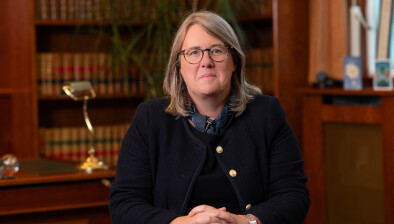
Maria McCloskey, executive director of Irish Rule of Law International, said: “Survivors of gender-based violence should not face further harm when they turn to the justice system for protection. Justice must be accessible, but it must also be fair, sensitive to trauma, and grounded in dignity.
“Through our work with local partners and the legal professions in Malawi, Tanzania, and Zambia, we are helping strengthen judicial processes that protect vulnerable witnesses while upholding the fundamental principles of the rule of law.
“At its heart, this is about ensuring that justice systems serve the people who need them most.”
The role of the legal professions
The 16 Days of Activism against Gender-Based Violence, running from 25 November to 10 December, is a global call for action to prevent and eliminate violence against women and girls. For legal professionals and justice institutions, it is also an opportunity to reflect on how justice is delivered. Judges, magistrates, prosecutors, lawyers, and other justice professionals all have a role in ensuring that survivors and vulnerable witnesses can participate effectively in legal proceedings without unnecessary further harm.
Through partnerships with local institutions and the legal professions, IRLI continues to support approaches that strengthen the rule of law, improve access to justice, and promote fair, effective, and survivor-sensitive judicial processes.
Because justice must be not only accessible. It must also be delivered in ways that protect dignity, uphold rights, and avoid compounding the trauma of those seeking its protection.

Irish Rule of Law International is a legal development charity, founded and supported by the legal professions across the island of Ireland. Working with local partners, IRLI strengthens the rule of law and access to justice through its three main programmes in Malawi, Tanzania, and Zambia.

Share this article:

Subscribe to our newsletter to not miss articles like this one:
 SUBSCRIBE