



Irish Refugee Council warns of increasingly restrictive asylum system
 Reading time: 3 minutes

The Irish Refugee Council has warned that Ireland’s asylum system is becoming increasingly restrictive, with longer delays, rising deportation orders and continued failures to provide accommodation for some people seeking protection.
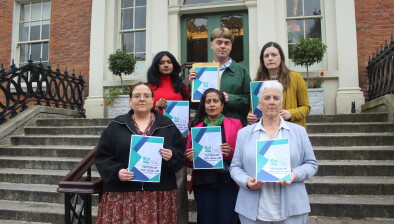
The warning came as the organisation published its annual Asylum Information Database (AIDA) 2025 report, which examines developments in Ireland’s international protection system during 2025 and the first months of 2026.
The report found that applications for international protection fell by 29 per cent in 2025, with 13,159 applications lodged compared with the previous year. Despite the decline, the Irish Refugee Council said delays in processing cases continued, while a policy of refusing accommodation to some applicants remained in place.
A total of 19,558 decisions were issued at first instance, with 3,751 applicants (19 per cent) receiving a positive decision. A further 1,274 applicants (23 per cent) secured protection following an appeal.
The organisation said the year was also marked by a sharp rise in deportation orders, an expansion of accelerated asylum procedures and proposed restrictions on family reunification and citizenship.
Nick Henderson, chief executive of the Irish Refugee Council, said the changes represented a move towards a more restrictive approach to asylum.
“The significant increase in deportation orders, the expansion of accelerated procedures, limiting access to asylum, family reunification and citizenship signal a shift towards a more restrictive approach to protection,” he said.
“We are very concerned that these changes are at the expense of fairness, due process, or the rights of people fleeing persecution and conflict.”
The report said single men seeking protection continued to experience homelessness after arriving in Ireland, with some forced to sleep rough while waiting for accommodation.
It also highlighted overcrowding in emergency accommodation centres and concerns about the conditions in some tented facilities.
The Irish Refugee Council said a judgment by the Court of Justice of the European Union had confirmed that Ireland could not avoid its obligations to provide basic reception conditions because of pressure on accommodation capacity.
“The State cannot avoid its legal obligations to provide for basic needs simply because accommodation is under pressure,” Mr Henderson said. “Human dignity is not optional, and access to shelter, food and essential supports must be guaranteed for everyone seeking protection.”
The report also noted that the implementation of the EU Migration and Asylum Pact would bring further changes, including through the proposed General Scheme of the International Protection Bill.
Figures up to February 2026 showed 121,048 people had registered for temporary protection in Ireland since March 2022. Of these, 18,132 remained in State accommodation, while 29,860 had entered the labour market and 18,185 Ukrainian children had enrolled in Irish primary and secondary schools.
Mr Henderson concluded: “As Ireland implements the EU Migration and Asylum Pact, it is essential that efficiency is not pursued at the expense of rights. Ireland’s response to people seeking protection should be guided by dignity, humanity and the rule of law, ensuring that those fleeing war, persecution and violence are treated fairly and afforded the protection to which they are entitled.”

Share this article:

Subscribe to our newsletter to not miss articles like this one:
 SUBSCRIBE