


Written by:

Gillian O'Hanlon BL
Case Reporter
High Court: No negligence on part of GP in child appendicitis case
 Reading time: 5 minutes
Written by:
Gillian O'Hanlon BL
Case Reporter
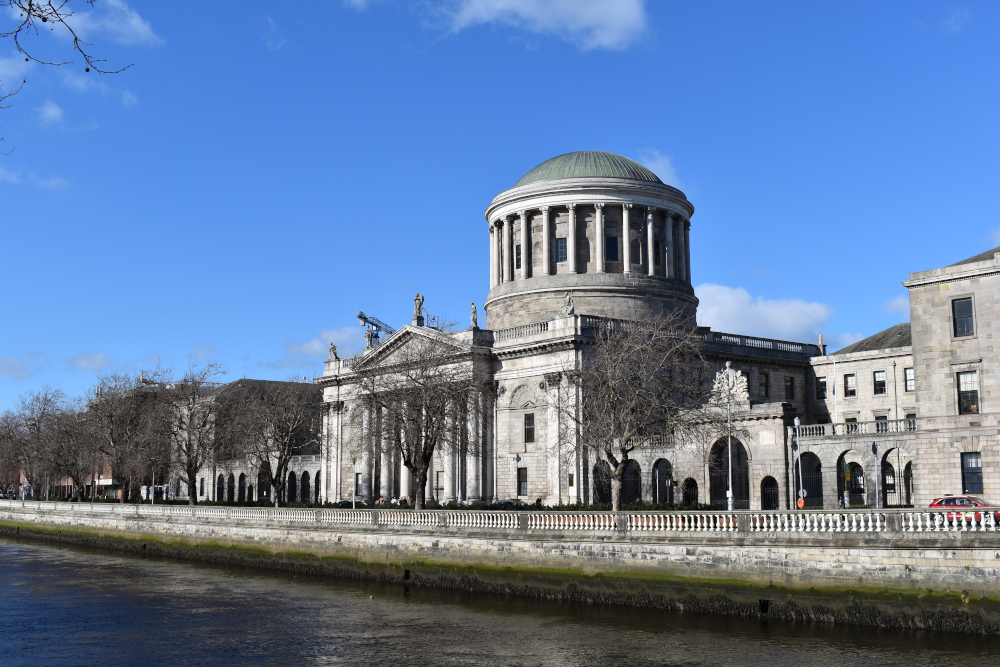
The High Court has refused to find that an out of hours GP service was negligent in failing to diagnose appendicitis in an 11-year-old child.

About this case:
- Citation:[2026] IEHC 110
- Judgment:
- Court:High Court
- Judge:Ms Justice Leonie Reynolds
Delivering judgment for the High Court, Ms Justice Leonie Reynolds was satisfied that Dr Rachel Finnegan acted with the standard of care expected of her and that if the plaintiff’s mother had followed her advice, her daughter’s surgery would not have been required and her unfortunate injuries would have been avoided.
Background
On 13 December 2017, the plaintiff’s mother phoned the first defendant’s out of hours medical practice, Southdoc, prior to bringing the then-minor plaintiff to the practice, explaining that the plaintiff had suffered with vomiting, abdominal pain and diarrhoea since the previous day.
Upon arrival at the clinic, a history of the plaintiff’s complaints and symptoms was taken by a triage nurse and the second defendant then conducted a physical examination. The plaintiff’s mother claimed that upon arrival, the plaintiff was “bending” over due to pain.
The plaintiff’s mother queried whether the plaintiff could be suffering with appendicitis, prompted by results of online searches by her older daughter, but a diagnosis of gastroenteritis was made. The second defendant advised the plaintiff’s mother on the plaintiff’s management and provided a handwritten note along with a hospital referral letter in case the plaintiff’s condition deteriorated.
The plaintiff alleged that the second defendant failed to identify that she met several diagnostic criteria for acute appendicitis and failed to refer her to hospital that evening, resulting in a three-day delay in diagnosis and her appendix becoming perforated, requiring surgery which left permanent disfiguring scarring on her abdomen.
The keys issues in dispute between the parties included the plaintiff’s presentation and her ability or otherwise to stand up straight, whether the plaintiff required help to get up onto the couch in the examination room, whether Dr Finnegan dismissed concern about appendicitis or kept it as a differential diagnosis (as documented in the referral letter) and the extent of “red flag” advice given by the second defendant.
The High Court
Ms Justice Reynolds highlighted the relevant standard of care in medical negligence cases as set out in Dunne v National Maternity Hospital [1989] IR 91 and Morrisey v HSE [2020] IESC 6.
Having heard the evidence, the court was satisfied that when the plaintiff presented on 13 December 2017, the second defendant had used her clinical acumen and experience to carefully assess her symptoms and complaints, and carried out a thorough physical examination as documented in her contemporaneous notes.
Pointing out the direct contrast between the evidence of the second defendant and that of the plaintiff and her mother, the court preferred the evidence of the second defendant to the effect that she had sight of the triage notes in advance of the consultation, commenced her assessment by observing the plaintiff walking from the waiting room to her consultation room, and that the plaintiff had been able to get onto the couch unaided, a matter which was confirmed in her contemporaneous notes.
The was further satisfied that while the plaintiff’s history and the absence of an acute abdomen pointed away from appendicitis, the second defendant kept appendicitis in her differential diagnosis and gave clear advice in the event that deterioration occurred.
The court accepted the second defendant’s evidence that she provided red flag advice to the plaintiff’s mother, noting that in circumstances where the plaintiff’s mother insisted on a hospital referral letter, “it was surprising that several days elapsed before she acted upon it”.
Ms Justice Reynolds did not accept the proposition advanced by the plaintiff’s GP expert that the only management option available to the second defendant was mandatory referral to hospital, being satisfied that a “watchful waiting” approach was the proper course of action, that an essential part of GP training and experience is to use “time as a tool” and that if every case of suspected appendicitis were referred to hospital, the hospital system “would simply not function”.
Finding that the second defendant acted in accordance with the standard of care expected of her, the judge was also convinced that had the plaintiff been referred to an emergency department on 13 December, she would likely have been triaged, her blood tests would have been normal, and she would have been discharged from hospital with similar safety netting advice.
The court outlined that even if perforation had occurred on 14 December, the plaintiff’s expert had agreed that any perforation would have been localised without abscess formation and there would have been no need for a laparotomy.
In the circumstances, Ms Justice Reynolds confirmed that the primary diagnosis of gastroenteritis was reasonable, that the second defendant’s management and advice to the plaintiff and her mother was in accordance with the expected standard, and that “had Mrs. Afolabi followed the red flag advice provided by Dr. Finnegan and presented to hospital by 14/15th, on the balance of probabilities the laparotomy would not have been required, and the plaintiff’s unfortunate injuries would have been avoided”.
Conclusion
Accordingly, the High Court dismissed the plaintiff’s claim.
Afolabi v Southdoc Services Limited & Anor [2026] IEHC 110

Share this article:

Subscribe to our newsletter to not miss articles like this one:
 SUBSCRIBE