

Written by:

Gillian O'Hanlon BL
Case Reporter
High Court: Court authorises blood transfusion for 16-year-old pregnant Jehovah’s Witness
 Reading time: 6 minutes
Written by:
Gillian O'Hanlon BL
Case Reporter
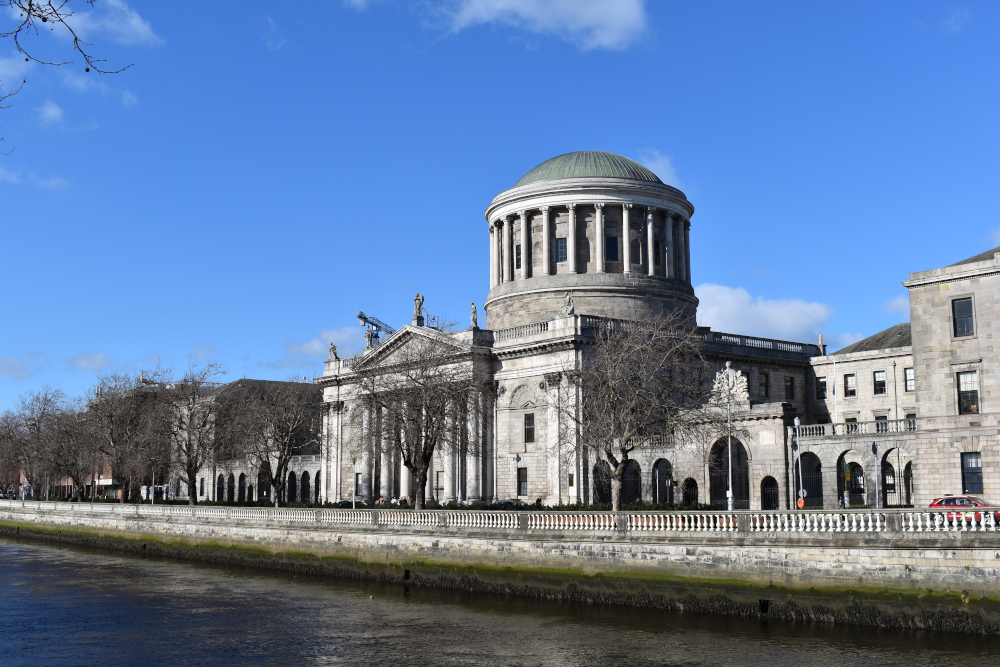
The High Court has authorised the HSE to provide as a “last resort” blood transfusions and other treatments to a pregnant minor against the wishes of the minor and her parents, who are Jehovah’s Witnesses.

About this case:
- Citation:[2026] IEHC 134
- Judgment:
- Court:High Court
- Judge:Mr Justice Mark Heslin
Delivering judgment for the High Court, Mr Justice Mark Heslin explained that “the right to life is on ‘top’ of the ‘pyramid’ of rights and it is very much through that ‘lens’ that I hope the minor can see the outcome of today’s application… Put otherwise, this Court cannot countenance otherwise avoidable serious injury, including multi-organ failure and/or death, to this already vulnerable minor.”
Background
E, a 16-year-old female, was 37 weeks’ pregnant. She was admitted into a hospital on 8 February 2026 with reduced foetal movement for the third time over the course of her pregnancy.
The minor purported to execute an Advance Healthcare Directive under part 8 of the Assisted Decision-Making (Capacity) Act 2015 and, by doing so, expressed the wish not to receive a blood transfusion in any situation.
During consultations on 5 and 6 February 2026, E repeatedly informed her treating consultant, Dr H, that she did not want to receive a transfusion under any circumstances, including in the event of any major haemorrhage before, during or after delivery of her baby.
E’s parents were Jehovah’s Witnesses. They supported her wish not to receive a blood transfusion based on their religious beliefs.
The applicant, the Health Service Executive (HSE), sought authorisation from the High Court to provide to E all appropriate medical treatment and ancillary procedures, including a blood transfusion and clotting agents, and to take all reasonable steps necessary and clinically or medically indicated to treat any complications arising from treatment.
The High Court
Mr Justice Heslin considered the report of Dr H, which noted inter alia that adolescent pregnancies are associated with higher risk of complications such as anaemia and hypertensive disorders with an associated increased risk of postpartum haemorrhage.
The judge also examined a document exhibited by the applicant entitled “Care Plan for Women in Labour Refusing a Blood Transfusion”, noting that none of the measures detailed in that document were capable of treating acute massive bleeding.
The court further considered an averment made by Dr H in her affidavit, that whereas the minor was prepared to allow cell salvage where her own red blood cells could be recovered and transfused into her circulatory system, this is not a straightforward procedure and is typically performed where there is controlled or limited bleeding.
In that regard, Dr H explained: “In the context of obstetrics there is certainly no guarantee that self-salvage will be available and/or suitable to address urgent uncontrolled and/or substantial blood loss. In many ways a blood transfusion is a last resort to save the life of a patient or prevent serious injury to their vital organs.”
Mr Justice Heslin noted: “At the very outset, it was confirmed by the HSE, through Ms Hill, that the proposed treatment would be very much as a last resort, only.”
The court also examined the report of the minor’s Guardian ad litem, Ms Quinn, which stated that the minor was not “strongly into her religion at the moment” and had confirmed to the Guardian that if the decision was taken out of her hands it would be easier for her, leading the Guardian to “[come] away from the meeting with [E] believing that the Court must step in and take this massive pressure of making this decision away from this vulnerable teen”.
Mr Justice Heslin was guided by inter alia the decision of the Supreme Court in In the matter of JJ [2022] 3 IR 1, noting that the proper approach for the court is to decide whether there is “clear and convincing evidence that the decision of the parents is one which prejudicially affects the health and welfare of the child to such an extent that the decision of the parents can properly be described as a failure of parental duty to the child in question”.
The court accepted that the phrase “parental failure” as employed in JJ “may well be difficult to hear”, but emphasised that the phrase has a specific legal meaning and that there could be a finding of parental failure “even if the parents are entirely loving, attentive, supportive of their child, and sincere in their views” and “there is nothing to suggest that the position is otherwise in this application”.
In this regard, Mr Justice Heslin reiterated that parental failure is assessed by reference to the adverse impact on a minor, not the motivation or reasoning of parents, and “that holds true regardless of how loving and sincere the parents may be”.
The judge also emphasised that the court was only concerned with a single discrete decision in the application before it, “out of a myriad of decisions” which parents might make in respect of a minor and in that regard, JJ made explicit that the failure to act in the minor’s best interests contrary to Article 42A of the Constitution can be a failure in one single respect.
Finding that the uncontroverted medical evidence established that the minor was at an increased risk of haemorrhage and having regard to Dr H’s opinion that the minor was unable to truly weigh the information provided to her in order to make a valid decision, Mr Justice Heslin turned to the second relevant factor, being the minor’s acknowledgment that if the decision was taken out of her hands, it would be easier for her.
Being satisfied that this was a situation where it was appropriate to override the single, discrete decision to refuse treatment to avoid the possibility of “the tragic and needless death of the minor, or her serious and irreversible injury”, Mr Justice Heslin emphasised that a refusal by the court to permit a transfusion in the event that one was clinically necessary would constitute a clear failure to vindicate the minor’s rights to bodily integrity and to life.
Conclusion
Accordingly, the High Court granted the reliefs sought, and wished the minor and her loved ones well.
In the matter of E and in the matter of a minor aged 16 and in the matter of a blood transfusion to which the minor objects and her parents do not consent [2026] IEHC 134

Share this article:

Subscribe to our newsletter to not miss articles like this one:
 SUBSCRIBE