


Written by:

Gillian O'Hanlon BL
Case Reporter
High Court: Leave to bring judicial review of Ombudsman’s legal aid decision refused
 Reading time: 6 minutes
Written by:
Gillian O'Hanlon BL
Case Reporter
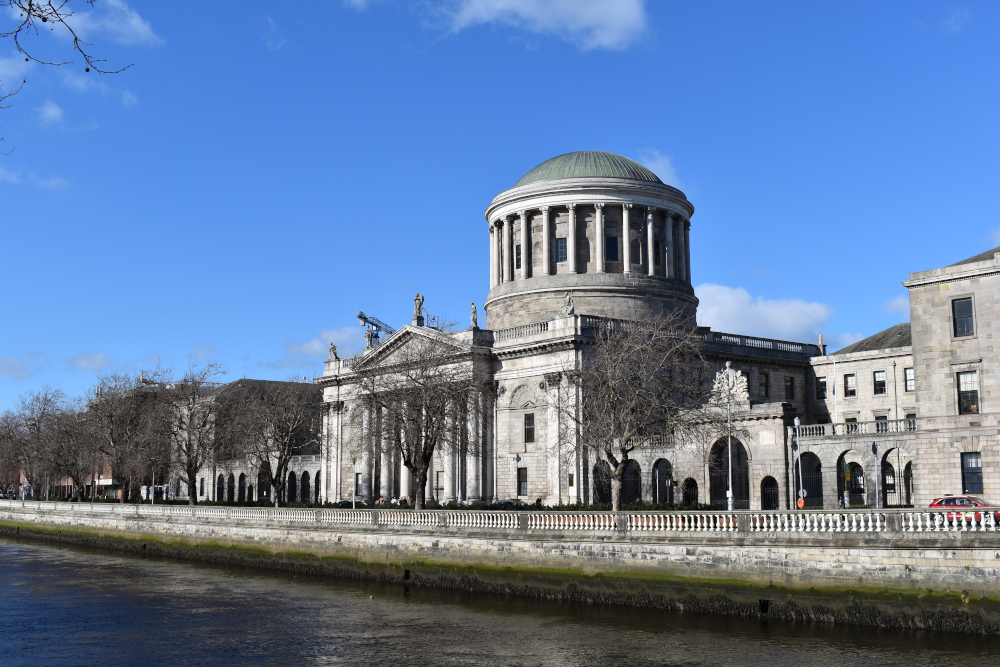
The High Court has refused to grant leave to challenge a decision of the Ombudsman upholding a refusal of civil legal aid by the Legal Aid Board.

About this case:
- Citation:[2026] IEHC 123
- Judgment:
- Court:High Court
- Judge:Mr Justice Anthony Barr
Delivering judgment for the High Court, Mr Justice Anthony Barr determined that the applicant had not made out an arguable or stateable case that the respondent acted unreasonably or unlawfully in the consideration of his complaint or in its decision, and clarified that the applicant could not rely on the provisions of the Family Home Protection Act 1976 as a general exception to the exclusion of disputes concerning rights and interests in or over land from the Civil Legal Aid Act 1995.
Background
The applicant applied to the Legal Aid Board (LAB) for legal aid in bringing proceedings against his neighbour in relation to a contested right-of-way over a laneway at a property in Co Kildare.
The applicant alleged that a purchaser of the adjoining property blocked the entrance to the laneway at his side of his property, thereby preventing him from accessing his backyard. On his application to the LAB, the applicant stated that he was unable to obtain the services of a solicitor without providing substantial funding for the proposed litigation.
The LAB refused his application on the basis that disputes concerning rights and interests in or over land were not eligible for legal aid under s.26(2)(b) and s.28(9)(a)(ii) of the Civil Legal Aid Act 1995. Following an internal review and appeals process, the LAB upheld its refusal of the request.
The applicant lodged a complaint to the respondent complaining that the LAB had failed to take account of relevant documents in its consideration of his application and had misclassified his application for legal aid as a property dispute.
The respondent did not uphold the applicant’s complaint, finding that there was no evidence that the decision by the LAB had been improperly made.
The applicant, acting as a litigant in person, sought leave to bring judicial review proceedings against the respondent’s decision.
The High Court
Mr Justice Barr explained at the outset that the proceedings before the court were judicial review proceedings and were not an appeal from the decision of the respondent or from the LAB’s decision, rather the proceedings sought to establish that there was some unlawfulness or legal infirmity in the decision made by the respondent.
The judge further highlighted that on a leave application, the court was merely applying the test in G v DPP [1994] 1 IR 374, in essence, being concerned only with whether the applicant had established an arguable or stateable case that the respondent acted in a manner which was legally unsound.
The court observed that the respondent’s role in investigating complaints is to consider whether a person has been adversely affected by improper actions on part of a public service provider within its remit, and that in the absence of evidence that the impugned decision was made improperly, then under the Ombudsman Act 1980, there are no grounds for the respondent to pursue the matter with the provider.
Having considered the evidence and the parties’ submissions, Mr Justice Barr found that a grant of leave would not be appropriate where the applicant had not established an arguable case that the respondent acted unreasonably or unlawfully in its consideration of the complaint.
The court accepted that the respondent had obtained all relevant material and information from both the applicant and the LAB, and having done that, was entitled to conclude that the LAB had acted rationally and lawfully in concluding that the case related to a dispute concerning rights in or over land.
Mr Justice Barr noted that s.28(9)(a)(ii) of the 1995 Act provides that legal aid shall not be granted by the LAB in respect of designated matters including disputes such as that advanced by the applicant, and that LAB had taken the precaution of obtaining the opinion of counsel in the matter.
The judge further considered that the First Schedule of the 1980 Act prohibits the respondent from reviewing the adequacy or correctness of legal services provided by or on behalf of the LAB, and so it was precluded from reviewing the correctness of counsel’s opinion.
Turning to the grounds raised by the applicant, Mr Justice Barr noted that the environmental and public safety matters referred to relating to the underlying access dispute with the applicant’s neighbour and were not relevant to the respondent’s view of the applicant’s interaction with the LAB.
Observing that the applicant’s complaint as to errors on the folio was not relevant to the review of the service provided by the LAB to the applicant, the court turned to the assertion that the applicant was suffering ongoing harm due to his inability to access the laneway and his backyard.
Noting that this was not relevant to any consideration of whether the applicant had a right to bring proceedings against the respondent, the court also addressed the complaint that the respondent had misdirected itself in deciding that the LAB could not have granted legal aid in the matter, due to an exception in s.28(9)(c) of the 1995 Act.
Mr Justice Barr explained that the relevant subsection provides that notwithstanding the exclusion in s.28(9)(a), legal aid may be granted where the subject matter of the dispute is the applicant’s home (or what would be but for the dispute) and the LAB considers that the applicant suffers from an infirmity, or may have been subjected to duress, undue influence or fraud and that a refusal to grant legal aid would cause hardship to the applicant.
Finding that the provisions of s.28(9)(c) had been duly considered by the decision-maker, Mr Justice Barr also confirmed that the applicant could not rely on the provisions of the Family Home Protection Act 1976 as a general exception to the rule against the grant of legal aid where civil proceedings involve rights over land that is a family home.
The judge reasoned: “Even if the court is wrong in that, the proceedings in this case do not involve rights in or over the applicant’s family home, but concern an alleged right of way over a laneway adjoining his neighbour’s property.”
Conclusion
Accordingly, the High Court refused to grant leave to proceed by way of judicial review.
Wynne v The Office of the Ombudsman [2026] IEHC 123

Share this article:

Subscribe to our newsletter to not miss articles like this one:
 SUBSCRIBE