
High Court judge states that colleague ‘misread’ previous jurisprudence on Article 40
 Reading time: 3 minutes
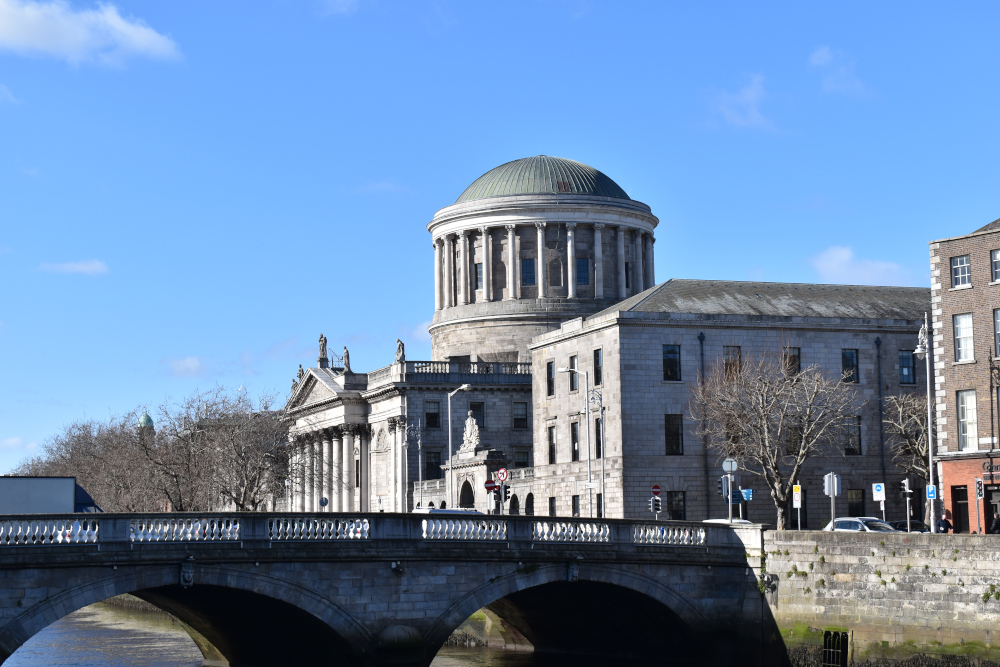
Judge Garrett Simons giving judgment in the case of Ennis, Irwin and O’Hanlon v. Governor of Cloverhill Prison has stated that his colleague Judge Michael Twomey ‘misread’ previous jurisprudence in finding that the alleged unlawful detentions had been caused by the conduct of solicitors.
Criminal defence solicitors have been withdrawing their services since June in opposition to the “one accused, one fee” model that was introduced by justice minister Jim O’Callaghan 1 July. Solicitors will receive one fixed fee of €520 for representing a legally aided person before the District Court. Previously solicitors were paid €239.38 for a first appearance and €59.86 for each subsequent appearance.
This withdrawal of services has led to many accused being without representation for bail hearings before the District Court leading to a number of Article 40 injuries being brought before the High Court.
Judge Simons last week ordered the immediate release of an accused who had bail refused and his previous bail revoked before the District Court on the basis that the bail hearing was fundamentally unfair.
However, Judge Twomey had on 5 August dismissed an application by Mr Stephen Ennis on the basis that Article 40 was not an appropriate remedy where the alleged unlawful detention had come about as a result of a solicitor picking and choosing when to represent a client for financial reasons.
Judge Simons stated that Judge Twomey’s reasoning mischaracterised the legal position. He said: “No solicitor has the power to cause the detention of another person.
“Even if one were to assume that the existence of the ongoing dispute in relation to legal fees might have contributed indirectly to circumstances in which an individual accused person was being detained unlawfully, responsibility for those circumstances could not be visited upon that individual.
“The fact, if it be a fact, that the conduct of a third party may have indirectly contributed to the circumstances in which an unlawful detention occurred cannot authorise the State to continue to detain that individual.”
He added that the absence of legal representation “does not, of itself, render a bail hearing fundamentally flawed. An unrepresented accused person may, depending upon the circumstances, be afforded a meaningful opportunity to understand, test and answer the case for detention.”
Considering the cases of Mr Ennis and Mr Irwin Judge Simons found that they both had an opportunity to test their detention and as such it was in accordance with law and they were not entitled to relief under Article 40.4.2° of the Constitution.
Their circumstances differed to those of Mr O’Hanlon, whose immediate release had been ordered by Judge Simons in an ex tempore judgment last week, who had not been given the opportunity to question Garda, it was only after bail had been refused that he was given the opportunity to say that he had recently obtained an address and his existing bail was revoked without hearing from him at all. Judge Simons found that those circumstances “did not constitute a hearing” and came within “the exceptional category in which relief is available under Article 40.4.2°”.

Share this article:

Subscribe to our newsletter to not miss articles like this one:
 SUBSCRIBE