





Written by:

Gillian O'Hanlon BL
Case Reporter
High Court: Court directs release of accused amid solicitor pay strike
 Reading time: 8 minutes
Written by:
Gillian O'Hanlon BL
Case Reporter
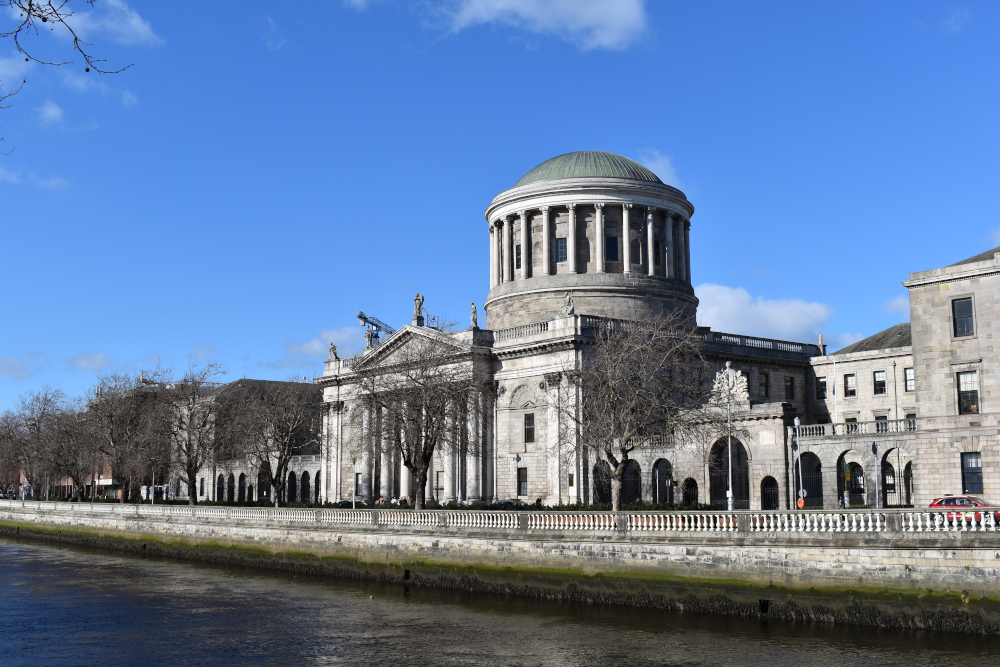
The High Court has determined that the detention of an unrepresented accused was not in accordance with law in circumstances where his bail hearing was fundamentally flawed.

About this case:
- Citation:[2026] IEHC 599
- Judgment:
- Court:High Court
- Judge:Mr Justice Garrett Simons
Delivering judgment for the High Court in August, Mr Justice Garrett Simons opined “An immediate release pursuant to Article 40.4.2° is only available where there has been a default of fundamental requirements, or some kind of fundamental denial of justice or a fundamental flaw in the decision-making process. In the context of a bail hearing, the defect must involve the denial of a fundamental requirement, such that the proceedings could not properly be regarded as a bail hearing at all.”
Colman Fitzgerald SC and Kevin McCrave appeared for Mr Ennis instructed by Niall O’Connor & Co. Solicitors, Michael O’Higgins SC and Orla Doolin appeared for Mr Irwin instructed by Staines Law, Michael O’Higgins SC and Alexander Langan MacDonnell appeared for Mr O’Hanlon instructed by Michael Kelleher & Company, Eoin McCullough SC and Davy Lalor appeared for the Minister and the Governor instructed by the Chief State Solicitor’s Office, and Sunniva McDonagh SC and Kieran Kelly appeared for the Director of Public Prosecutions instructed by the Chief Prosecution Solicitor.
Background
On 3 August 2026, Mr Stephen Ennis appeared before the District Court charged with possession of a firearm and ammunition in suspicious circumstances.
In circumstances where a large number of solicitors had withdrawn their services amid the ongoing criminal legal aid remuneration dispute with the Minister for Justice, Mr Ennis asked the District Court whether he could represent himself at his bail application as he did not have legal representation.
The District Court offered to adjourn to the following day so that Mr Ennis might have the opportunity to obtain legal representation, but he declined that offer. Mr Ennis was refused bail.
On 4 August 2026, Mr Shane Irwin appeared before the District Court on charges including unauthorised interference with the mechanism of a vehicle and failure to appear.
At his bail application, Mr Irwin was asked whether he had a solicitor. He confirmed that he did but stated that he had not spoken to him. Mr Irwin’s bail application was ultimately refused, though he was advised that securing a solicitor would be regarded as a change in circumstances sufficient to allow him to renew his application for bail before the District Court.
On 22 July 2026, Mr Sean O’ Hanlon appeared before the District Court charged with the theft of two cans of Coca-Cola valued at €3.60. The prosecution objected to bail on the basis of Mr O’ Hanlon’s history of 46 previous bench warrants.
At hearing, Mr O’ Hanlon was not legally represented and no enquiry was made as to whether he wished to obtain legal representation. Bail was refused by the District Court.
Habeas corpus applications came before the High Court in all three cases, resulting in the immediate release from prison of Mr O’ Hanlon on 18 August 2026. Mr Justice Simons delivered an omnibus judgment in respect of the three applications.
The High Court
At the outset of his judgment, Mr Justice Simons addressed the “complementary jurisdictions” of the constitutional inquiry under Article 40.4.2 of the Constitution and the High Court’s full and original jurisdiction in bail matters.
Noting that a person who is detained pursuant to an order which is valid on its face and made by a court of competent jurisdiction will not normally have a choice of remedy, save in “rare and exceptional circumstances”, the judge emphasised that the habeas corpus remedy “arises only if there has been a default of fundamental requirements, or some kind of fundamental denial of justice or a fundamental flaw in the decision-making process.”
As to those fundamental requirements, the court explained that the accused must be afforded a meaningful opportunity to understand, test and answer the grounds upon which pre-trial detention is sought, through inter alia the giving of adequate notice of the prosecution’s objections to bail, the opportunity on part of the accused to question prosecution witnesses and to answer the objections whether by evidence, oral submissions, or both.
The court also highlighted the necessity of cautioning an accused in respect of their privilege against self-incrimination, and of providing sufficient reasons to allow the accused to identify the basis upon which bail has been refused or existing bail has been revoked.
As to the applicants’ suggestion that the High Court was bound to follow the approach adopted in McCormack v. Governor of Mountjoy Women’s Prison [2026] IEHC 554, Mr Justice Simons was satisfied that two aspects of the reasoning in McCormack were erroneous and refused to follow that judgment.
Firstly, the court was satisfied that McCormack mischaracterised the civil application for judicial review in A.B. v. Chief International Protection Officer [2026] IESC 23, as being “so different” from a habeas corpus inquiry that it could not be viewed as authority “affecting the availability of the constitutionally guaranteed remedy of habeas corpus”.
The court was also critical of McCormack’s treatment of the judgment in Roche (otherwise Dumbrell) v. Governor of Cloverhill Prison [2014] IESC 53, which characterised the observations of the Supreme Court concerning recourse to the High Court’s jurisdiction in bail matters as obiter dicta and distinguished the decision on its facts.
As to the recent judgments of Mr Justice Michael Twomey in Ennis v. Governor of Cloverhill Prison [2026] IEHC 575 and Kiely v. Governor of Cloverhill Prison [2026] IEHC 576, Mr Justice Simons determined that the ordinary principle of judicial comity did not arise as a decision to refuse to direct an inquiry, as happened in those cases, is not binding on the unsuccessful applicant and as such, cannot constitute a precedent which a judge of coordinate jurisdiction is required to follow.
The court was further satisfied that in any event, Mr Justice Twomey had erred in suggesting that insofar as the applicants were detained unlawfully, that state of affairs had been caused by the conduct of their solicitors “picking and choosing” when to act for them for financial reasons.
Observing that no solicitor had the power to cause the detention of another person and that Ennis and Kiely involved a misreading of observations in Ryan v. Governor of Midlands Prison [2014] IESC 54 and Roche/Dumbrell, Mr Justice Simons moved to consider the impact of the absence of legal representation in the circumstances.
Noting that the absence of legal representation does not, of itself, render a bail hearing fundamentally flawed, the judge explained that “the relevant question is not whether the accused person could have presented the application more skilfully with the assistance of a lawyer, but whether the absence of representation prevented real and meaningful engagement with the proceedings.”
The court considered that “there will be cases where the nature or complexity of the objection, the volume of written material, the need to test disputed evidence, or the personal circumstances of the accused person are such that meaningful engagement cannot realistically occur without legal assistance.”
Turning to Mr Ennis’ application, Mr Justice Simons explained inter alia that Mr Ennis had been offered an adjournment to seek legal representation and had elected to proceed without, had adequate notice of the objections to his bail, was permitted to make submissions, was invited to cross-examine the Garda witness and was advised of his entitlement to give evidence.
Being satisfied that Mr Ennis had been afforded a meaningful opportunity to understand, test and answer the case for detention, Mr Justice Simons refused the application. The court was similarly satisfied that Mr Irwin’s detention was in accordance with law.
As to Mr O’ Hanlon, the court found that he had not been legally represented and that no enquiry was made by the District Court as to whether he wished to obtain legal representation.
The court also found that bail had been refused without inviting Mr O’ Hanlon to address inter alia his bench warrant history, without inviting him to question the Garda witness, without giving a caution as to his privilege against self-incrimination, and without adequate notice of the objections and of the revocation of his existing bail.
Finding that Mr O’ Hanlon’s proceedings could not properly be regarded as a bail hearing at all, Mr Justice Simons stated that in circumstances where the fundamental requirements were wholly or effectively denied, such that the proceedings could not properly be regarded as a bail hearing at all, “Mr O’Hanlon’s case comes within the exceptional category of cases in which relief is available under Article 40.4.2°.”
Conclusion
Accordingly, the High Court refused Mr Ennis’ and Mr Irwin’s applications and found that Mr O’ Hanlon’s detention was not in accordance with law.
Ennis & Ors v Governor of Cloverhill Prison & Anor [2026] IEHC 599

Share this article:

Subscribe to our newsletter to not miss articles like this one:
 SUBSCRIBE

