

Written by:

Gillian O'Hanlon BL
Case Reporter
High Court: Injunction relating to Mattress Mick’s termination of licence agreement refused
 Reading time: 6 minutes
Written by:
Gillian O'Hanlon BL
Case Reporter
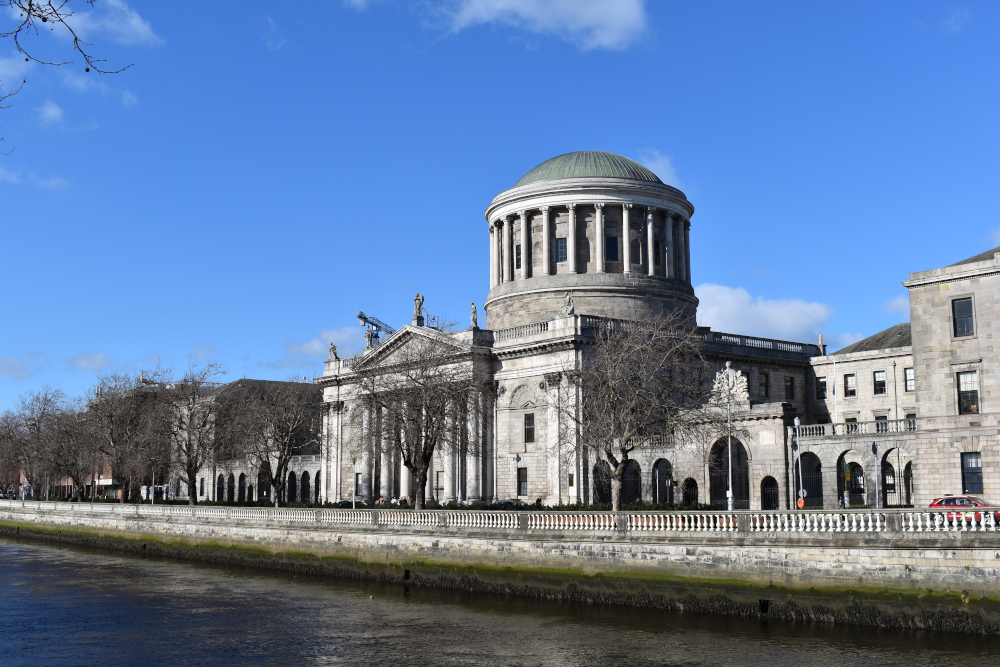
The High Court has refused to grant injunctive relief to former licencees of Mattress Mick’s trademarks.

About this case:
- Citation:[2025] IEHC 676
- Judgment:
- Court:High Court
- Judge:Ms Justice Marguerite Bolger
Delivering judgment for the High Court, Ms Justice Marguerite Bolger was not satisfied that the plaintiffs had raised a serious issue to be tried and found that the “balance of justice” tipped in favour of refusing the interlocutory reliefs sought.
Neil Rafter BL appeared for the plaintiffs, and Neal Flynn BL appeared for the defendants.
Background
The first and second plaintiffs traded under the defendants’ trademarks, Mattress Micks and Mattress Mick’s, since 2020 and 2022 respectively.
On 1 January 2025, a written license agreement was drawn up which provided inter alia for a territory of 30km, and that the “Licensor may terminate this License Agreement with immediate effect, if the Licensee commits a material breach in carrying out its Business under this License Agreement, is unable to pay debts when they fall due and/or ceases to carry on its business.”
The agreement was signed by the first named defendant and on behalf of the plaintiffs, by the deponent of the plaintiffs’ grounding affidavit.
The deponent claimed that he signed the agreement without fully reviewing it, having been assured by the first defendant that there was no change to the terms on which the plaintiffs’ Waterford and Carlow shops operated and that the plaintiffs’ understanding and agreement was that Laoise and Portlaoise fell within its Carlow territory.
In September 2025, the plaintiffs heard that the first defendant was going to offer a Portlaoise concession to a different retailer.
The plaintiffs wrote to the first defendant complaining that Portlaoise was within their territory as per their licence agreements. The defendants did not reply.
On 7 October 2025, the first defendant, on behalf of the second defendant, issued a notice indicating the intention to terminate both trademark license agreements within 30 days. No reason for the termination was identified.
The defendants contended that it was a no-fault termination upon 30 days’ notice, which they alleged was expressly provided for in the agreement of 1 January 2025.
The plaintiffs sought injunctive relief restraining inter alia the defendants from terminating the licence agreement.
The plaintiffs asserted that there were serious issues to be tried relating to the terms of their agreement with the defendants, the collateral purpose of the termination which the plaintiffs inferred from the sequence of events, and the standing of the second defendant to issue the 7 October notice, where the plaintiffs’ agreements were with the first defendant.
The High Court
As to the applicable terms and conditions between the plaintiffs and defendants, Ms Justice Bolger remarked that it was “almost trite law to say that a person, particularly a businessperson, is bound by what they sign” and highlighted: “The Supreme Court in James Elliott Construction Limited v. Irish Asphalt Limited 2014 IESC 74 held that the parties were bound by the terms and conditions of assigned contractual documents ‘regardless of whether or not they have read the terms and conditions’.”
Noting the plaintiffs’ claim that they had been given assurances by the first named defendant different to the written terms and conditions of the agreement, the judge was satisfied that this was inconsistent with the entire agreement clause in the written agreement and that the plaintiffs offered no documentary evidence or details of the circumstances in which they alleged that the assurances were made.
As to the plaintiffs’ argument that the termination clause in the 2025 agreement did not entitle either party to terminate without cause and was limited to a material breach or inability to pay its debts as referenced in the second paragraph thereof, the court found inter alia that this was not supported by any reasonable analysis of contract construction.
The court was equally unconvinced that the plaintiffs had adduced any evidence of representations made to them, or reliance on any such representations to their detriment, to establish a reasonably arguable case of estoppel.
Turning to the plaintiffs’ contention that the licence agreement was terminated with the collateral purpose of allowing the defendants to reassign their Laois territory, the court accepted that the defendants had established a reasonably arguable case that the agreement permitted a 30-day no-fault termination and that Laois was not included in the plaintiff’s territory.
In respect of the argument that the second defendant did not have standing to terminate the agreement, Ms Justice Bolger highlighted that this contention had been advanced “despite a clear assignment clause contained in the agreement, the first defendant’s averment in relation to having sold his trademarks to the second defendant and entered a deed of assignment with it… and the fact that the plaintiff wrote to the second defendant on 9 October 2025 after receiving notice of termination on 7 October 2025.”
Noting that the plaintiffs had raised an issue for the first time in their submissions concerning the Trade Marks Act 1996 and that the pleadings did not seek any reliefs pursuant to the 1996 Act, the judge was not satisfied that a serious issue to be tried arose where inter alia s.32(3) of the Act required a licence agreement to be signed to be effective and where the plaintiffs sought to disavow the only signed agreement.
“That questions the entire basis of the plaintiff’s attempts to rely on an effective trademark licence and/or the provisions of the Trade Marks Act,” Ms Justice Bolger emphasised.
Moving to consider the balance of justice, the court noted that the plaintiffs were seeking equitable relief in circumstances where they had ceased paying licence fees to the defendants at some stage prior to the termination of their licence agreements.
The court found that the minutes of a meeting of 15 April 2025, relied upon by the plaintiffs as evidencing the defendants’ agreement to suspend their licence fees, did not assist them as it was unclear who had prepared them.
Ms Justice Bolger considered the plaintiffs’ contention that the termination of the agreement and the defendants’ failure to recognise Laois as part of their contractual territory would significantly impact their business, goodwill and economic viability, and would result in the “unavoidable” redundancies of 18 staff.
Highlighting that no evidence had been given as to why redundancies would be avoidable, the court was not satisfied that the difficulty of having to run their furniture shops with different branding, uniforms and online presence “comes anything close to the catastrophic levels for which the plaintiffs contend”.
As to the adequacy of damages, Ms Justice Bolger was satisfied that any damages the plaintiffs may suffer, if the injunction was wrongly refused, “are quantifiable as they arise from running a retail premises”.
The judge continued: “Figures in relation to turnover, outgoings and profits can be calculated for the years during which the plaintiffs had the benefit of the defendant’s trademarks and compared to the time since the termination of the trademark license agreement.”
Conclusion
Accordingly, the High Court refused the interlocutory relief sought.
Somnus Gmc Waterford Limited & Anor v Micheal Flynn and Mattress Mick Limited [2025] IEHC 676

Share this article:

Subscribe to our newsletter to not miss articles like this one:
 SUBSCRIBE