



Written by:

Gillian O'Hanlon BL
Case Reporter
High Court: Decades-old appeal relating to Dublin city property struck out
 Reading time: 5 minutes
Written by:
Gillian O'Hanlon BL
Case Reporter
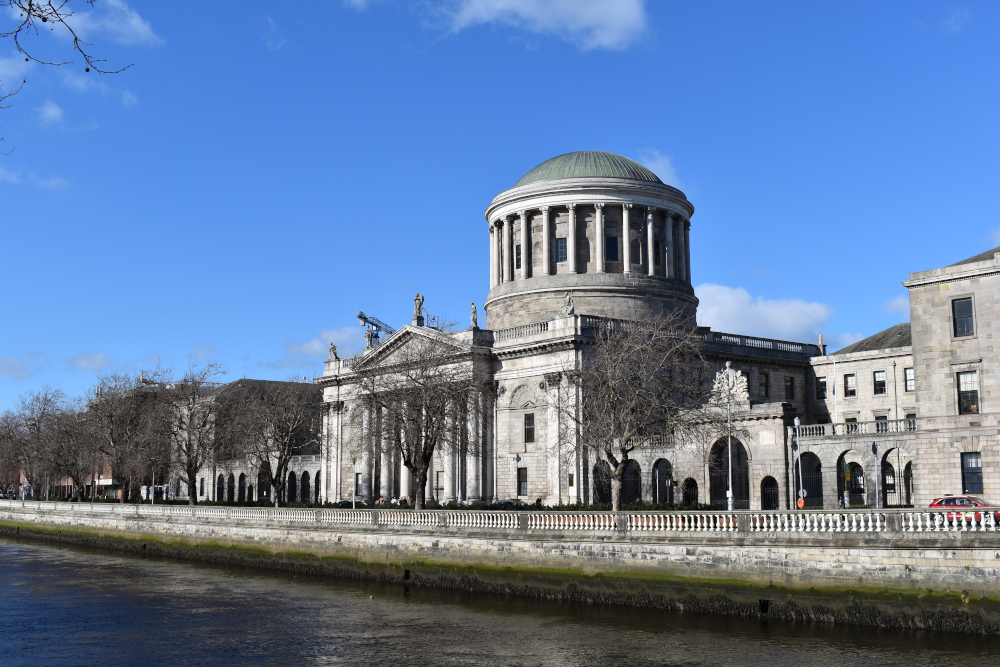
The High Court has struck out an appeal launched in 2003 against an order for possession of a property in Inchicore, Dublin.

About this case:
- Judgment:
- Court:High Court
- Judge:Mr Justice Anthony Barr
Delivering judgment for the High Court, Mr Justice Anthony Barr remarked: “To permit an appeal to proceed in 2025 when the notice of appeal was served in 2003 and when the original plaintiff, the respondent to the appeal, died in July 2023, would make this litigation a parody of justice.”
Background
The property at 46 Jamestown Road, Inchicore, Dublin was originally owned by a Charles McGovern.
The original plaintiff claimed that under the terms of the will of Charles McGovern, the trustees were to have the trust fund valued and to have transferred two-thirds of the sum to the original plaintiff absolutely.
The original plaintiff claimed that following the death of the Charles McGovern’s wife in 1971, her brother, the original defendant, and other siblings continued to reside in the property. Over time, the other siblings left the property, but the original defendant continued to reside there.
The plaintiff contended that she permitted her brother to reside in the property under licence in order to maintain good family relations, but in 2000, Dublin Corporation indicated to the original plaintiff that due to the state of the property, it was intended to take action under the Derelict Sites Act 1990.
When the original defendant refused to leave the property, the original plaintiff issued proceedings in the Circuit Court on her own behalf and in the alternative, as executor and trustee of the will of Charles McGovern, seeking an order for the ejectment of the original defendant and an order granting possession of the property to her.
In December 2001, the original plaintiff obtained judgment in default of appearance against the original defendant, with a stay on the order until February 2002. The original defendant, having been ejected from the property and having unlawfully re-entered same, obtained an extension of time to appeal that order and served a notice of appeal on 12 March 2003.
In October 2019, the original defendant died. In July 2023, the original plaintiff died. Each party was substituted by orders of November 2023 and February 2024, respectively.
With no steps having been taken to prosecute the 2003 appeal, the new plaintiff issued a motion in May 2024 seeking to strike out the appeal for want of prosecution and delay.
The High Court
Mr Justice Barr accepted that the principles set out in Kirwan v Connors [2025] IESC 21 were applicable to the case, having regard to McGrath v Irish Ispat Limited [2006] 3 IR 261, noting that “in the case of an appeal, it has to be recognised that the respondent to the appeal is not a party who merely has a chose in action, but is someone who has obtained a judgment either granting some form of relief (if they are a plaintiff), or an order dismissing the proceedings against them (if they are a defendant)”.
The judge warned that a party who has obtained judgment is entitled to rely on that judgment and should not be denied the benefit of same for a prolonged period while an appellant delays in bringing on an appeal.
Finding that when considering delay in the context of an appeal, Kirwan should be applied with greater stringency, Mr Justice Barr observed that since the service of the notice of appeal on 12 March 2003, “absolutely nothing” was done to prosecute the appeal and that no explanation for that inactivity was forthcoming.
The court considered the suggestion on behalf of the new defendant that it was understandable that nothing was done to prosecute the appeal where he was de facto in occupation of the house, opining: “That may well have been true, but it was in breach of the order of the Circuit Court made on 17 December 2001. A defendant cannot rely on the fact that he remained in breach of a court order as an excuse for not prosecuting his appeal.”
The court also rejected the “unstateable” argument that the original plaintiff bore some of the blame for the delay because she did not take any steps to bring on the appeal against the judgment that she had obtained.
As to the contention that the new plaintiff was not entitled to bring the application at issue where he had not obtained a grant of representation to the estate of Charles McGovern, Mr Justice Barr found that this ignored the fact that the proceedings had been issued by the original plaintiff in her personal capacity, that the order for possession had been granted in her favour personally and that a substitution order had been granted which put the new plaintiff in the shoes of the original plaintiff for the purposes of the action.
Applying Kirwan, the court acceded to the new plaintiff’s application and refused to adjourn same pending the determination of other litigation claiming damages for alleged malfeasance and breach of duty on part of the original plaintiff, explaining: “Justice and common-sense demand that there must be an end to litigation. That point has long since been passed in the present case.”
Conclusion
Accordingly, the High Court struck out the appeal for want of prosecution and delay.
O’Kelly (As personal representative of the estate of Marie Lucy O’Kelly) v McGovern (As personal representative of the estate of Raymond McGovern) [2025] IEHC 704

Share this article:

Subscribe to our newsletter to not miss articles like this one:
 SUBSCRIBE