



Written by:

Gillian O'Hanlon BL
Case Reporter
High Court: Decision to cancel registration of doctor convicted of attempted murder confirmed
 Reading time: 5 minutes
Written by:
Gillian O'Hanlon BL
Case Reporter
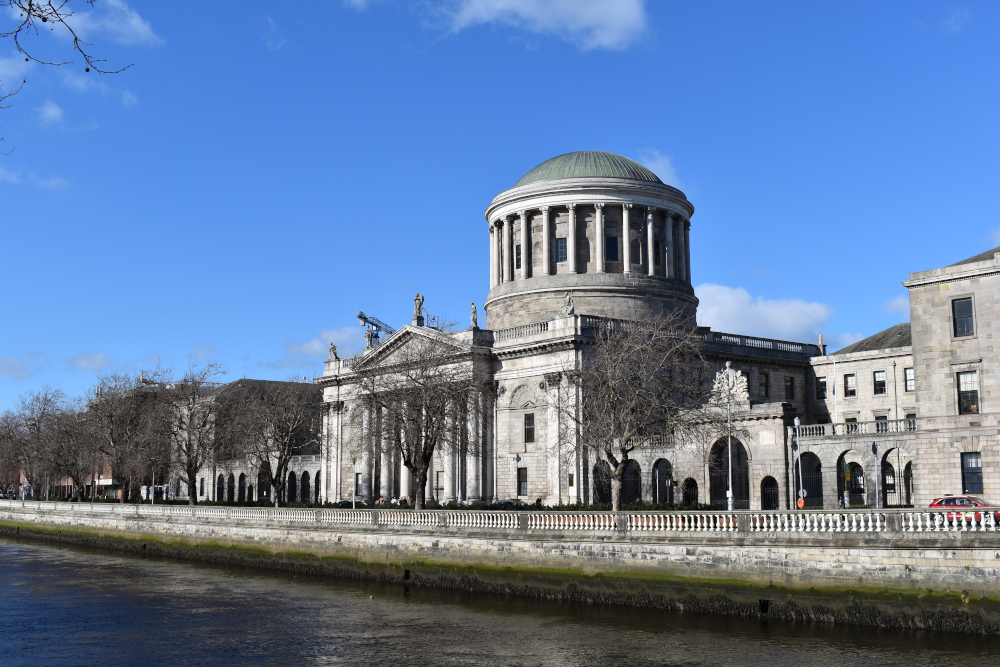
The High Court has confirmed the decision of the Medical Council to cancel the registration of a doctor who attempted to poison his mother’s partner whilst in disguise as a community nurse.

About this case:
- Citation:[2025] IEHC 742
- Judgment:
- Court:High Court
- Judge:Mr Justice David Barniville
Delivering judgment for the High Court in December, Mr Justice David Barniville opined that in the “shocking and macabre” circumstances of the case, it was “impossible to envisage any other sanction other than cancellation which would be appropriate” and that any decision to impose a more lenient sanction would have been manifestly unreasonable.
Background
In February 2024, the Irish Medical Council was made aware through media reports that the respondent doctor had been charged with attempted murder in the UK.
In early March 2024, the UK’s General Medical Council (GMC) issued a notification to the Medical Council that the respondent had been suspended from the GMC’s register.
The Medical Council successfully applied to the High Court for suspension of the respondent’s registration on 24 June 2024.
At his criminal trial in the UK, the respondent ultimately pleaded guilty to attempted murder and to the administration of poison with intent to endanger life or to inflict grievous bodily harm.
The respondent had forged NHS appointment letters and had masqueraded as a community nurse under the pretence of performing a routine health check on his mother’s partner, Mr O’Hara, at their shared property.
Having attended at the property, the respondent had injected Mr O’Hara with a purported Covid-19 booster, which was actually a pesticide. Mr O’Hara subsequently became seriously unwell and suffered necrotising fasciitis in his upper arm.
The sentencing court concluded that the respondent’s motivation was purely financial and that he had attempted to murder Mr O’Hara in order to remove the obstacle which lay between him and his immediate recovery of his share in the property following his mother’s death, in the event of her pre-deceasing Mr O’Hara.
The court also noted that during the search conduct following his arrest, the respondent’s home and garage were found to contain liquid mercury, thallium, sulphuric acid, arsenic and a “library of material describing and giving instructions on the use of various chemicals in killing human beings”.
It was also apparent to the court that the respondent had considered other methods of murdering Mr O’Hara, such as poisoning by lacing food and drink with chemicals.
The respondent was sentenced to 31 years and five months’ imprisonment.
The Medical Council
The Medical Council, having considered the matter at a meeting on 27 June 2025 in the respondent’s absence, was satisfied that the statutory criteria in s.57 of the Medical Practitioners Act 2007 were satisfied as the respondent had been convicted outside the State for an offence consisting of acts or omissions which, if done in the State, would constitute an offence triable on indictment.
The Medical Council was satisfied that the respondent had used his status as a doctor to plan and commit his crime, and that the subject acts were carried out with trickery, forethought, were planned in advance and were motivated by financial gain.
The Medical Council further considered that the respondent had left his victim knowing that he had an adverse reaction to the poison, and had caused permanent physical and psychological damage to him.
In those circumstances, the Medical Council was satisfied that the respondent was permanently unfit to continue to practise medicine and that is was in the public interest to act immediately under the provisions of s.57(6)(a) of the 2007 Act and considered the cancellation of his registration to be the most appropriate sanction.
The Medical Council subsequently applied to the High Court to confirm its decision.
The High Court
Mr Justice Barniville noted the relevant test as that set out in s.76(3) of the 2007 Act, which provides that the court shall confirm the decision under s.71 the subject of the application unless the court sees good reason not to do so.
The court explained that the “shocking and macabre” facts of this case clearly fell within the statutory provision in s.57(1)(g) of the 2007 Act and that in the circumstances, the Medical Council had been entitled to make a complaint to its Professional Practice Committee and to deal with the matter under s.57.
Being of the view that the Medical Council had complied fully with the relevant provisions of s.57 of the 2007 Act and in the absence of any infringement or breach of those provisions, and absent any breach of fair procedures or the making of a manifestly unreasonable decision, the High Court determined that there was no good reason not to impose the sanction of cancellation decided by the Medical Council.
Observing that the relevant legal principles applicable to confirmation applications had been recently summarised in Nursing and Midwifery Board v Burke [2025] IEHC 557, Mr Justice Barniville concluded that the relevant procedures had been “applied impeccably” by the Medical Council, and that the decision “was so far from being unreasonable as it is impossible to envisage any other sanction other than cancellation which would be appropriate in the circumstances here”.
Conclusion
Accordingly, the High Court confirmed the decision of the Medical Council to cancel the respondent’s registration.
Medical Council v Thomas Kwan [2025] IEHC 742

Share this article:

Subscribe to our newsletter to not miss articles like this one:
 SUBSCRIBE